MODERN KITCHENS · 097 / 100
Aksumite wheat and lentil landscape · Northern Ethiopian and Eritrean highlands · c. 300–650 CE
Evidence: historically informed adaptation. The historical evidence and modern cooking choices are distinguished below.
Aksumite farming joined local crops with other cereals and pulses. Beta Samati research records wheat among plant remains. Regional agricultural research includes lentils in the wider crop setting. Neither source establishes stuffed peppers.
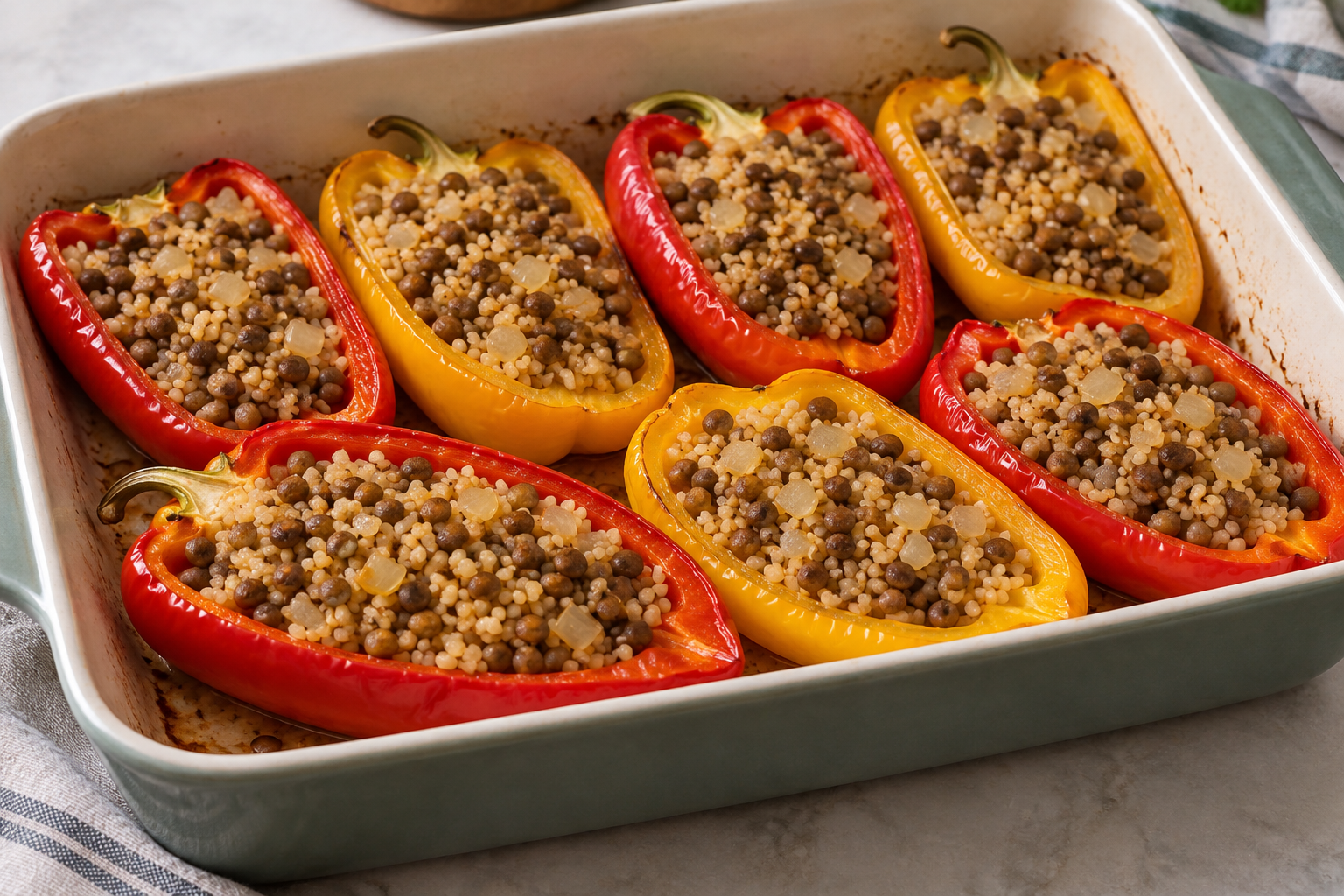
The pepper container is an explicitly modern addition. Bell peppers are American plants and are not projected into the pre 700 Aksumite evidence. We use them because they are familiar supermarket vegetables that turn cooked grain and pulses into a substantial baked main. Commercial bulgur is also a modern convenience; the cited seed evidence does not identify our particular precooking and cracking process.
Cook the grain and lentils as a separate filling before spooning them into the pepper halves. A short initial roast softens the vegetables so the final cooking does not leave a firm raw edge around an overcooked filling. Use a shallow dish and add a little water beneath the halves. Covering the first part of the final bake keeps the grain moist.
Serve two filled halves per person. The result has a separate tender vegetable shell, whole lentils and distinct wheat pieces, giving it a different identity from a plain pilaf or soup. The source links explain the ancient crops; the modern pepper, commercial grain product, stuffing, proportions and controlled oven method supply the practical dinner. This is an honest adaptation around historical ingredients, with the substantial inventions named rather than hidden.
Bulgur and lentil stuffed peppers
Serves 4 · Preparation 20 min · Cooking 50 min · 5 minutes resting
A modern adaptation for home cooking. Times are approximate.
Ingredients
- 600 g bell peppers, about 4 medium, halved lengthwise and seeded
- 160 g coarse bulgur wheat
- 300 g fully cooked canned brown lentils, drained
- 120 g onion, diced
- 20 ml neutral oil, divided
- 350 ml water for bulgur
- 100 ml water for baking dish
- 4 g salt, divided
Method
- Heat oven to 200°C. Brush pepper halves with 5 ml oil, put in a shallow baking dish and roast 15 minutes.
- Meanwhile soften onion in remaining oil 5 minutes in a saucepan. Add bulgur, 350 ml water and 3 g salt. Cover and simmer 12–15 minutes or according to packet. Fold in lentils and heat 2 minutes.
- Spoon hot filling into pepper halves and sprinkle remaining salt. Add 100 ml water around them. Cover with foil and bake 15 minutes.
- Uncover and bake 10–15 minutes until peppers are tender and filling reaches 74°C. Add a spoonful of water if filling starts to dry.
- Rest 5 minutes and serve two halves per person.
Substitutions and adjustments
- Use cooked brown rice instead of bulgur as a gluten-free modern substitution.
- Use 300 g cooked chickpeas instead of lentils for a different modern filling.
Historical choices: Aksumite wheat and lentils supply the crop connection; American bell peppers, commercial bulgur and stuffed-vegetable baking are explicit modern additions.
Troubleshooting: Firm peppers need a longer covered bake. Dry filling needs water added beneath the foil.
Storage and reheating: Refrigerate up to 3 days or freeze 1 month. Reheat to 74°C in a covered dish.
Kitchen note: Use fully cooked lentils and cook final filling to 74°C. Cool promptly in shallow portions and refrigerate within 2 hours.
Sources and further reading
- Harrower et al., Beta Samati: an Aksumite town. Full primary article inspected, archaeobotany paragraph names teff, wheat and barley; no pilaf or gravy formula.
- Ruiz-Giralt et al., Aksumite sorghum and finger-millet cultivation. Primary full article inspected: regional cereal, teff and lentil context, 50 BCE–700 CE; models and microremains do not establish exact recipes.
Browse Ancient Recipes for Modern Kitchens · More creative work at Incoprea