MODERN KITCHENS · 095 / 100
Lower Tilemsi early millet traditions · Northern Mali, West Africa · c. 2500–2000 BCE
Evidence: historically informed adaptation. The historical evidence and modern cooking choices are distinguished below.
Pearl millet has an African crop history distinct from Asian millets. Lower Tilemsi research examines early cultivated grain. Further ceramic-temper research explores changing domestication traits. The evidence supplies a cereal story, not a crumble recipe.
Here commercial pearl-millet flour becomes a crumbly topping for cooked vegetables. Cabbage, carrot, a little wheat flour and neutral oil are openly modern choices in this formula, and the combination is not described as an ancient northern Mali dish. Flour sold as bajra usually provides the intended species; an unspecified millet label may refer to another plant. That distinction matters even when the cook can make a useful substitution.
The filling and topping need different kinds of moisture. Cook the cabbage and carrot until nearly tender, then look at the pan before transferring them: the vegetables should be moist, with a small amount of liquid, rather than floating in a broth. If a large pool remains, briefly uncover and let it reduce. A loose wet filling steams the underside of the topping instead of helping it bake into separate crumbs.
Mix the flours and salt before rubbing in the oil so there are no isolated pockets of dry flour. Sprinkle in the lower quantity of water, tossing with a fork instead of kneading. Pinch a little mixture between your fingers: it should hold in an irregular crumb, then break apart with gentle pressure. If it falls straight back into powder, use a little of the remaining water. Stop before it becomes a sticky dough. Scatter these small loose clusters across the filling without pressing them into a lid.
Bake uncovered in the specified shallow dish. Look for a dry, lightly golden surface and check beneath a central crumb for a cooked texture with no dry flour pocket; the top colour alone is not the whole test. If the surface colours before the lower crumbs cook, cover loosely to finish, then uncover briefly if needed. Do not taste raw crumb mixture. The five-minute rest makes the hot layers easier to spoon, but this dish is intended to be served by spoon rather than cut into neat slices.
Serve as a substantial vegetable side or pair with a simple pulse dish from the Incoprea cooking collection. The recipe belongs to Ancient Recipes for Modern Kitchens, our cookbook in preparation. Early pearl-millet evidence supplies its historical starting point; the vegetables, wheat addition, crumb structure and controlled oven method remain openly modern. Use the texture checks alongside the approximate timetable.
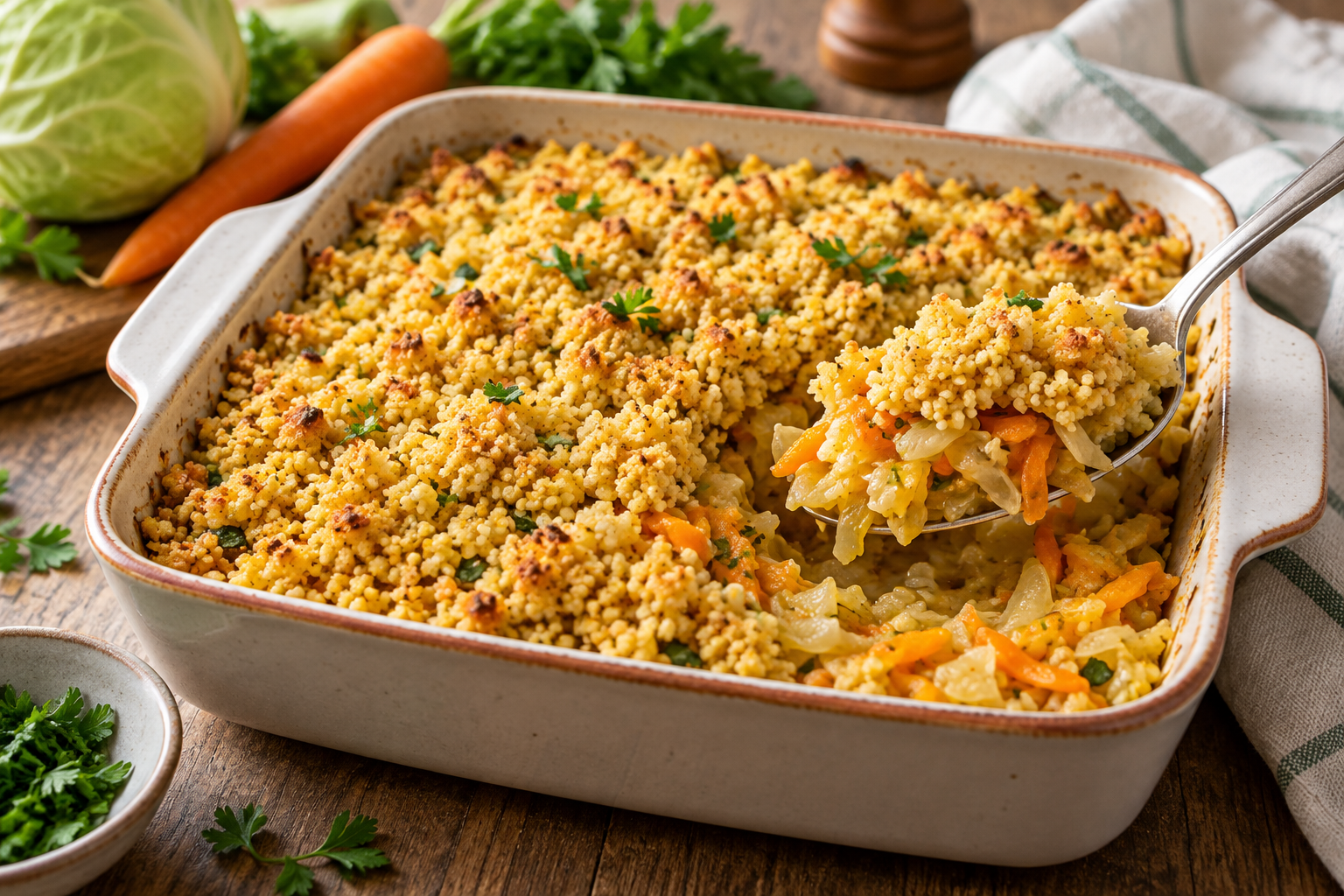
Pearl-millet vegetable crumble
Serves 4 · Preparation 20 min · Cooking 40 min · 5 minutes resting
A modern adaptation for home cooking. Times are approximate.
Ingredients
- 150 g pearl-millet flour, preferably labeled bajra
- 40 g plain wheat flour
- 400 g green cabbage, finely shredded
- 250 g carrot, grated
- 50 ml neutral oil, divided
- 100 ml water for vegetables
- 40–60 ml water for crumbs
- 4 g salt, divided
- 5 g fresh parsley, chopped, optional modern garnish
Method
- Heat oven to 190°C. Heat 15 ml oil in a skillet; add cabbage, carrot, 2 g salt and 100 ml water. Cover and cook 10 minutes until nearly tender.
- Check the liquid: the vegetables should be moist with only a small amount remaining. If there is a large pool, uncover briefly to reduce it. Transfer vegetables and their remaining small amount of liquid to a shallow 20 cm square baking dish.
- Mix both flours and remaining salt. Rub in remaining 35 ml oil; sprinkle in 40 ml water and toss into coarse damp crumbs. A pinched spoonful should hold together, then break apart easily. Use the remaining water gradually only if still powdery, stopping before a sticky dough forms.
- Scatter small loose crumbs over vegetables without pressing. Bake uncovered 25–30 minutes until topping is dry, lightly golden and fully cooked beneath. Check a central crumb for dry flour pockets. If browning runs ahead of cooking, cover loosely to finish and then uncover briefly if needed.
- Rest 5 minutes and serve by spoon, keeping both layers in each portion. Add optional parsley at serving.
Substitutions and adjustments
- Use fine cornmeal instead of pearl millet if unavailable; the cereal identity changes.
- Use 40 g certified gluten-free oat flour instead of wheat for a modern gluten-free version.
Historical choices: Early pearl millet is documented; vegetables, flour combination and this savory crumble format are modern choices.
Troubleshooting: Powdery before baking: toss in a little of the remaining measured water and repeat the pinch test. Soggy underneath: reduce excess vegetable liquid and keep the dish shallow. Brown on top but floury beneath: cover loosely and continue cooking, then uncover to dry the surface. This is a spoonable crumble, not a sliceable pie.
Storage and reheating: Refrigerate up to 3 days. Reheat to 74°C in an oven, covering the filling initially then uncovering to crisp topping.
Kitchen note: Cook flour topping thoroughly; do not taste raw crumbs. Refrigerate perishable leftovers within 2 hours.
Sources and further reading
- Manning et al., 4500-year-old domesticated pearl millet from the Tilemsi Valley. Primary research abstract inspected: northern Mali millet and ceramic temper, c. 2500–2000 BCE; no savory vegetable crumble.
- Fuller et al., Transition from wild to domesticated pearl millet. Primary paper inspected: ceramic temper at Middle Holocene northern Mali sites; no modern vegetable layers or flour crumbs.
Browse Ancient Recipes for Modern Kitchens · More creative work at Incoprea