MODERN KITCHENS · 094 / 100
Butana and Gash crop-domestication traditions · Eastern Sudan · c. 3500–1700 BCE
Evidence: historically informed adaptation. The historical evidence and modern cooking choices are distinguished below.
Pottery impressions help trace sorghum's transformation under cultivation. Butana research examines wild and domestic traits. A wider regional study follows the cereal's development and movement. These impressions are plant evidence, not a preserved cooking formula.
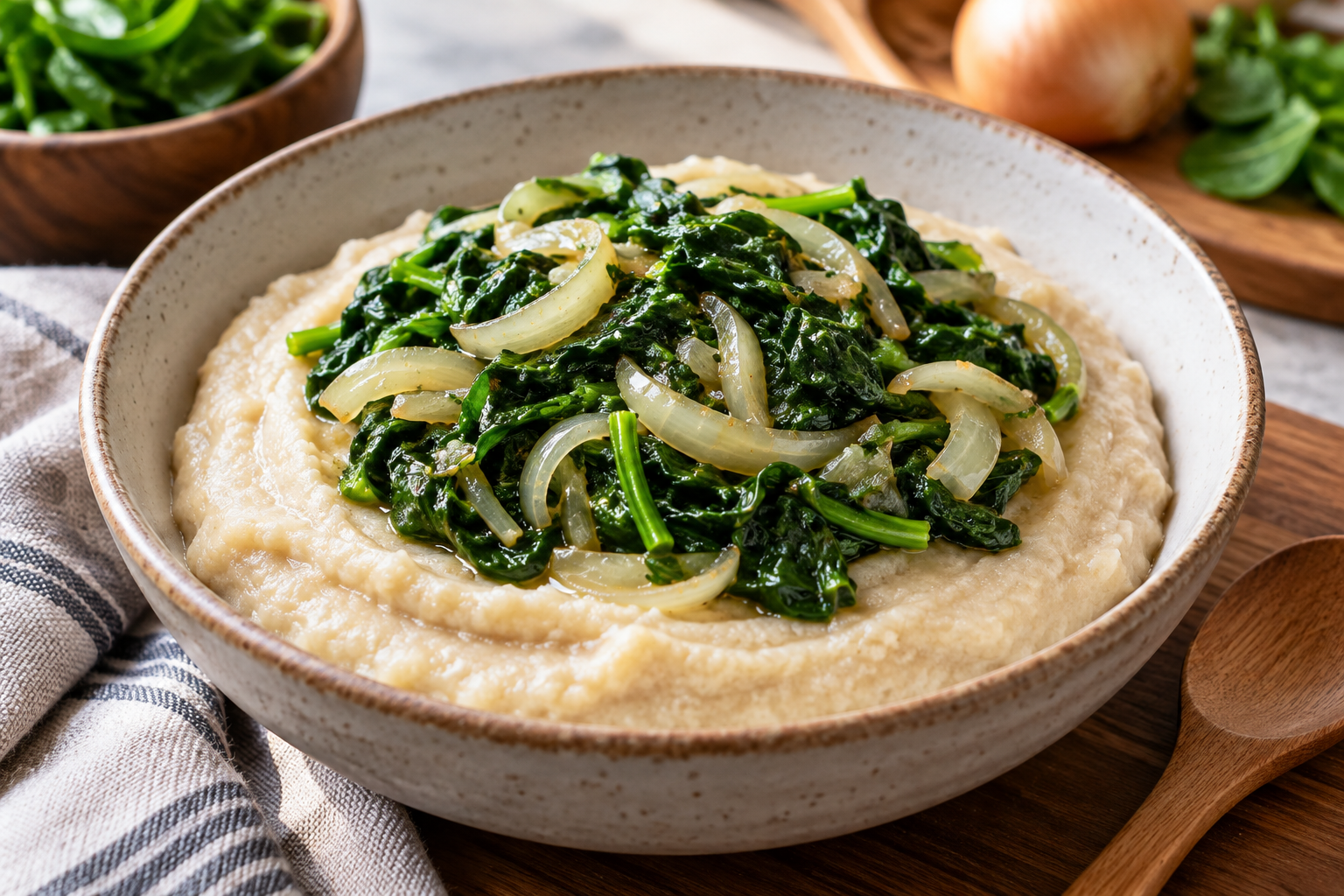
Our savory mash uses commercial sorghum flour, with a simple spinach topping. Spinach, onion and oil are modern choices in this recipe; the sources do not identify their mixture with ancient sorghum. Nor do they show that this smooth flour texture was served in an identical form. We use the crop history as the anchor and write a contemporary method around it.
A cold-water slurry helps prevent flour lumps. Pour it into gently simmering water, then stir steadily as the starch thickens. The mash should be soft enough to spoon, rather than a stiff ball. Cook the greens separately so their brighter texture and flavor contrast with the warm grain base. Ordinary saucepan and skillet heat replace any uncertain historical equipment.
Serve the greens over the mash as a light main or alongside meat. The dish's identity comes from a fully cooked flour gel with a separate vegetable topping, rather than whole-grain breakfast porridge. Easy flour substitutions are provided, but they change the historical crop and remain named as substitutions. Ancient sorghum research inspired the subject; the greens, exact measurements, texture and serving arrangement belong to the modern adaptation.
Soft sorghum mash with sautéed greens
Serves 4 · Preparation 15 min · Cooking 20 min
A modern adaptation for home cooking. Times are approximate.
Ingredients
- 160 g sorghum flour
- 800 ml water, divided
- 250 g washed spinach
- 120 g onion, thinly sliced
- 20 ml neutral oil
- 4 g salt, divided
Method
- Whisk sorghum flour with 250 ml cold water. Bring remaining water and 2 g salt to a simmer.
- Pour in slurry, whisking. Simmer gently 12–15 minutes, stirring frequently, until fully cooked and smooth. Add water if needed for a soft spoonable mash.
- Meanwhile heat oil in a skillet. Soften onion 6–8 minutes, add spinach and remaining salt, and cook 3–4 minutes until wilted.
- Divide hot mash among bowls and top with greens.
Substitutions and adjustments
- Use 160 g fine cornmeal, allowing its package cooking time; this changes the African cereal.
- Use chopped kale instead of spinach and cook 8–10 minutes until tender.
Historical choices: Ancient sorghum impressions supply the crop connection; spinach topping and this soft flour-mash formula are modern.
Troubleshooting: Lumps need firm whisking. A stiff mash needs hot water added gradually.
Storage and reheating: Refrigerate up to 3 days. Reheat to 74°C with water; warm greens separately.
Kitchen note: Cook flour fully; do not taste raw slurry. Refrigerate within 2 hours.
Sources and further reading
- Winchell et al., Evidence for sorghum domestication in fourth-millennium Sudan. Primary paper inspected: mixed wild and domestic sorghum impressions in Butana pottery; no flour mash or modern spinach preparation.
- Fuller and Stevens, Origins and dissemination of African sorghum and pearl millet. Primary cached research discussion inspected: eastern Sudan sorghum cultivation and gradual domestication; no precise cooking recipe.
Browse Ancient Recipes for Modern Kitchens · More creative work at Incoprea