MODERN KITCHENS · 090 / 100
Classic-period Teotihuacan crop context · Central Mexico · c. 100–600 CE
Evidence: historically informed adaptation. The historical evidence and modern cooking choices are distinguished below.
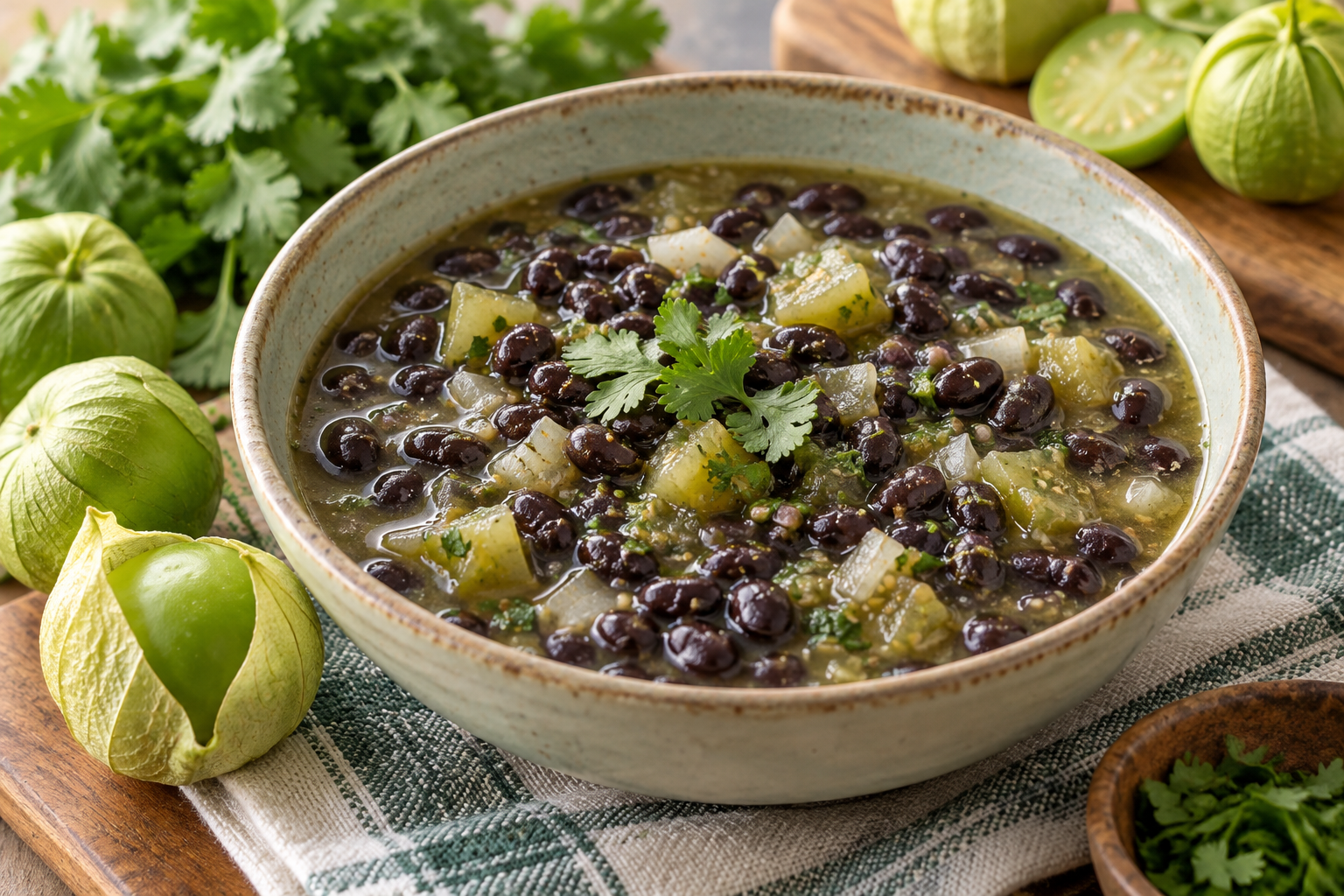
Beans belong to the Teotihuacan plant-resource record. Research discussing its cuisine also includes tomatillo in the regional crop context. These observations do not recover a bean-and-tomatillo soup.
Our formula uses ready-cooked black beans and fresh tomatillos in a modern saucepan. Tomatillos are husked fruits, botanically different from ordinary tomatoes. If they are not sold locally, canned chopped tomatoes make an easy, explicitly different substitute. The historical narrative must not silently treat the two plants as the same ingredient. Onion and oil are present-day choices in this recipe.
Remove the papery husks and wash the sticky surface of each tomatillo. Simmer the chopped fruit until it softens before adding the cooked beans. Mash a small portion of beans into the broth for body, leaving most whole. The soup should be pleasantly tart and substantial, with neither cream nor a complicated spice mixture required.
Serve hot as a light main or lunch. It has a different identity from a wrapped bean tamale or a stuffed squash because the pulse remains in a bright liquid food. The sources supply the regional plants and the caution required when interpreting ancient foods; the pairing, canned convenience, measurements and short simmer are modern decisions. A useful substitution broadens access without becoming an unsupported historical claim.
Black-bean and tomatillo soup
Serves 4 · Preparation 15 min · Cooking 25 min
A modern adaptation for home cooking. Times are approximate.
Ingredients
- 500 g fully cooked canned black beans, drained
- 350 g fresh tomatillos, husked and chopped; or canned chopped tomatoes
- 120 g onion, diced
- 15 ml neutral oil
- 800 ml water
- 3 g salt
- 5 g fresh coriander leaves, chopped, optional modern garnish
Method
- Husk and wash tomatillos. Heat oil in a saucepan and soften onion 5 minutes.
- Add chopped tomatillos and water. Simmer 10–12 minutes until fruit softens completely.
- Add cooked beans and salt. Mash 3 tablespoons beans against the pan to thicken.
- Simmer 8 minutes until piping hot. Thin with hot water if necessary. Scatter optional coriander leaves over each portion.
Substitutions and adjustments
- Use 350 g canned chopped tomatoes where tomatillos are unavailable; flavor and botanical identity differ.
- Canned pinto beans are a modern alternative to black beans.
Historical choices: Teotihuacan bean and tomatillo context anchors the chapter; this soup combination, onion and method are modern.
Troubleshooting: If too tart, add 50 ml water and a little more mashed bean. Avoid adding raw flour as a thickener.
Storage and reheating: Refrigerate up to 3 days or freeze 2 months. Reheat to 74°C.
Kitchen note: Use fully cooked canned beans. Wash tomatillos after husking; refrigerate leftovers promptly.
Sources and further reading
- Plaza of the Columns project, Plant-based Diet and Plants. Project's first-hand flotation research lists maize, beans, squash and amaranth; not proof of our combinations or techniques.
- Cagnato et al., Amorphous carbonized objects and ancient Mesoamerican cuisine. Primary study inspected: Teotihuacan crop context includes tomatillo and complex foods; modern experimental replicas do not establish these exact recipes.
Browse Ancient Recipes for Modern Kitchens · More creative work at Incoprea