MODERN KITCHENS · 087 / 100
Early and Late Archaic plant-resource traditions · Northern coastal Peru · c. 7000–1800 BCE
Evidence: historically informed adaptation. The historical evidence and modern cooking choices are distinguished below.
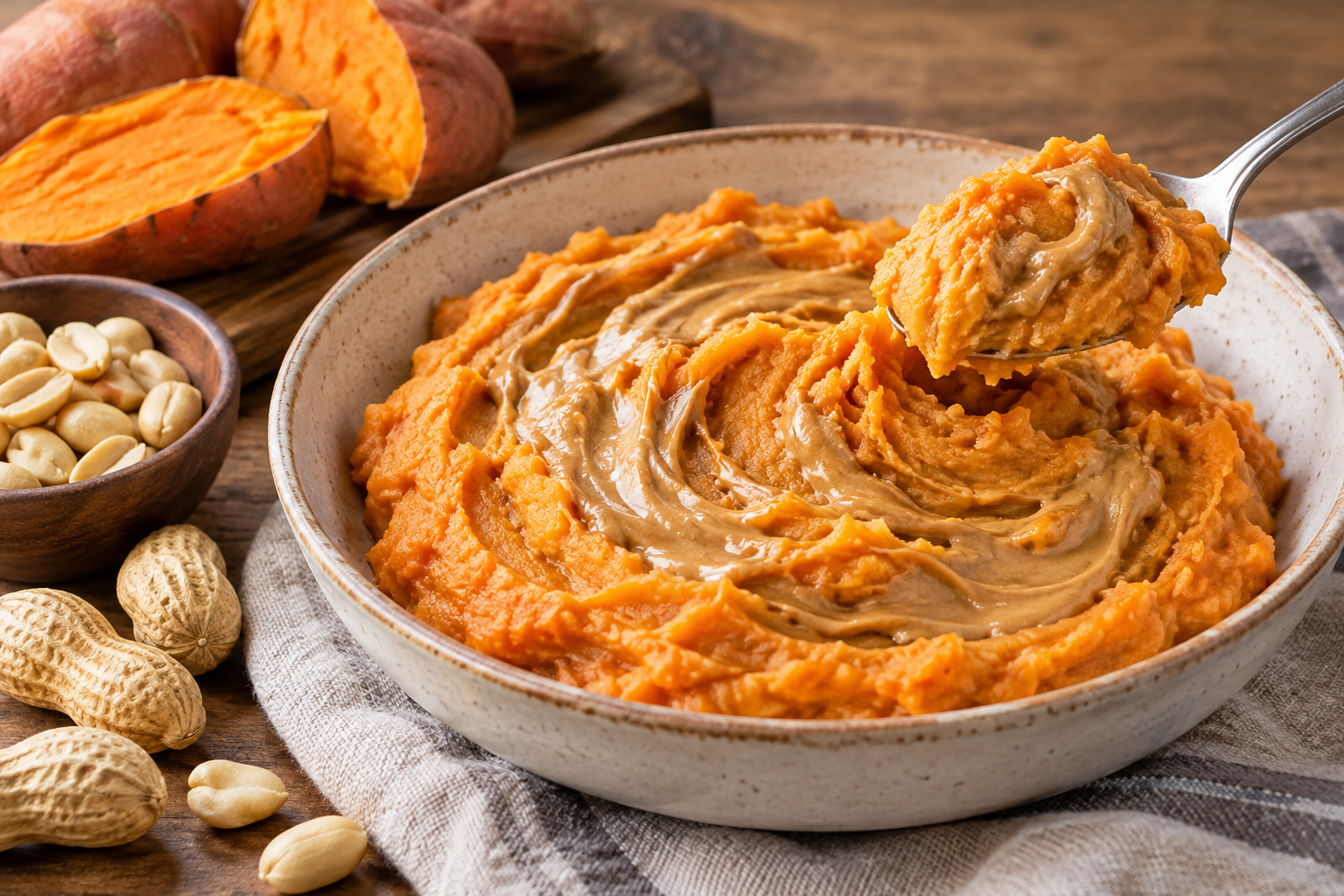
Peanut and sweet potato have separate archaeological stories in northern Peru. Nanchoc dental-starch research identifies peanut consumption in an early crop landscape. Aspero research provides a later sweet-potato connection. These are different sites and periods.
We bring the two resources together in a modern side dish. The combination is not a claim of one excavated ancient recipe, and the long date range belongs to the separate evidence rather than a continuous documented formula. Commercial sweet potatoes and plain peanut butter make the dish usable without shelling, grinding or specialist ingredients. A modern saucepan replaces historical equipment.
Boil the sweet potato pieces until completely tender, then drain them well. Mash with peanut butter while warm so it disperses evenly. The nuts give richness without dairy, while a little lime balances the natural sweetness. Lime juice is an explicitly modern flavor choice in this preparation; it is not projected into the precontact historical evidence.
Serve small warm portions beside vegetables or meat. Keep a little texture if you enjoy a rustic mash, or work it smooth with a potato masher. This is a different food role from a sweet dessert or roasted tuber wedge: the tuber becomes a soft savory accompaniment enriched with nuts. The crop evidence inspired the ingredients, while the pairing, seasoning, texture and measurements were developed as a practical present-day adaptation.
Sweet-potato and peanut mash
Serves 4 · Preparation 15 min · Cooking 20 min
A modern adaptation for home cooking. Times are approximate.
Ingredients
- 800 g commercial sweet potatoes, peeled and 2 cm cubes
- 60 g plain unsweetened peanut butter
- 50–100 ml hot water
- 15 ml lime juice
- 3 g salt
Method
- Put sweet potato in a saucepan and cover with water. Bring to a boil and simmer 15–20 minutes until easily pierced and crushed.
- Drain well and return to the warm pan. Mash with peanut butter and salt.
- Add hot water a tablespoon at a time until soft and spoonable. Stir in lime juice.
- Serve warm, smooth or slightly chunky.
Substitutions and adjustments
- Use sunflower-seed butter for a nut-free modern substitute; the peanut connection is lost.
- Use chunky peanut butter for additional texture.
Historical choices: Peanut and sweet potato evidence comes from separate sites and periods; their mash pairing and lime are modern.
Troubleshooting: Watery mash needs better drainage or a minute over low heat, stirring.
Storage and reheating: Refrigerate up to 3 days or freeze 2 months. Reheat to 74°C with a splash of water.
Kitchen note: Peanuts are an allergen. Use commercial edible tubers and heat through fully; refrigerate promptly.
Sources and further reading
- Piperno and Dillehay, Starch grains on human teeth in northern Peru. Smithsonian-hosted primary-study abstract inspected: ancient peanut consumption and diverse crop resources at Nanchoc; no sweet-potato peanut mash.
- Analysis of starch grains in dental calculus at Aspero. Primary study cached results table inspected: potato, sweet potato, squash, bean and maize starch identifications in 3000–1800 BCE contexts; identifications do not reveal these recipes.
Browse Ancient Recipes for Modern Kitchens · More creative work at Incoprea