MODERN KITCHENS · 085 / 100
Formative crop traditions around Chiripa · Lake Titicaca Basin, Andes · c. 1400–100 BCE
Evidence: historically informed adaptation. The historical evidence and modern cooking choices are distinguished below.
Quinoa belongs to the long agricultural history of the Titicaca Basin. Archaeological research documents its role among regional resources. Work discussing earlier Chiripa evidence provides another crop-history anchor. Neither describes these fritters.
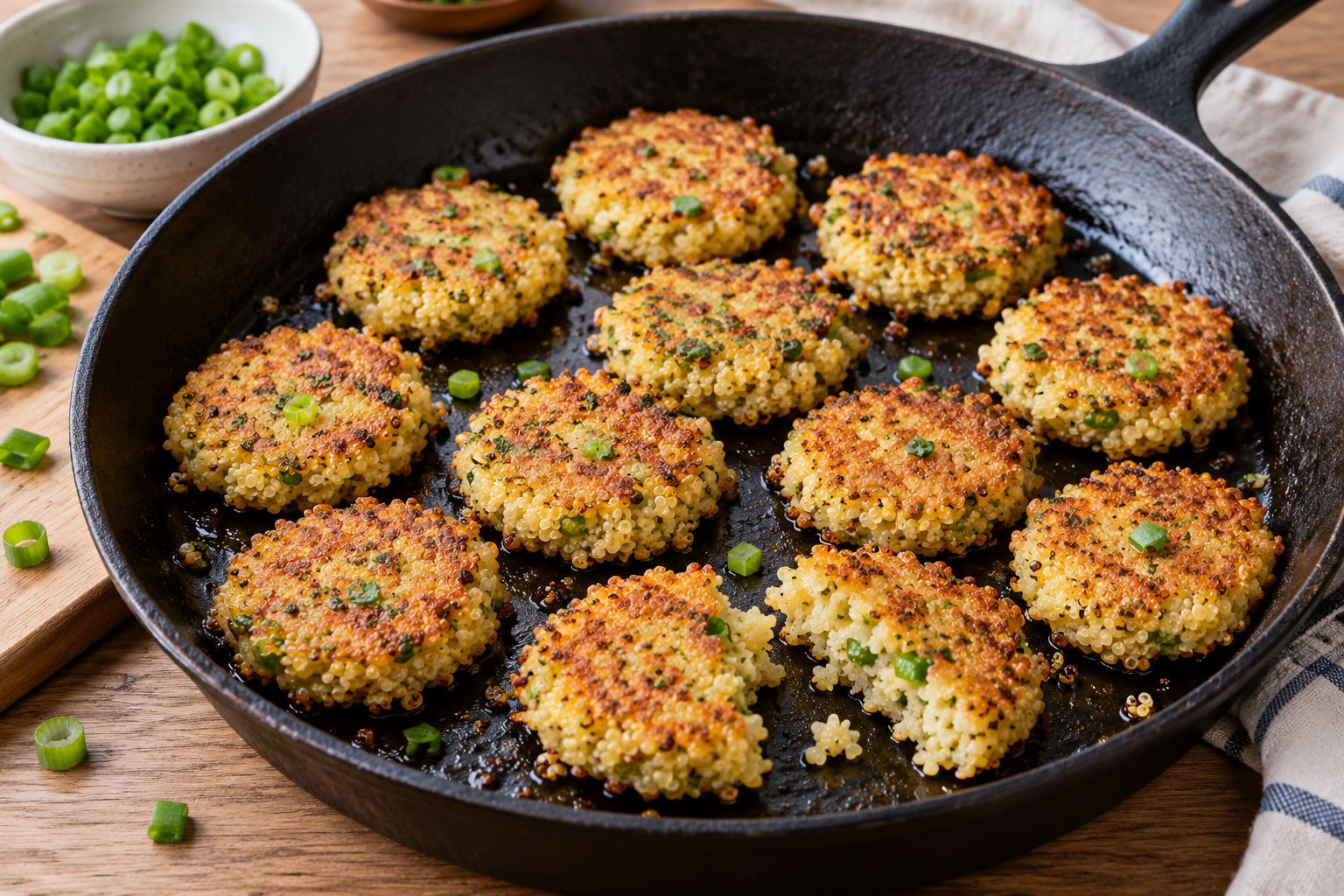
This preparation deliberately changes cooked quinoa into small, crisp-edged cakes. Egg and a little wheat flour are present-day binders, not precontact Andean ingredients claimed by the evidence. Their use is identified so the recipe remains easy to shape with supermarket supplies. The dish is a modern historically informed adaptation, rather than an ancient named fritter or a recovered ritual food.
Let the cooked quinoa cool and lose excess moisture before mixing. The batter should hold a shallow mound on a spoon; if it flows, add a little more flour. Flatten each portion gently in the pan so the center cooks along with the edges. Moderate heat sets the egg while developing a golden surface, and a broad spatula helps with turning.
Serve as a savory light lunch with a fresh salad. The quinoa grains remain distinct inside, creating a texture unlike a smooth flour pancake. This offers a meaningfully different use of the crop from boiling it into soup. The ancient evidence supplies the grain's regional story; the binder, portion size, skillet cooking and complete measurements are modern decisions made for a practical kitchen.
Crisp quinoa skillet fritters
Serves 4 · Preparation 20 min · Cooking 35 min · 20 minutes quinoa cooling; 5 minutes batter rest
A modern adaptation for home cooking. Times are approximate.
Ingredients
- 150 g quinoa, rinsed
- 300 ml water
- 100 g egg, about 2 medium eggs
- 35 g plain wheat flour
- 40 g scallions, finely chopped
- 3 g salt
- 30 ml neutral oil
- 5 g fresh parsley, chopped, optional modern garnish
Method
- Simmer quinoa with measured water, covered, 15 minutes or according to packet until liquid is absorbed and grains tender. Spread in a shallow dish to cool 20 minutes.
- Mix quinoa with eggs, flour, scallions and salt. Rest 5 minutes. It should hold together when pressed.
- Heat half the oil in a nonstick skillet over medium heat. Spoon six shallow cakes, about 1 cm thick, and cook 4–5 minutes per side. Repeat with remaining oil and batter.
- Cook centers to 71°C and surfaces golden. Serve hot. Scatter optional parsley over the hot cakes.
Substitutions and adjustments
- Use rice flour as a modern gluten-free binder; cakes may be more fragile.
- Use cooled quinoa cooked earlier only if promptly refrigerated.
Historical choices: Ancient quinoa is documented; egg, wheat binder and these pan-fried cakes are explicit modern additions.
Troubleshooting: Wet quinoa makes fragile cakes: cool and drain well, then add 10 g flour if necessary.
Storage and reheating: Refrigerate up to 2 days. Reheat to 74°C in a skillet.
Kitchen note: Cook egg-containing centers to 71°C. Cool cooked grain promptly and refrigerate within 2 hours.
Sources and further reading
- Miller et al., Quinoa, potatoes and llamas in the Titicaca Basin. Primary archaeological and isotopic study, cached abstract and crop section inspected; record spans 1400 BCE–1100 CE, here only pre 700 portion used; no quinoa fritter recipe.
- Homeland Food Traditions in the Tiwanaku Colonies. Article inspected for earlier Chiripa quinoa chronology; its later 600–1100 CE colony focus is not used to assert a pre 700 cooking technique.
Browse Ancient Recipes for Modern Kitchens · More creative work at Incoprea