MODERN KITCHENS · 082 / 100
Proto-Three Kingdom food-resource context · Korean peninsula · c. 100 BCE–300 CE
Evidence: historically informed adaptation. The historical evidence and modern cooking choices are distinguished below.
Dietary research can tell us about food categories without revealing a complete dish. Research on early Korean populations examines plants and animal resources in the Proto-Three Kingdom world. Agricultural chronology research gives a longer view of millet's regional history.
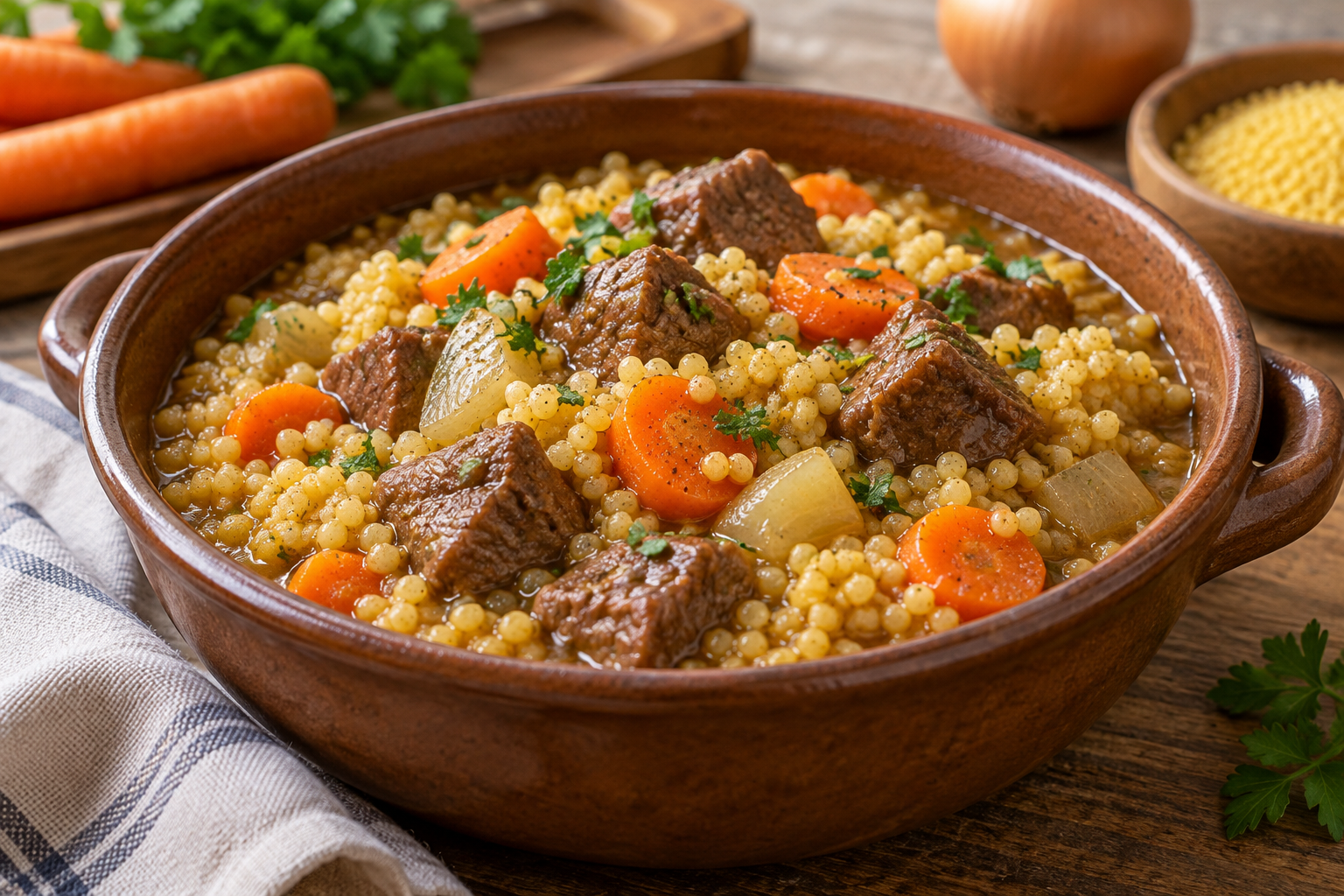
This main course is a modern combination inspired by that setting. Beef and millet are not claimed to have been excavated together as a finished meal. The grain sold today may be a different millet species or cultivar from particular ancient finds. Onion, carrots and measured seasoning make the dish practical and are openly modern choices in this formula. It is not an ancient version of a named contemporary Korean specialty.
Cook the beef until nearly tender before adding millet. The grain takes up the surrounding liquid and turns the pot into a thick main rather than a clear broth. Cut the meat evenly and simmer gently, adding hot water when necessary. A tough stewing cut needs time; speeding the boil does not replace that patient cooking.
Serve generous spoonfuls with both meat and grain visible. The dish differs from a porridge because fork-tender beef and vegetables supply the central meal structure. The source links explain the historical resources and the limits of dietary reconstruction. Our saucepan, exact quantities, order of additions and temperature guidance translate that theme into a workable contemporary dinner without inventing a recovered ancient recipe.
Beef and millet one-pot supper
Serves 4 · Preparation 20 min · Cooking 110 min
A modern adaptation for home cooking. Times are approximate.
Ingredients
- 600 g beef chuck, cut into 3 cm cubes
- 120 g hulled millet, rinsed
- 150 g onion, diced
- 200 g carrot, thickly sliced
- 15 ml neutral oil
- 1.1 litres water
- 4 g salt
- 5 g fresh parsley, finely chopped, optional modern garnish
- 0.5 g ground black pepper, optional modern seasoning
Method
- Heat oil in a heavy saucepan. Brown beef in two batches, 8 minutes total; set aside.
- Soften onion 3 minutes. Return beef, add water and bring to a boil. Cover and simmer gently 70 minutes.
- Add carrots and millet. Simmer partly covered 25–30 minutes, stirring regularly, until millet is soft and beef is fork-tender.
- If beef remains chewy, simmer longer, adding water to avoid scorching. Add salt and serve thick but moist. Add the optional parsley at serving. Add optional pepper to taste.
Substitutions and adjustments
- Hulled foxtail millet is preferable if labeled; common supermarket proso millet is an explicit species substitution.
- Use boneless stewing lamb instead of beef as a modern protein change.
Historical choices: Early Korean dietary and crop research supplies separate resource connections; this beef-millet pot is our modern pairing.
Troubleshooting: Chewy beef needs longer simmering. If millet dries the pot, add 100 ml hot water and stir.
Storage and reheating: Refrigerate up to 3 days or freeze 2 months. Reheat to 74°C.
Kitchen note: Keep raw beef separate. Cook the stew until fork-tender and hot throughout; whole-cut beef must reach at least 63°C with a 3-minute rest.
Sources and further reading
- Choy et al., Enhanced dietary reconstruction of Korean prehistoric populations. Primary study inspected: Mumun and Imdang diets, Proto-Three Kingdom context including cattle and hunting/fishing; no modern beef-millet pot.
- Kim and Park, Millet vs rice in the Korean context. Archaeological synthesis of Korean millet and rice chronology, Early Mumun around 1500 BCE onward; no porridge or salad recipe.
Browse Ancient Recipes for Modern Kitchens · More creative work at Incoprea