MODERN KITCHENS · 081 / 100
Mumun mixed crop traditions · Korean peninsula · c. 1500–300 BCE
Evidence: historically informed adaptation. The historical evidence and modern cooking choices are distinguished below.
Korean agricultural history is more varied than a simple rice-only account. Research comparing millet and rice discusses Mumun farming. A broader archaeological synthesis considers crops alongside continuing wild-resource use. The evidence does not supply a standardized porridge recipe.
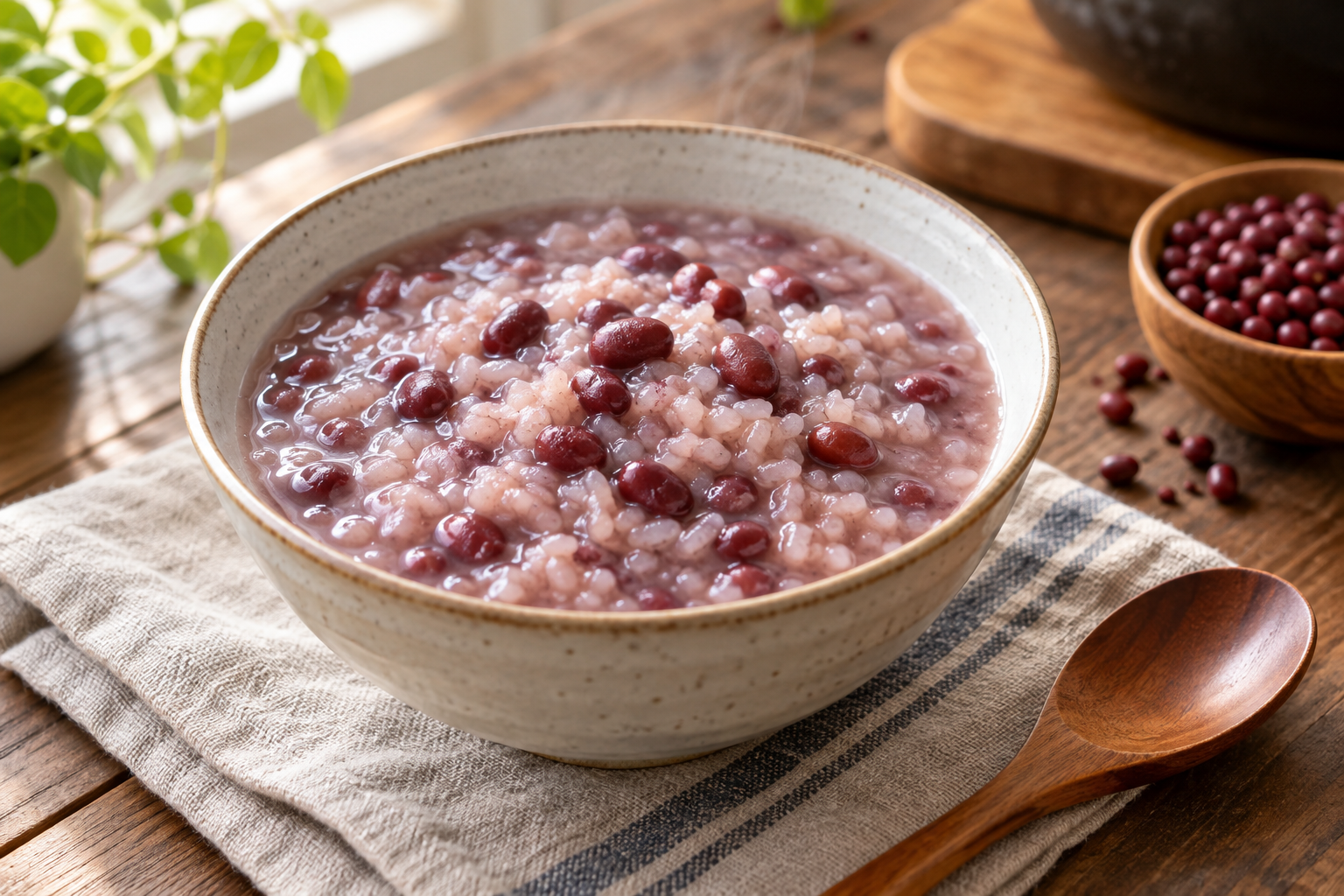
Our recipe combines rice with cooked adzuki beans in a soft, lightly sweet bowl. It is historically informed rather than a claim that today's named Korean red-bean porridge already existed in this exact form. The crop histories, their local chronologies and the modern dish must remain separate. Canned cooked beans make preparation easier; plain kidney beans are an explicit species substitution when adzuki are unavailable.
Cook the rice until the grains begin to open and the surrounding water thickens. Add the ready-cooked beans later, mashing some to color and enrich the liquid. Leaving other beans whole gives the spoon something to find. Sugar is optional in flavor terms but measured here as a modern choice; this can also be served savory.
Serve small warm bowls as breakfast or a light grain course. The soft liquid texture distinguishes it from a shaped millet-and-bean patty or a dry rice side. Our quantities and schedule are contemporary, and refrigeration is part of safe modern handling. The historical introduction asks how regional farming developed, while the recipe offers an accessible response without pretending to recover the food from a particular excavated vessel.
Soft rice and red-bean porridge
Serves 4 · Preparation 10 min · Cooking 40 min
A modern adaptation for home cooking. Times are approximate.
Ingredients
- 130 g white short-grain rice
- 300 g fully cooked plain adzuki beans, drained; or canned kidney beans
- 1.1 litres water
- 20 g sugar, optional
- 2 g salt
Method
- Rinse rice. Bring rice, water and salt to a boil in a large saucepan.
- Simmer partly covered 30 minutes, stirring every 5 minutes, until rice becomes very soft.
- Mash half the cooked beans and add them with the whole beans. Simmer 8–10 minutes, stirring often.
- Add optional sugar. Thin with hot water as needed and serve warm.
Substitutions and adjustments
- Use canned kidney beans if plain adzuki are unavailable; this changes the historical species.
- For savory service omit sugar and season to taste, a modern variation.
Historical choices: Mumun crop diversity supplies context; this rice-bean porridge, sweetness and proportions are not an excavated Korean recipe.
Troubleshooting: If thickening too fast, add water and lower heat. The rice should be soft, not al dente.
Storage and reheating: Cool within 1 hour, refrigerate up to 1 day and reheat once to 74°C.
Kitchen note: Use fully cooked beans, never raw kidney beans. Cool rice promptly and refrigerate at 4°C or colder.
Sources and further reading
- Kim and Park, Millet vs rice in the Korean context. Archaeological synthesis of Korean millet and rice chronology, Early Mumun around 1500 BCE onward; no porridge or salad recipe.
- Stevens and Fuller, The importance of wild resources in early agricultural systems. Archaeological context for Korean rice, legumes and gathered resources; warns of intrusive uncharred rice at some sites, no exact porridge recipe.
Browse Ancient Recipes for Modern Kitchens · More creative work at Incoprea