MODERN KITCHENS · 079 / 100
Jomon aquatic-resource traditions · Japanese archipelago · c. 5000–1000 BCE
Evidence: historically informed adaptation. The historical evidence and modern cooking choices are distinguished below.
Cooking leaves traces even when a meal disappears. Research at Torihama identifies aquatic signatures in Jomon pottery. Later regional research examines continuity across the transition toward agriculture. Neither study recovers this salmon supper.
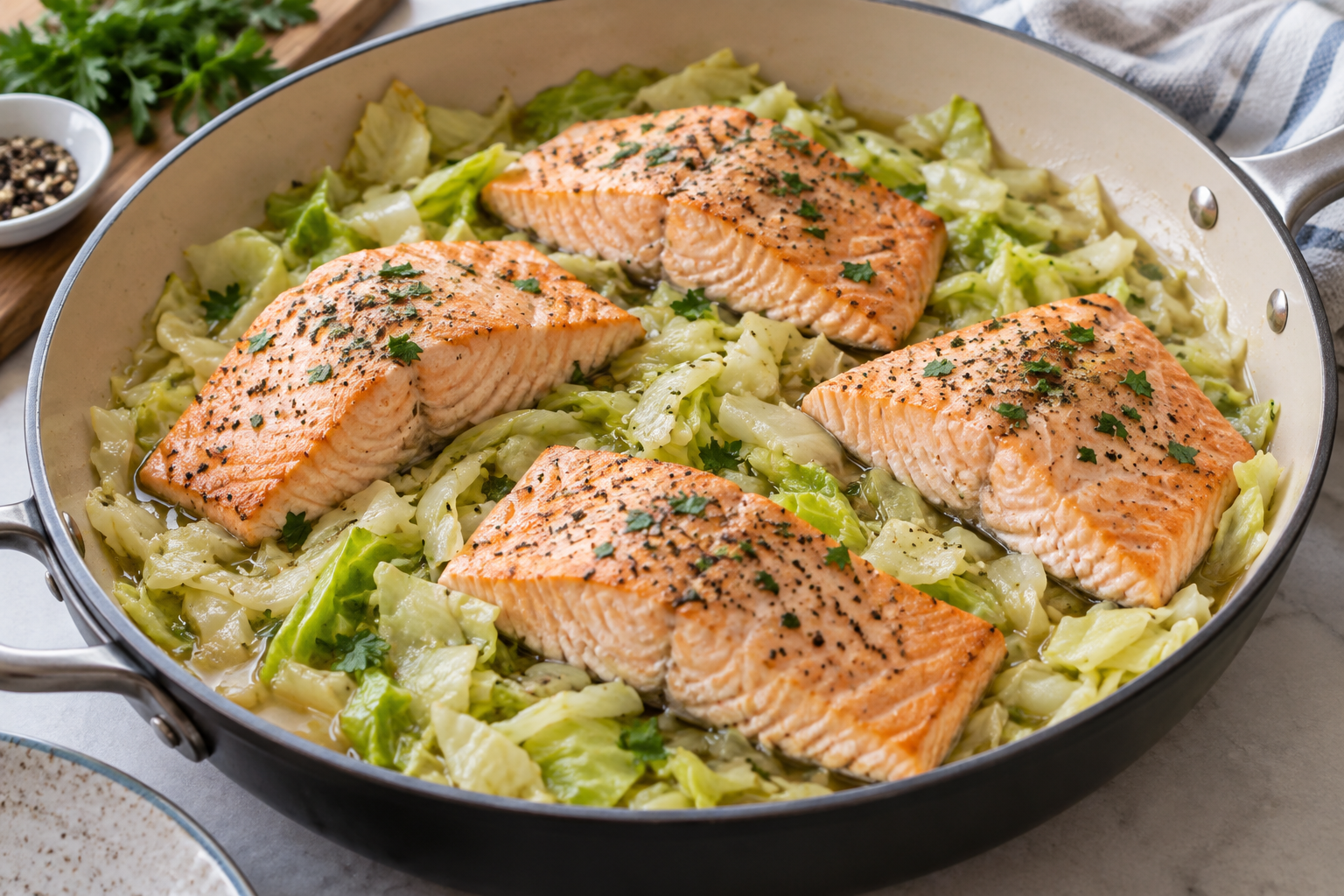
The recipe is a modern adaptation of an aquatic-food theme. Supermarket salmon is our chosen fish, and cabbage, lemon and measured salt are practical modern companions. The chemical signatures do not identify these exact ingredients together, their proportions, or the way we cut the fillets. We do not reproduce an uncertain ancient smoking, drying or storage method.
A covered skillet lets the cabbage soften first, creating a bed on which the fish can cook gently. Cut the salmon into equal portions and arrange them with space between. The liquid needs only a quiet simmer: vigorous boiling can break the fish before its center finishes. Use a thermometer as well as the visual cue of flesh that separates into moist flakes.
Serve this as a substantial fish-and-vegetable main course, spooning a little cooking liquid around each portion. The method uses one pan and a short list of ingredients, making it practical for an ordinary evening. Its archaeological connection is the processing of aquatic foods in pottery; its accessible salmon, vegetable base and precise cooking instructions are modern decisions. The generated illustration represents that contemporary food and adds no historical evidence.
Gently simmered salmon and cabbage
Serves 4 · Preparation 15 min · Cooking 25 min
A modern adaptation for home cooking. Times are approximate.
Ingredients
- 600 g boneless salmon fillet, cut into four portions
- 500 g green or napa cabbage, sliced
- 15 ml neutral oil
- 200 ml water
- 20 ml lemon juice
- 3 g salt
- 5 g fresh parsley, finely chopped, optional modern garnish
- 0.5 g ground black pepper, optional modern seasoning
Method
- Check salmon for pin bones and remove them. Heat oil in a wide covered skillet over medium heat.
- Add cabbage and half the salt; stir 3 minutes. Add water, cover and simmer 7 minutes until cabbage begins to soften.
- Set salmon on cabbage and sprinkle remaining salt. Cover and simmer gently 8–12 minutes until the thickest portion reaches 63°C and flakes easily.
- Add lemon juice and serve fish with cabbage and a spoonful of pan liquid. Add the optional parsley at serving. Add optional pepper to taste.
Substitutions and adjustments
- Use boneless trout or cod; adjust time to thickness.
- Cabbage and lemon are modern vegetable and seasoning choices, not asserted Jomon ingredients.
Historical choices: Jomon pottery supports aquatic-food processing; this chosen fish, cabbage combination and skillet method are modern.
Troubleshooting: If the pan dries, add 50 ml hot water. If fish breaks apart, reduce the simmer.
Storage and reheating: Refrigerate up to 2 days. Reheat gently to 74°C.
Kitchen note: Use commercially sold fish, remove bones and cook thickest portions to 63°C. Refrigerate within 2 hours.
Sources and further reading
- Lucquin et al., Ancient lipids in Japanese pottery. Primary Torihama study inspected: aquatic-resource processing across Jomon phases; does not identify this salmon-cabbage preparation.
- Lundy et al., Culinary continuity in central Japan. Primary residue study inspected: Final Jomon–Early Yayoi continuity and mixed resources; no modern salmon or chestnut soup recipe.
Browse Ancient Recipes for Modern Kitchens · More creative work at Incoprea