MODERN KITCHENS · 076 / 100
Mature Harappan wheat and pulse traditions · Indus Valley, South Asia · c. 2600–1900 BCE
Evidence: historically informed adaptation. The historical evidence and modern cooking choices are distinguished below.
Wheat and lentils belong to Harappa's documented crop world. Recent plant research examines that assemblage. Excavation-report work adds context for processing and plant use. Neither source describes a lentil potpie.
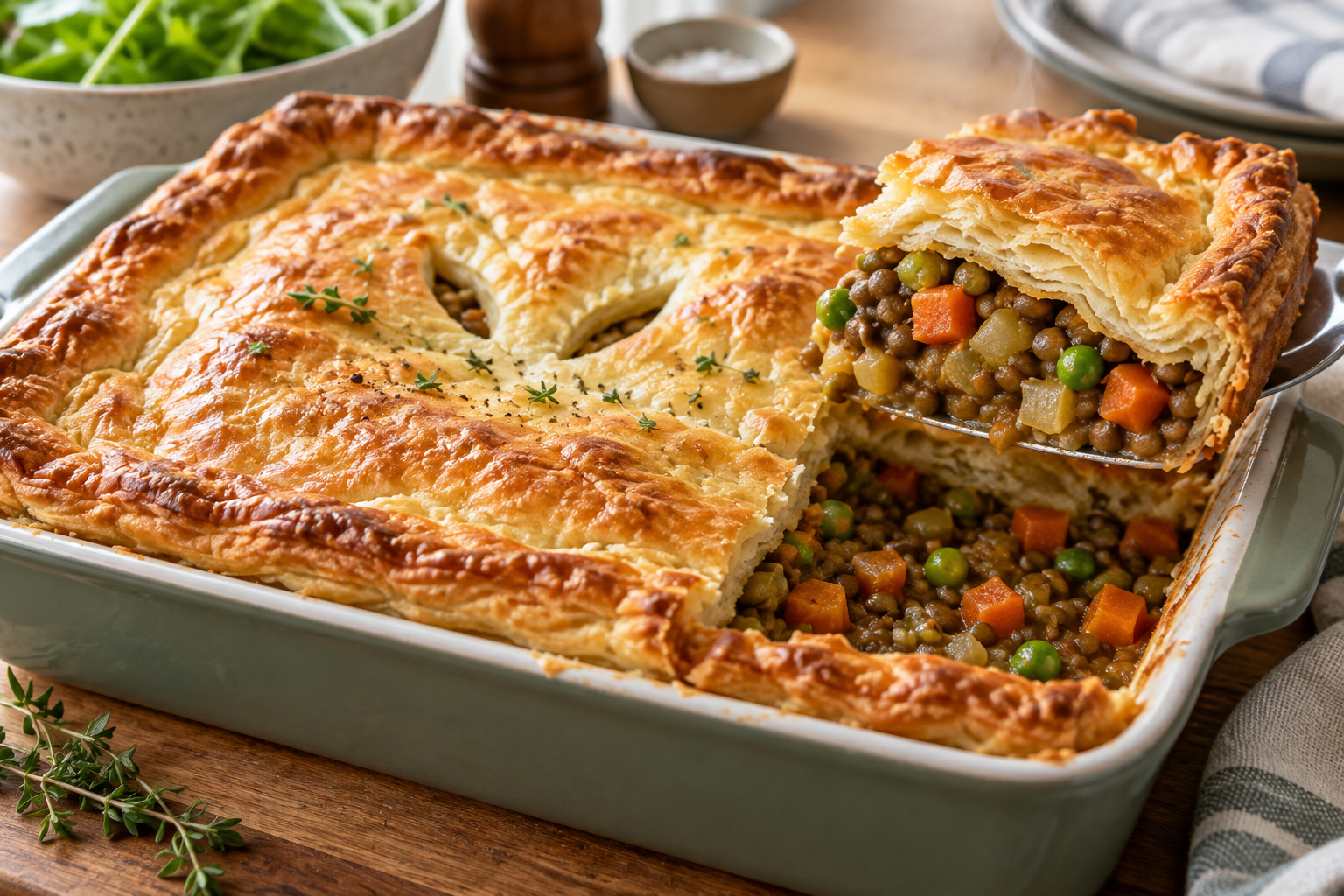
The pastry lid is a deliberate modern invention. We use ready-made puff pastry and canned cooked lentils to keep the preparation manageable, with carrot, onion and frozen peas supplying a familiar vegetable filling. The archaeological evidence does not establish this combination, butter-rich pastry, or an oven-baked pie. The historical connection belongs to wheat and pulses; the dish's form belongs to this collection.
Soften the vegetables before assembling the pie, then thicken their liquid with a little flour. The filling should be moist but not a thin soup, since excess water can leave the pastry underside soggy. Let the saucepan stop steaming heavily before covering it. A shallow ordinary baking dish lets the filling heat evenly while the pastry develops a golden top.
Serve generous spoonfuls with a piece of crisp lid. This is a substantial vegetarian main, distinct from grain-and-pulse pilaf or soup because a separate pastry layer completes the baked dish. Practical products shorten the work without becoming invisible historical assumptions. Ancient crop evidence inspired the ingredients, while the savory filling, lid, quantities, texture cues and modern oven schedule were written here.
Lentil and vegetable potpie
Serves 4 · Preparation 20 min · Cooking 50 min · 10 minutes filling cooling; 10 minutes final resting
A modern adaptation for home cooking. Times are approximate.
Ingredients
- 500 g fully cooked canned brown lentils, drained
- 200 g carrot, finely diced
- 120 g onion, diced
- 120 g frozen green peas
- 15 g plain wheat flour
- 250 g ready-made puff pastry, thawed according to packet
- 20 ml neutral oil
- 350 ml water or low-salt vegetable stock
- 4 g salt, adjusted for stock
- 1 g dried thyme, optional modern seasoning
Method
- Heat oil in a saucepan over medium heat. Soften onion and carrot 7 minutes. Stir in flour and cook 1 minute.
- Add water gradually, stirring. Simmer 10 minutes until carrot is tender and liquid lightly thickened. Add lentils, peas and salt; simmer 3 minutes until piping hot. Stir in the optional thyme with the lentils.
- Heat oven to 200°C. Transfer filling to a shallow 20 × 25 cm baking dish and let stand 10 minutes.
- Lay pastry over filling, trim excess and press onto dish rim. Cut two small steam vents. Bake 25–30 minutes until pastry is golden, fully cooked beneath and filling bubbling.
- Rest 10 minutes. Serve four portions, each with filling and pastry.
Substitutions and adjustments
- Use plain canned white beans instead of lentils for a modern change of pulse.
- Use a ready-made shortcrust pastry lid and follow its packet baking guidance; pastry format remains modern.
Historical choices: Harappan wheat and lentils supply separate crop evidence; vegetables, commercial pastry and this potpie format are modern inventions.
Troubleshooting: A wet filling needs a few uncovered simmering minutes before assembly. If lid browns before filling bubbles, cover loosely with foil.
Storage and reheating: Refrigerate up to 3 days or freeze 1 month. Reheat to 74°C in a covered oven dish, uncovering briefly to restore crust.
Kitchen note: Use fully cooked lentils. Bake pastry thoroughly, follow package handling instructions and refrigerate leftovers within 2 hours.
Sources and further reading
- James et al., Taphonomy and labour at Harappa. Primary paper inspected, especially pp. 4–5: barley, wheat, lentil, pea, small chickpea quantities; charred finds have multiple pathways and do not preserve these recipes.
- Miller, Urban Palaeoethnobotany at Harappa. Excavation-report context emphasizes combining plant remains with archaeological context; no exact bread, soup or dumpling recipe.
Browse Ancient Recipes for Modern Kitchens · More creative work at Incoprea