MODERN KITCHENS · 075 / 100
Mature Harappan plant-resource traditions · Indus Valley, South Asia · c. 2600–1900 BCE
Evidence: historically informed adaptation. The historical evidence and modern cooking choices are distinguished below.
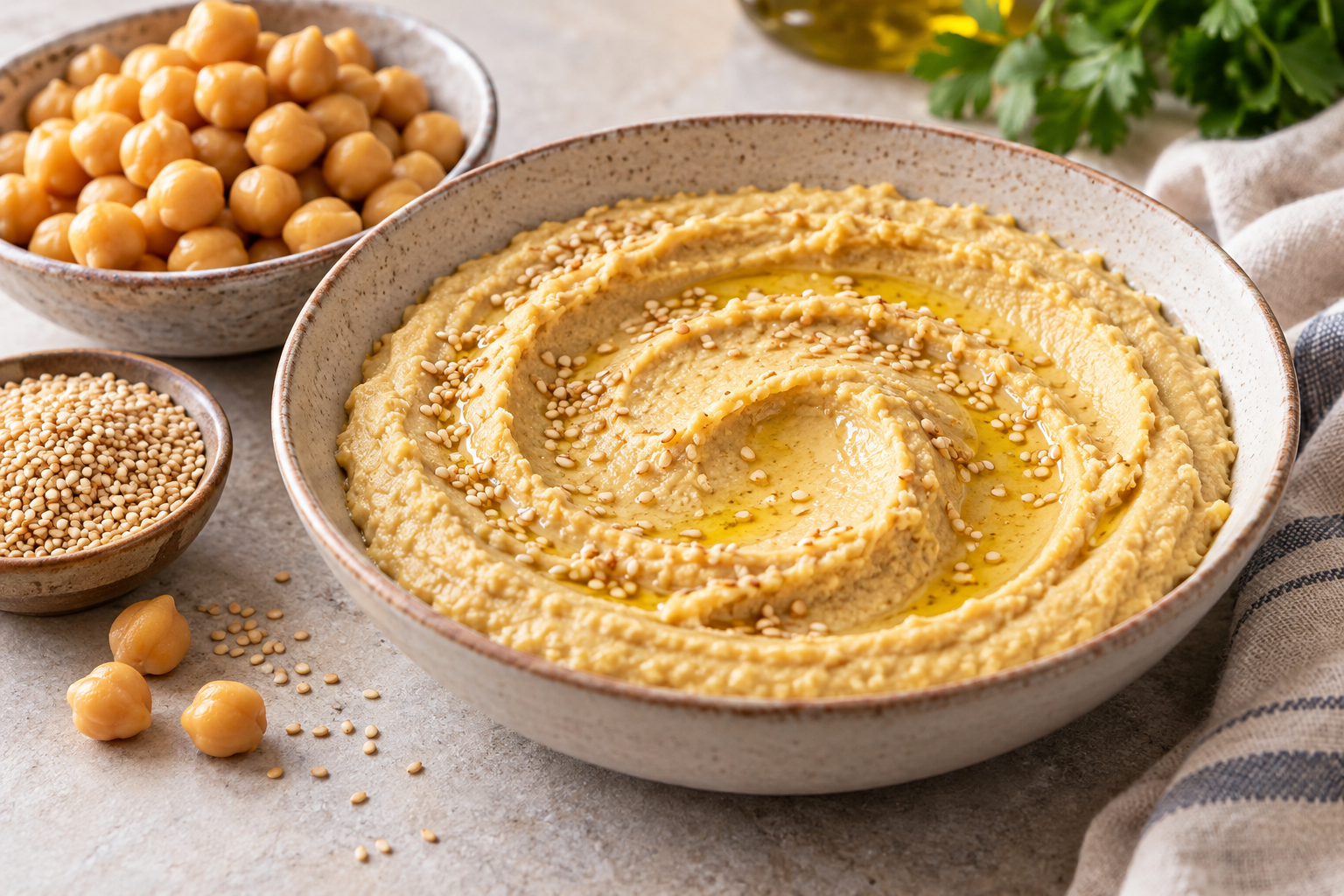
Chickpeas and sesame offer separate connections to Indus farming. The Harappa crop study reports chickpea in small quantities. Research on oilseeds and flavor examines sesame and warns against overinterpreting plant presence.
The spread below is deliberately modern. No cited source recovers a Harappan chickpea-sesame dip, proves these plants were eaten together, or supplies lemon juice and a food processor. We combine ready-cooked chickpeas with toasted seeds because the result makes a useful sandwich filling or accompaniment to bread. Its historical interest lies in the crops; its culinary arrangement belongs to this collection.
Lightly toasted sesame gives texture as well as flavor. Grind it first, then add the beans and water, so whole seeds do not remain throughout an otherwise smooth mixture. The chickpeas must already be cooked. Canned beans make the recipe short and spare the cook a long soak and simmer, without hiding that modern convenience.
Adjust the consistency to the meal: use less water for a thick filling, or a little more for a dip. Fresh cucumber sticks can accompany it as a present-day serving suggestion, without becoming another archaeological claim. The clear distinction between ancient ingredients and a modern spread matters more than attaching an ancient name to something the evidence cannot identify. Here, careful sourcing and practical cooking share the page, each with its own limits.
Toasted-sesame chickpea spread
Serves 6 · Preparation 15 min · Cooking 5 min · 5 minutes sesame cooling
A modern adaptation for home cooking. Times are approximate.
Ingredients
- 400 g canned chickpeas, drained and rinsed
- 40 g sesame seeds (about ¼ cup)
- 20 ml neutral oil
- 25 ml lemon juice
- 70–100 ml water
- 3 g salt
Method
- Toast sesame in a dry skillet over medium-low heat 3–4 minutes, stirring, until fragrant and pale golden. Cool 5 minutes.
- Grind seeds in a small food processor, then add chickpeas, oil, lemon, salt and 70 ml water.
- Process until smooth, scraping sides. Add remaining water by tablespoons to obtain a spreadable consistency.
- Taste and serve with bread or washed vegetable sticks.
Substitutions and adjustments
- Use 35 g commercial tahini instead of whole sesame; omit toasting.
- For a sesame allergy, omit sesame and add 15 ml extra oil; the historical seed connection is lost.
Historical choices: Chickpea and sesame finds support individual crop histories; this dip, lemon and appliance method are modern.
Troubleshooting: If gritty, process longer with 1 tablespoon water. If loose, blend in additional drained chickpeas.
Storage and reheating: Refrigerate in a covered container up to 3 days. Stir before serving.
Kitchen note: Use fully cooked canned chickpeas. Sesame is an allergen; refrigerate the finished spread within 2 hours at 4°C or colder.
Sources and further reading
- James et al., Taphonomy and labour at Harappa. Primary paper inspected, especially pp. 4–5: barley, wheat, lentil, pea, small chickpea quantities; charred finds have multiple pathways and do not preserve these recipes.
- Bates, Oilseeds, spices, fruits and flavour in the Indus Civilisation. Primary review inspected including sesame and the explicit warning against assuming every excavated plant was a human food; does not attest chickpea-sesame dip.
Browse Ancient Recipes for Modern Kitchens · More creative work at Incoprea