MODERN KITCHENS · 071 / 100
Han-period Xiawanggang food landscape · Central China · c. 200 BCE–200 CE
Evidence: historically informed adaptation. The historical evidence and modern cooking choices are distinguished below.
A history of meat begins before the cooking pot. Zooarchaeological research at Xiawanggang includes pigs from Han-period contexts. Isotopic research on earlier northern Chinese pigs explores how people fed and managed them. Neither study provides a cabbage-braise recipe.
This is a modern historically informed adaptation centered on commercially raised pork. Cabbage and ginger supply a practical present-day vegetable base; their use together with pork in this formula is not claimed as an excavated combination. Soy sauce is convenient modern seasoning here, not a dating shortcut. The dish does not imitate raw meat preparations or the uncertain preservation of historical animal foods.
Use shoulder rather than a lean chop. Its connective tissue needs patient moist cooking, and becomes more tender while a lean cut can dry out. Brown the cubes in two batches, then add enough water for a gentle covered simmer. The cabbage goes in late so it softens without spending the entire braising time in the pan.
The finished pot should have fork-tender meat, sweet soft cabbage and a little concentrated broth. Serve it with plain rice or steamed bread. Its substantial main-course role differs from a quick vegetable side or a delicate soup. An ordinary covered saucepan supplies controlled heat, while the written texture cues tell a cook when to continue simmering. The ingredient connection is historical; the domestic kitchen method, modern seasonings and complete measurements are ours.
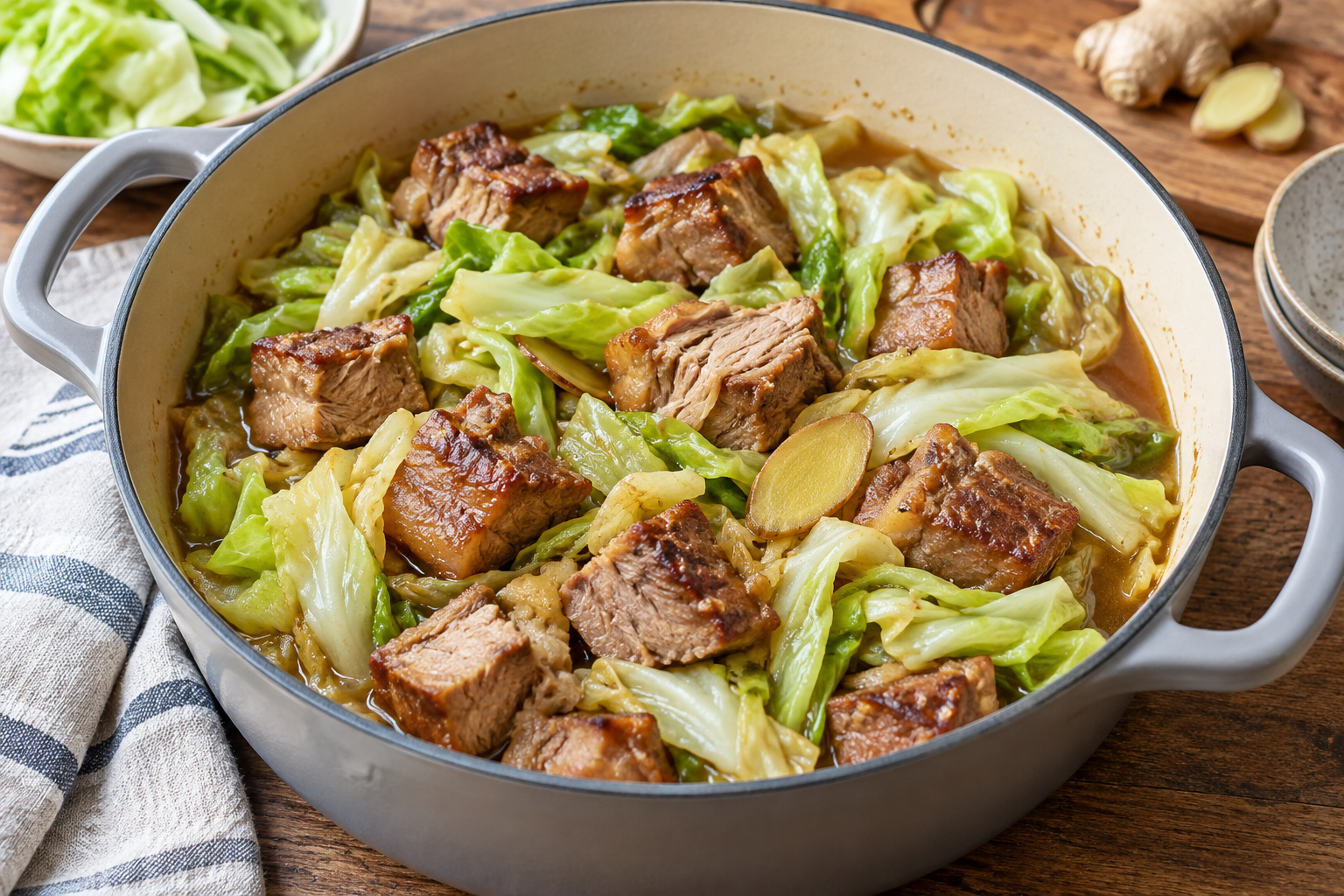
Slow pork and cabbage braise
Serves 4 · Preparation 20 min · Cooking 105 min
A modern adaptation for home cooking. Times are approximate.
Ingredients
- 650 g boneless pork shoulder, 3 cm cubes
- 500 g green cabbage, thickly sliced
- 15 g fresh ginger, peeled and sliced
- 15 ml neutral oil
- 25 ml reduced-salt soy sauce
- 600 ml water
- 15 ml white wine or cider vinegar
Method
- Heat oil in a heavy saucepan over medium-high heat. Brown pork in two batches, about 8 minutes total.
- Add ginger, soy sauce and water. Bring to a boil, cover and simmer gently 70 minutes, stirring occasionally.
- Add cabbage and vinegar. Cover and simmer 20–25 minutes until pork breaks apart readily with a fork.
- If pork remains chewy, cook another 15–20 minutes, adding water as needed. Uncover briefly to reduce excess broth.
Substitutions and adjustments
- Use napa cabbage for a softer result; add it only for the final 15 minutes.
- Use 4 g salt instead of soy sauce for a simpler seasoning; this is still a modern choice.
Historical choices: Han pigs anchor the history; cabbage, soy sauce and this braising formula are modern choices, not an attested ancient dish.
Troubleshooting: A chewy shoulder needs more gentle simmering. A dry pan needs 100 ml hot water.
Storage and reheating: Refrigerate up to 3 days or freeze 2 months. Reheat to 74°C.
Kitchen note: Keep raw pork separate from ready-to-eat food. This long braise must reach at least 63°C with a 3-minute rest; continue much longer for fork tenderness.
Sources and further reading
- Cucchi et al., Social Complexification and Pig Husbandry in Ancient China. Xiawanggang sequence includes Han pigs around 200 BCE–200 CE; cabbage-braise combination is invented.
- Dong et al., Stable isotopes reveal intensive pig husbandry. Early northern Chinese pig feeding and later textual context; no modern braise recipe.
Browse Ancient Recipes for Modern Kitchens · More creative work at Incoprea