MODERN KITCHENS · 069 / 100
Late classical Chinese wheat-food context · Northern China · c. 200–600 CE
Evidence: historically informed adaptation. The historical evidence and modern cooking choices are distinguished below.
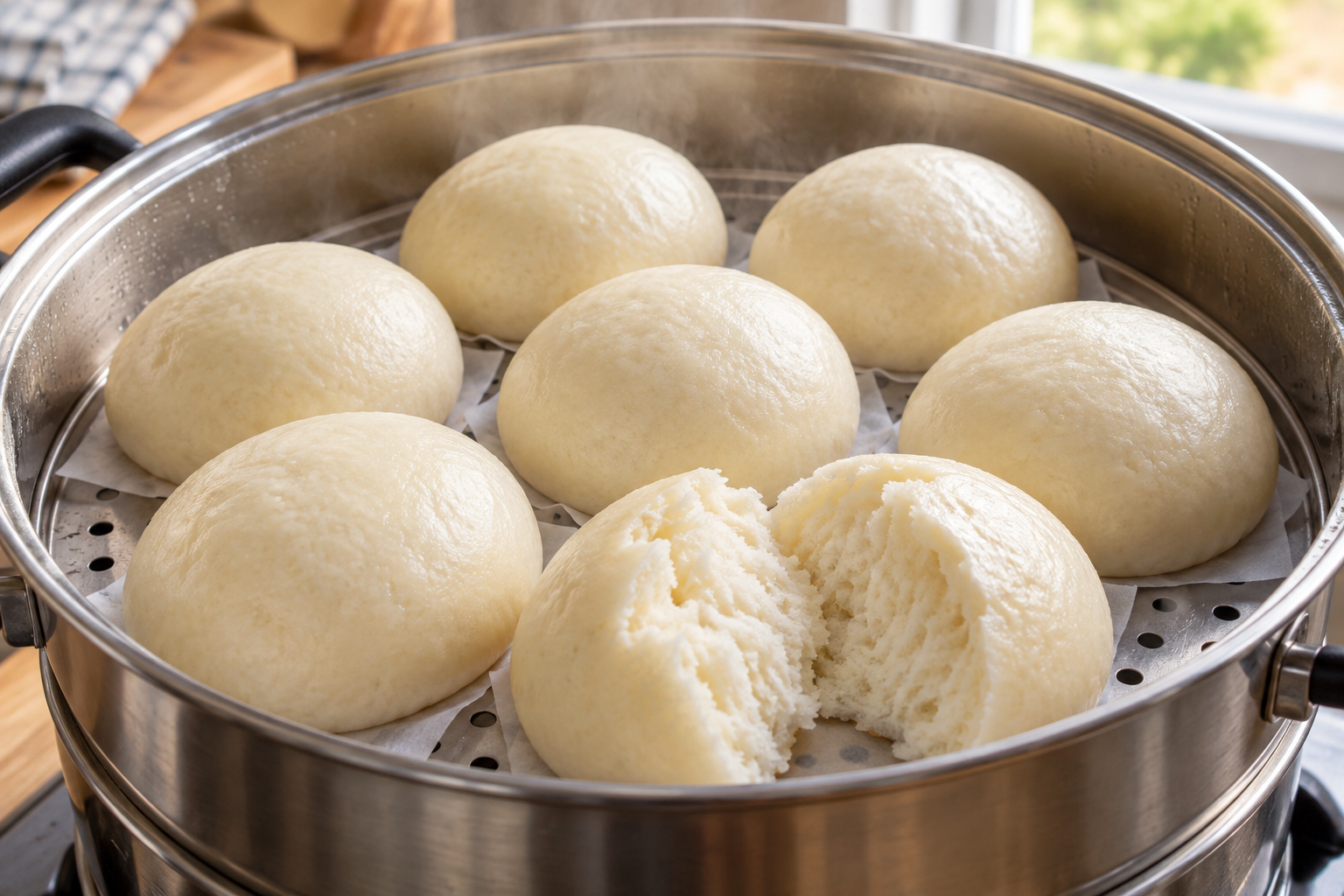
A wheat seed can travel farther than the finished food made from it. Research on Chinese wheat chronology warns against accepting every early find at face value. Han crop research also shows that grain preferences differed by region.
These rolls belong to a modern cooking exercise inspired by that history. They are not presented as a recovered Han formula or as proof that today's named mantou existed in an identical form. White supermarket flour, commercial yeast and measured warm water give a manageable dough. The historical connection is wheat in ancient China; the exact dough and the roll shape are our choices.
Steam produces a pale, soft surface rather than the browned crust of oven bread. An ordinary metal steamer or colander set above a saucepan works well when covered securely. Small pieces of baking paper keep the rolls from sticking. Leave space between them, since they expand as they cook, and keep the boiling water beneath the food rather than touching it.
Serve these plain rolls with a stew so they absorb some of its juices. Their quiet flavor and yielding crumb make them useful as a meal component. The proofing cues matter more than an exact clock: a cold kitchen can slow the rise. This deliberately simple preparation lets a cook compare steaming with baking while keeping the uncertain history of particular flour foods separate from the solid history of the grain itself.
Soft steamed wheat rolls
Serves 8 · Preparation 25 min · Cooking 40 min · 85–115 minutes rising; 3 minutes covered rest after each batch
A modern adaptation for home cooking. Times are approximate.
Ingredients
- 300 g plain all-purpose wheat flour, plus 15 g for dusting
- 180 ml lukewarm water, about 35–40°C
- 4 g instant yeast
- 10 g sugar (2 teaspoons)
- 3 g salt
- 10 ml neutral oil (2 teaspoons)
Method
- Mix flour, yeast, sugar and salt. Add water and oil; knead 8 minutes into a smooth soft dough.
- Cover and let rise 60–90 minutes until roughly doubled. Divide into eight pieces and shape round rolls.
- Place four rolls at a time on small baking-paper squares in a steamer, leaving 3 cm between. Keep the other four covered. Rest 25 minutes until visibly puffy.
- Bring water beneath the basket to a steady boil. Steam the first four rolls covered for 15–18 minutes. Turn off heat and wait 3 minutes before lifting them out. Refill water if necessary, bring back to a boil and steam the second four the same way.
- After each batch, open the lid away from your face. A roll should have no wet dough in its center; steam a few minutes longer if needed.
Substitutions and adjustments
- Use active dry yeast, first dissolved in the measured water, if needed.
- Replace 75 g plain flour with wholewheat flour, adding 10–15 ml water if the dough feels stiff.
Historical choices: Wheat-food history inspires the dish, but commercial yeast, quantities and shaping are modern; no exact ancient mantou recipe is claimed.
Troubleshooting: Dense rolls usually need longer proofing. If wet inside, steam 5 more minutes.
Storage and reheating: Keep cooled rolls airtight for 1 day, refrigerate up to 3 days, or freeze 2 months. Steam to heat through.
Kitchen note: Do not taste raw dough. Steam until the center is fully cooked. Open the lid carefully to avoid steam burns.
Sources and further reading
- Deng et al., Assessing wheat in late Neolithic central China. Direct dating and historical context for Chinese wheat; does not date these yeast rolls.
- Liao et al., The Millet of the Matter. Han-period crop context and regional differences; soybean and rice finds are contextual, not proof of the proposed preparations.
Browse Ancient Recipes for Modern Kitchens · More creative work at Incoprea