MODERN KITCHENS · 068 / 100
Neolithic to early imperial crop traditions · Northern China · c. 2000 BCE–220 CE
Evidence: historically informed adaptation. The historical evidence and modern cooking choices are distinguished below.
A humble bean gives this soup its historical starting point. Archaeobotanical research places soybeans within northern China's ancient crop landscape. Han-period crop studies supply later context. Neither source preserves this soup.
The recipe is a historically informed adaptation: cooked soybeans meet mushrooms in a light, scallion-scented broth. The mushrooms, exact combination and seasoning are modern choices. We are not calling this an excavated dish or suggesting that modern canned beans duplicate ancient varieties. Canned white beans provide an easy supermarket alternative, with the species change kept visible.
Browning the mushrooms before adding water gives the otherwise simple soup a deeper flavor. Keep their slices thick enough to hold their shape, then simmer them briefly with the ready-cooked beans. Crushing a small spoonful of beans against the pan thickens the broth without flour, cream or a blender. The desired result remains spoonable rather than a smooth purée.
This makes a light lunch with bread or a useful first course. Its historical connection is the soybean, while its practicality comes from modern preparation and packaging. Serve it hot in modest bowls, allowing the beans and mushroom slices to remain visible. The accompanying generated image depicts that present-day food; it cannot establish what ancient cooks prepared or how this recipe performs in a real kitchen.
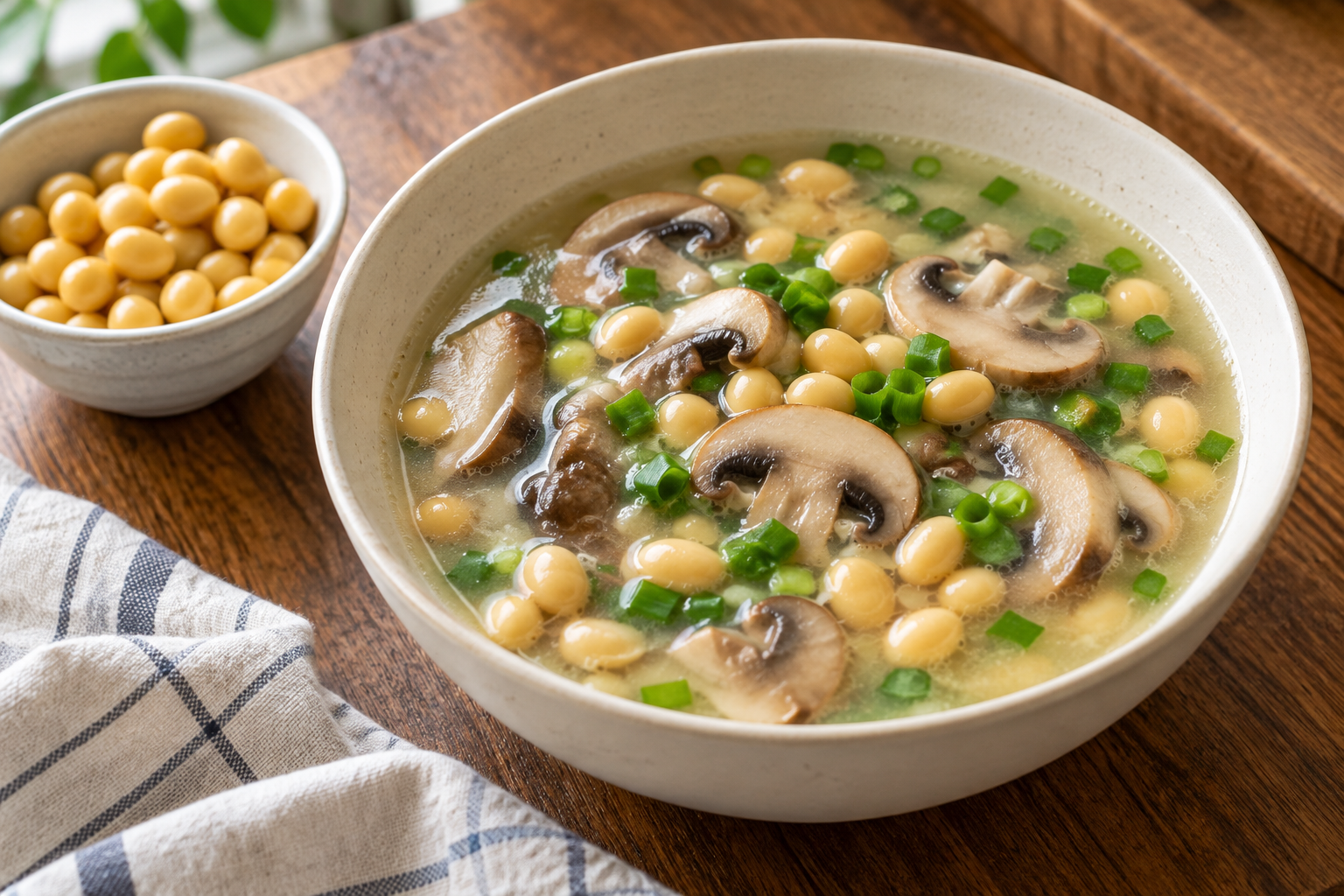
Soybean and mushroom soup
Serves 4 · Preparation 15 min · Cooking 20 min
A modern adaptation for home cooking. Times are approximate.
Ingredients
- 400 g fully cooked canned yellow soybeans, drained; or canned white beans
- 250 g brown mushrooms, sliced
- 50 g scallions, thinly sliced
- 15 ml neutral oil (1 tablespoon)
- 900 ml water or low-salt vegetable stock
- 3 g salt, less if using salted stock
Method
- Heat oil in a saucepan over medium-high heat. Cook mushrooms 6–8 minutes until their liquid evaporates and edges brown.
- Add scallion whites and stir 1 minute. Add beans, water and salt.
- Bring to a boil, then simmer 10 minutes. Mash 2 tablespoons of beans against the side and stir them back through.
- Add scallion greens. Serve when beans are piping hot and mushrooms are tender.
Substitutions and adjustments
- Use canned white beans if soybeans are unavailable; this explicitly changes the historical crop.
- Frozen shelled edamame can replace canned soybeans; simmer 5–8 minutes or follow package directions before the final step.
Historical choices: Ancient soybean evidence supplies the anchor; this mushroom soup and all quantities are modern.
Troubleshooting: If watery, mash more beans; if too thick, add hot water 30 ml at a time.
Storage and reheating: Refrigerate up to 3 days or freeze up to 2 months. Reheat to 74°C, stirring.
Kitchen note: Use beans already fully cooked. Do not put raw dried soybeans into this short-cooking soup. Refrigerate within 2 hours at 4°C or colder.
Sources and further reading
- He et al., Coupled and decoupled legumes and cereals in prehistoric China. Archaeobotanical synthesis supports northern Chinese soybeans alongside millets; no mushroom soup or salad recipe.
- Liao et al., The Millet of the Matter. Han-period crop context and regional differences; soybean and rice finds are contextual, not proof of the proposed preparations.
Browse Ancient Recipes for Modern Kitchens · More creative work at Incoprea