MODERN KITCHENS · 067 / 100
La Tène cereal evidence with explicitly modern soup construction · Lower Austria, Central Europe · Later European Iron Age/La Tène context, approximately 450 BCE–1 CE
Evidence: historically informed adaptation. The historical evidence and modern cooking choices are distinguished below.
Wheat can become a small dumpling without that shape being archaeologically established. La Tène crop research in Lower Austria supplies wheat evidence, and the Ashmolean Museum period note frames the later Iron Age. Neither preserves a dumpling recipe or proves that the sampled settlements served mushroom broth.
The historical context is approximately 450 BCE–1 CE. Cultivated supermarket mushrooms are a modern convenience, explicitly separate from the crop evidence. This is a new vegetarian soup, designed for a saucepan and two spoons. It does not require wild-fungus identification, historical vessels or the claim that every plausible cereal preparation must have been ancient.
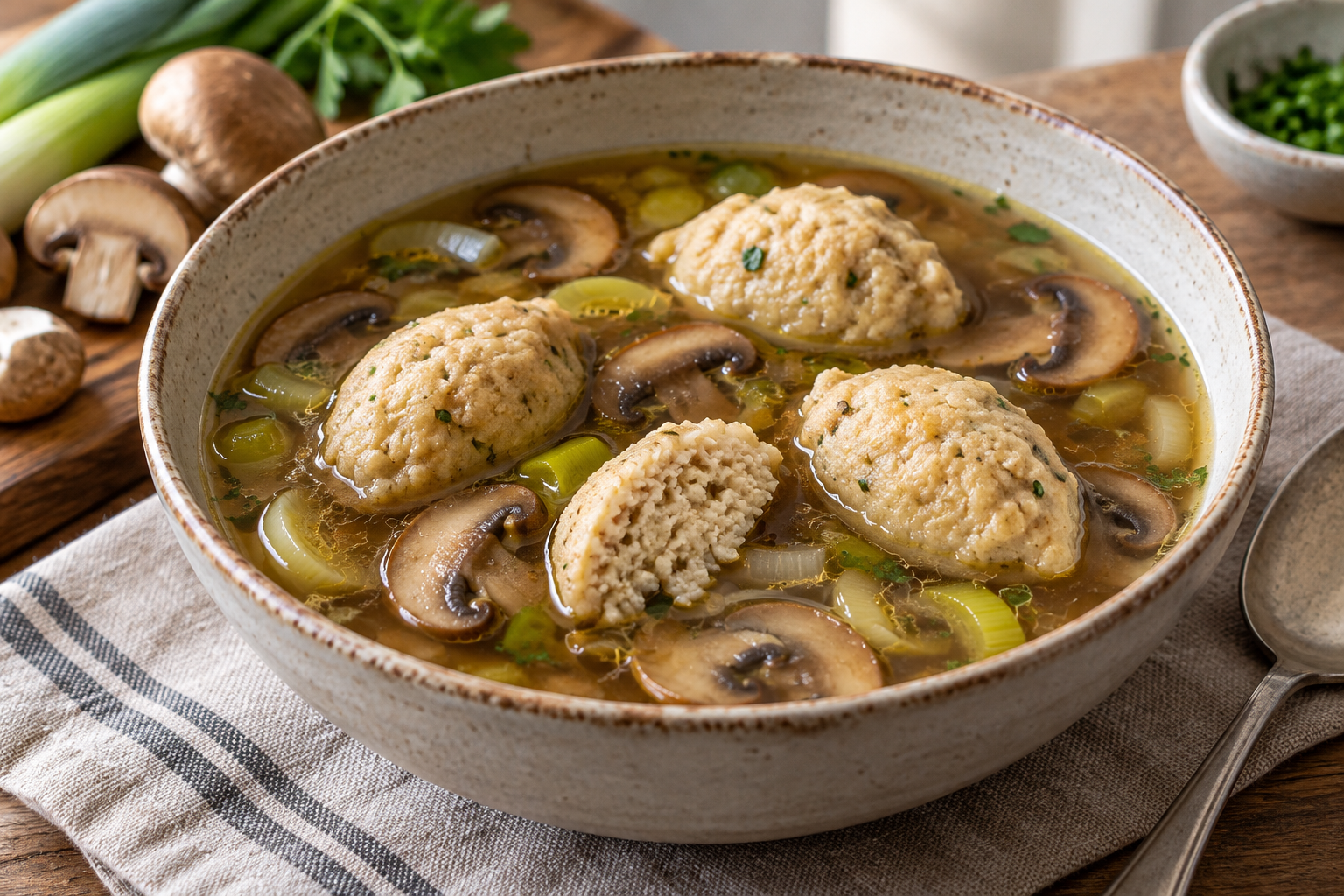
The dumplings are unfilled and dropped from a stiff batter, rather than rolled into wrappers. Aim for a mixture that sits in a soft mound on the spoon instead of pouring in a ribbon. Start with the lower amount of water, then use the remainder only if dry flour remains. A wet spoon helps release each portion without needing to thin the whole bowl. Divide the batter into sixteen similar portions: matching their size matters more than making perfect ovals.
Keep the broth at a gentle simmer, with small bubbles rather than a rolling churn. Give the dumplings room to expand and cover the pan so their exposed tops also receive heat. Floating is a useful observation, but it is not the finishing test. Cut through one of the largest dumplings: the centre should be set, with no sticky flour paste, as well as reaching the stated conservative temperature endpoint. If the outside is cooked and the middle is still wet, lower the heat and continue covered cooking.
Mushrooms are browned before liquid is added, giving the broth flavour without a separate stock-making project. Leek supplies softness, while egg helps the dumplings hold together. The intended result is a tender, substantial soup rather than a bowl of large floury balls. For a lighter companion, browse the vegetable dishes in the Incoprea cooking collection. This article is part of Ancient Recipes for Modern Kitchens, our cookbook in preparation; its wheat evidence is historical, while the mushrooms, egg binder, spoon shape and timetable remain modern decisions.
Unfilled wheat dumplings in mushroom broth
Serves 4 · Preparation 25 min · Cooking 25 min
A modern adaptation for home cooking. Times are approximate.
Ingredients
- 300 g cultivated mushrooms, sliced
- 150 g leek, thoroughly washed and sliced
- 20 ml (4 tsp) olive oil
- 1.4 litres water or low-salt vegetable stock
- 200 g plain wheat flour
- 1 large egg
- 110–130 ml water, for dumpling batter
- 4 g (⅔ tsp) salt, divided
Method
- Brown mushrooms in oil in a large lidded saucepan for 5–6 minutes, stirring so moisture can evaporate rather than collect in a deep pool. Add leek and cook 4 minutes.
- Add broth and 2 g salt. Bring to a gentle simmer: small bubbles should break the surface without a rolling boil.
- Mix flour with remaining salt, egg and 110 ml water just until no dry flour remains. The batter should hold a soft mound on a spoon rather than pour. Add the remaining water a little at a time only if needed; do not keep beating once combined.
- Using two spoons dipped in water, divide the batter into sixteen similar small portions and lower them gently into the broth, leaving room between them. Cover and cook 10–12 minutes at a gentle simmer without stirring vigorously.
- Cut one of the largest dumplings: its centre should be set without wet flour paste and reach 74°C/165°F. Floating alone does not show this. Continue gentle covered cooking if necessary, then serve four per bowl.
Substitutions and adjustments
- Plain wholemeal flour can replace 50 g of white flour; it may need extra water.
- Use commercially prepared vegetable stock for a stronger modern broth.
Historical choices: La Tène wheat evidence informs a new spoon-dumpling soup; mushrooms, egg binder, broth and cooking technique are not attested by the cited crop study.
Troubleshooting: If the batter runs off the spoon, pause before adding any more water; a wet batter and a hard boil both encourage breakage. If a dumpling is cooked outside but pasty inside, keep the broth gentle and extend covered cooking. Make the remaining portions smaller next time rather than boiling more fiercely.
Storage and reheating: Refrigerate within 2 hours and use within 2 days. Reheat gently to 74°C/165°F; dumplings may absorb broth, so add water.
Kitchen note: Use cultivated edible mushrooms, never unidentified wild fungi. Cook egg-containing dumplings to 74°C/165°F and flour fully.
Sources and further reading
- Heiss and Kohler-Schneider: La Tène plant economy, University of Vienna record. Wheat in the crop economy; no spoon-dumpling shape or mushroom broth evidence.
- Ashmolean Museum: European Iron Age and La Tène overview. Institutional period context, La Tène from approximately 450 BCE to the Roman period; not food or cooking evidence.
- FoodSafety.gov: safe minimum internal temperatures. Modern safety endpoints; not historical evidence.
- USDA FSIS: keep food safe. Modern refrigeration and reheating guidance; not historical evidence.
Browse Ancient Recipes for Modern Kitchens · More creative work at Incoprea