MODERN KITCHENS · 066 / 100
Bronze Age fish and cereal evidence · Denmark and the southern Scandinavian coastal region · Scandinavian Bronze Age context, approximately 1700–500 BCE
Evidence: historically informed adaptation. The historical evidence and modern cooking choices are distinguished below.
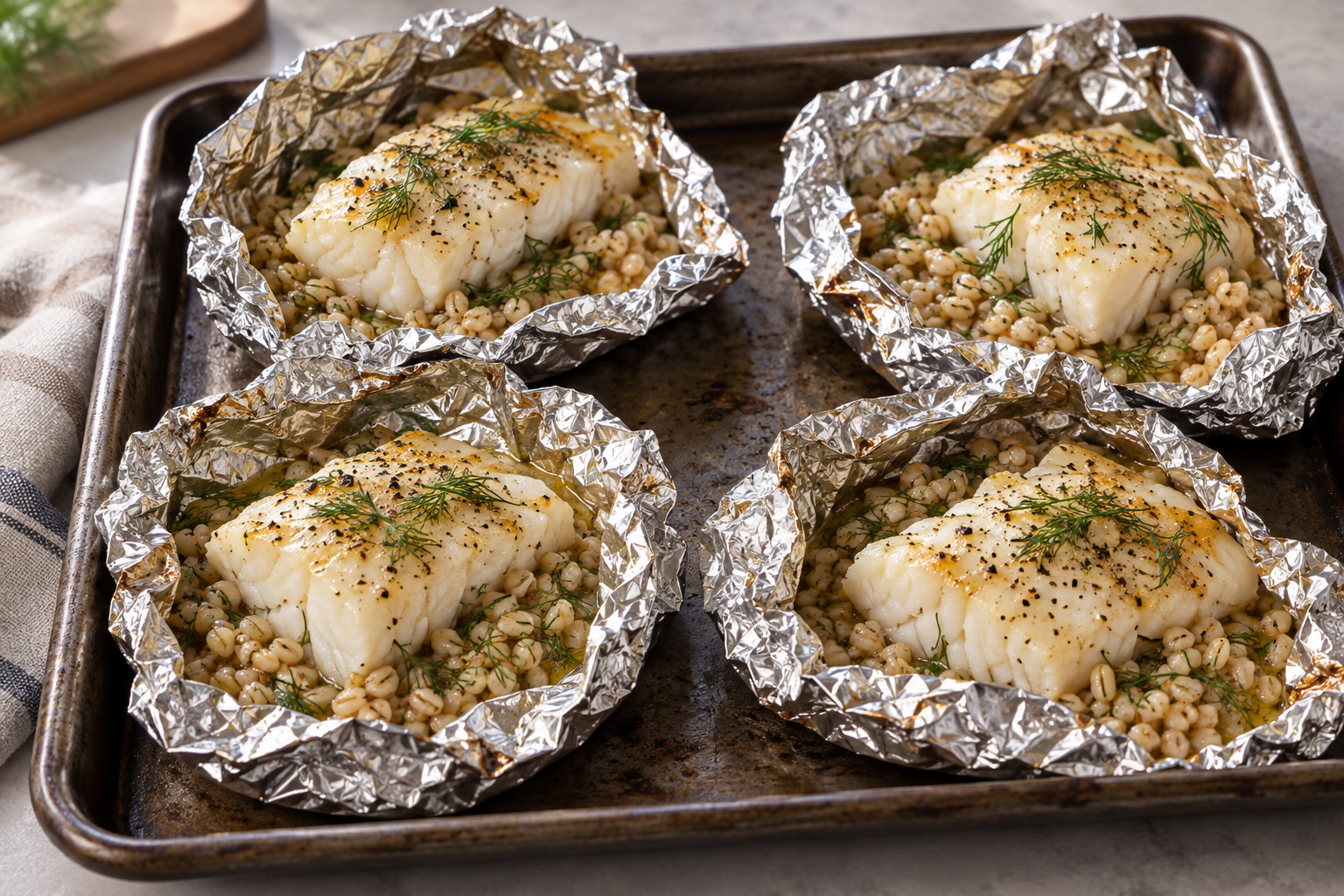
Fish and cultivated grain offer a useful coastal-food starting point. Denmark’s National Museum account of Bronze Age food discusses cod and barley, while its farming-history page places cereals in the region’s longer agricultural history. Neither describes cod baked above grain in a foil parcel.
The selected frame is the Scandinavian Bronze Age, approximately 1700–500 BCE. Aluminium foil, boneless fillets and pearl barley are openly modern conveniences. This dinner should not be called an ancient packet recipe, nor should a barley-and-fish combination be inferred as one specific excavated menu simply because both ingredients have evidence.
Cook the barley first so the grain will not demand more heat than the fish can tolerate. Divide it into four modest beds, add a small amount of water and put the fillets on top. Closing each packet creates a moist cooking space and keeps the portions separate. The result is a fish main with grain underneath, rather than a soup.
Open the packets carefully because hot steam escapes. Check the thickest fish in each portion, then transfer the contents to plates so the diner does not need to handle hot foil. Dill and salt are modern seasoning choices here, without pretending the museum identifies them in this combination. Serve with a cooked vegetable side. The historical sources anchor fish and cereal foodways; portioning, grain processing, foil, the sequence of cooking and the safe endpoint belong to the practical adaptation, whose modern equipment is part of its honesty.
Baked cod and barley parcels
Serves 4 · Preparation 20 min · Cooking 60 min
A modern adaptation for home cooking. Times are approximate.
Ingredients
- 160 g pearl barley
- 1 litre water, for barley
- 600 g boneless cod fillets, in four portions
- 15 ml (1 tbsp) olive oil
- 80 ml water, for parcels
- 10 g fresh dill, chopped, optional
- 3 g (½ tsp) salt
Method
- Boil barley in 1 litre water 30–40 minutes until tender; drain well. Heat oven to 200°C/400°F.
- Lay four large sheets of foil on a tray. Divide barley among centres and add 20 ml water to each.
- Place one fish portion over each grain bed, drizzle with oil and sprinkle with salt and optional dill. Fold foil into sealed parcels with room for steam.
- Bake 12–18 minutes until each thickest fish portion reaches 63°C/145°F and flakes. Open carefully, check, and reseal for longer cooking if needed.
- Transfer fish and barley to plates; serve promptly.
Substitutions and adjustments
- Hake or pollock makes a practical white-fish substitution.
- Use 400 g safely refrigerated cooked barley to shorten preparation.
Historical choices: Bronze Age cod and barley evidence informs the ingredients; foil packets, fillets, optional dill and this separate-portion oven method are modern inventions.
Troubleshooting: Fish dry: start checking at 12 minutes. Hard grain: cook it fully before making packets; the short oven stage will not rescue raw barley.
Storage and reheating: Refrigerate contents within 2 hours and use within 2 days. Reheat covered to 74°C/165°F, with a little water.
Kitchen note: Use reliable commercial fish and check for bones. Cook to 63°C/145°F. Open foil away from your face and hands to avoid steam burns.
Sources and further reading
- National Museum of Denmark: Food in the Bronze Age. Cod and barley in the regional food account; no packet technique.
- National Museum of Denmark: Introduction of farming. Longer cereal-farming context; not an exact Bronze Age fish-grain pairing.
- FoodSafety.gov: safe minimum internal temperatures. Modern safety endpoints; not historical evidence.
- USDA FSIS: keep food safe. Modern refrigeration and reheating guidance; not historical evidence.
Browse Ancient Recipes for Modern Kitchens · More creative work at Incoprea