MODERN KITCHENS · 065 / 100
Late Neolithic plant evidence and modern biscuit formula · Zürich and the Central European lakeshore region · Approximately 3200 BCE for selected lakeshore context
Evidence: historically informed adaptation. The historical evidence and modern cooking choices are distinguished below.
Hazelnuts leave a different trace from a finished biscuit. The Parkhaus Opéra study discusses hazelnuts and wheat in the settlement’s plant resources, while lakeshore farming research supplies a broader crop context. Those sources do not identify a sweet hazelnut biscuit or its ingredient proportions.
The selected Swiss setting lies around 3200 BCE. We use commercial shelled nuts and ordinary wheat flour instead of asking the reader to gather or process wild foods. A little modern butter and honey make a manageable crisp dough. They are additions to this recipe, not claims about the composition of the archaeological cereal preparations.
Chop or crush the nuts finely so the dough can be rolled thinly without breaking around large pieces. Keeping each biscuit small gives it enough surface to become crisp and prevents a heavy centre from staying soft. A simple baking tray and a cutter or knife are sufficient; no historical mould or specialist nut flour is required.
The biscuits firm as they cool, so do not judge their texture the moment they leave the oven. Remove the smaller edge pieces first if they colour faster. Serve one or two beside tea or as a small sweet after a meal, without describing the serving habit as prehistoric. This practical recipe provides a distinct crisp nut-and-flour form while preserving an honest evidence label. Nuts and cereals have a source context; sweetness, fat, dough texture, shaping and oven timing are a new modern construction rather than an ancient recovered confection.
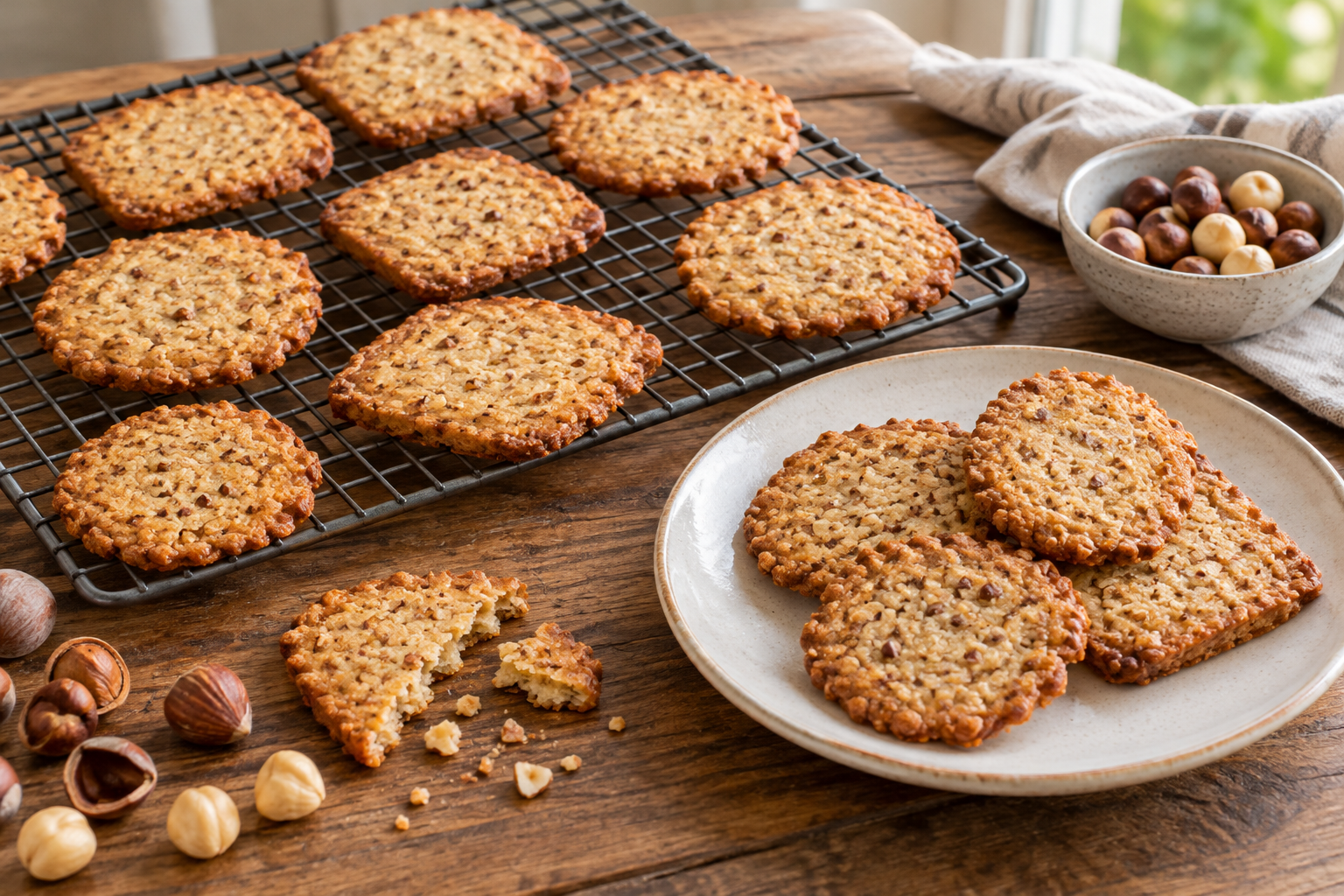
Thin hazelnut and wheat biscuits
Serves 12 · Preparation 20 min · Cooking 15 min · 5 minutes tray rest; 30 minutes cooling
A modern adaptation for home cooking. Times are approximate.
Ingredients
- 100 g commercial shelled hazelnuts, finely chopped or crushed
- 120 g plain wheat flour
- 50 g butter, softened, or 40 ml neutral oil
- 50 g (2½ tbsp) honey
- 15–30 ml water, only as needed
- 1 g (¼ tsp) salt
Method
- Heat oven to 180°C/350°F. Line a tray. Crush hazelnuts finely in a sturdy food bag with a rolling pin, or chop carefully.
- Mix nuts, flour and salt. Work in butter or oil and honey; add only enough water for a firm dough that holds together.
- Roll between baking-paper sheets to 4 mm thickness. Cut twelve small biscuits and lift to tray with space between them.
- Bake 12–16 minutes until edges are golden. Let stand on the tray 5 minutes, then cool completely on a rack.
Substitutions and adjustments
- Commercial ground hazelnuts work if they are fresh.
- Almonds make a different modern biscuit and change the site-specific nut anchor.
Historical choices: Hazelnut and wheat evidence informs a newly sweetened crisp biscuit; fat, honey ratio, shape and oven method are modern.
Troubleshooting: Crumbly dough: crush nuts finer and add water a teaspoon at a time. Soft biscuits: roll thinner and cool completely.
Storage and reheating: Keep fully cooled biscuits in an airtight container for 3 days or freeze up to 2 months; discard if damp or mouldy.
Kitchen note: Use commercial edible nuts and check for shell fragments. Bake flour fully. Contains wheat and tree nuts; honey is unsuitable for infants under 12 months.
Sources and further reading
- Heiss et al.: Parkhaus Opéra cereal preparations, PLOS ONE. Hazelnut and wheat resources; no biscuit recipe or added sweetener evidence.
- Antiquity: Cultivation of choice at Neolithic lakeshore sites. Regional crop context, not a sweet-dough method.
Browse Ancient Recipes for Modern Kitchens · More creative work at Incoprea