MODERN KITCHENS · 064 / 100
Late Neolithic lakeshore plant and cereal-preparation evidence · Zürich, Switzerland · Parkhaus Opéra layer context, approximately 3176–3153 BCE
Evidence: historically informed adaptation. The historical evidence and modern cooking choices are distinguished below.
An archaeological cereal object can reveal more than a seed, yet still leave the recipe uncertain. Research at Parkhaus Opéra examines cereal preparations and records wheat and flax in the settlement’s plant economy. Its authors warn against casually applying modern food names to ancient remains. That is a useful limit for the loaf below.
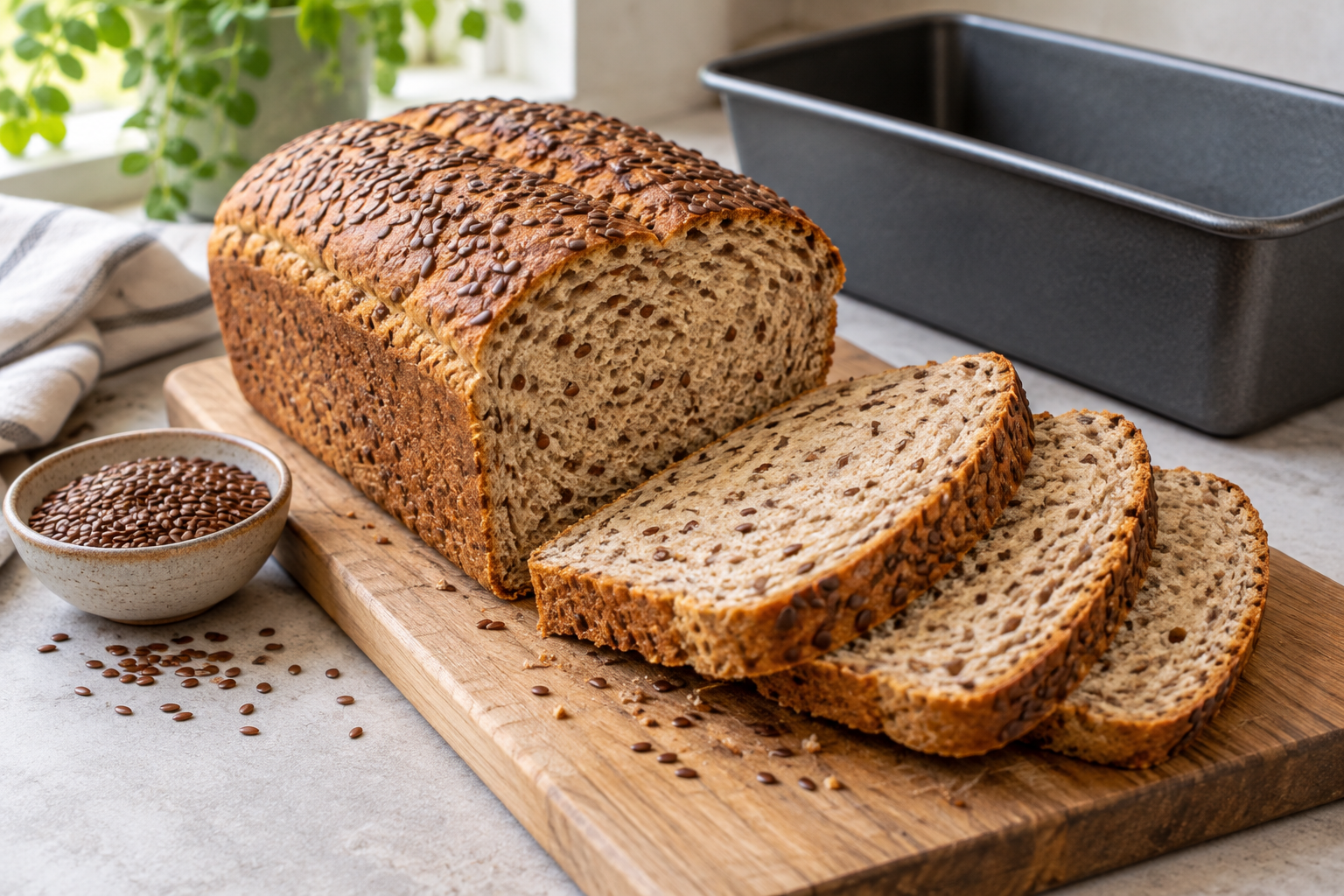
The cited layer belongs around 3176–3153 BCE. A separate study of Neolithic lakeshore farming gives a wider context for crop choices, not this loaf’s formula. Our strong bread flour and wholemeal wheat are convenient modern products; we do not substitute spelt silently or claim that the excavated object contained our flax ratio.
A modest quantity of flaxseed adds visible texture without making the loaf difficult to knead. Commercial instant yeast and a tin make the method predictable for a home cook. Because wholemeal flour absorbs water differently from white flour, begin with the lower quantity and add only enough for a soft workable dough. The dough should feel supple rather than pour.
Let it rise visibly, then bake until the centre is fully cooked. Cooling is part of the method: cutting too early can compress a moist crumb and make a sound loaf appear gummy. Serve slices with soup or a spread. This is a practical modern bread with a specific prehistoric plant context, not an exact reconstruction of the charred cereal preparations. The sources anchor wheat, flax and questions about food identification; flour processing, leavening, tin shape, seed proportion and baking timetable remain contemporary choices.
Wheat and flaxseed loaf
Serves 10 · Preparation 25 min · Cooking 50 min · 60–90 minutes first rise; 35–45 minutes final rise; at least 90 minutes cooling
A modern adaptation for home cooking. Times are approximate.
Ingredients
- 300 g strong white bread flour
- 150 g wholemeal wheat flour
- 35 g commercial food-grade flaxseed
- 7 g instant dried yeast
- 7 g (1 tsp) salt
- 300–330 ml lukewarm water
- 15 ml (1 tbsp) olive oil, plus 5 ml for tin
Method
- Reserve 5 g flaxseed for the surface. Mix flours, remaining 30 g flaxseed, yeast and salt. Add 300 ml water and oil. Knead 8–10 minutes, adding water only until soft and workable.
- Cover and rise 60–90 minutes until visibly expanded. Oil a 900 g loaf tin and shape dough into it.
- Cover and rise 35–45 minutes. Heat oven to 200°C/400°F. Lightly brush the risen dough with water and scatter the reserved flaxseed over the top.
- Bake 40–50 minutes until golden and the centre reaches about 95°C/203°F. Cover loosely with foil if the surface darkens early.
- Remove from tin and cool on a rack at least 90 minutes before slicing.
Substitutions and adjustments
- Replace wholemeal flour with strong white flour for a lighter modern loaf; use less water initially.
- Use commercial sunflower kernels as a different modern seed choice, with a different archaeological connection.
Historical choices: Wheat and flax finds supply a site-specific context; the yeast loaf, flour blend, flax proportion and tin method are modern, not the excavated cereal object’s recovered formula.
Troubleshooting: Gummy slices: cool fully before cutting and check baking endpoint. Slow rise: use a warmer room and wait for visible expansion.
Storage and reheating: Keep cooled bread wrapped for 2 days, or freeze slices up to 2 months. Toast from frozen or thaw covered.
Kitchen note: Use food-grade seeds and bake flour fully; do not taste raw dough. Contains wheat.
Sources and further reading
- Heiss et al.: Parkhaus Opéra cereal preparations, PLOS ONE. Wheat, flax and cereal-preparation evidence; warns against modern food-name assumptions.
- Antiquity: Cultivation of choice at Neolithic lakeshore sites. Wider farming context; does not identify this loaf recipe.
Browse Ancient Recipes for Modern Kitchens · More creative work at Incoprea