MODERN KITCHENS · 063 / 100
Later Iron Age crop context and wider ancient fruit evidence · Central Europe · Later European Iron Age/La Tène context, approximately 450 BCE–1 CE
Evidence: historically informed adaptation. The historical evidence and modern cooking choices are distinguished below.
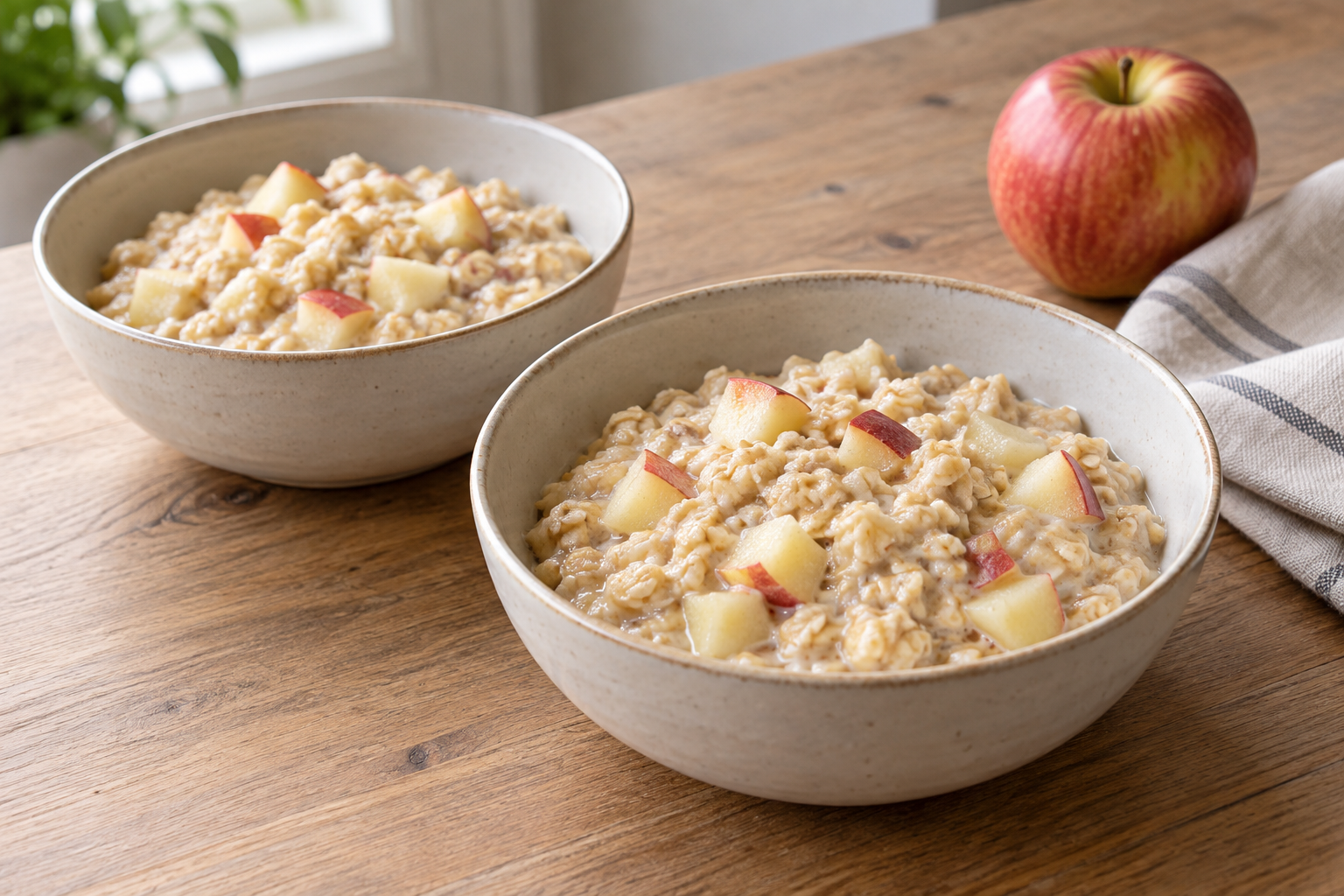
A familiar breakfast can be a useful place to practice caution. The Lower Austrian plant-economy study treats oats as a possible crop, not a certainty. The Parkhaus Opéra research records wild apple or pear remains in a much earlier Swiss setting. Those different places and periods do not establish one ancient oat-and-apple bowl.
This recipe is framed as historically informed around the later European Iron Age, approximately 450 BCE–1 CE, with the earlier fruit evidence explicitly separate. Rolled oats and a cultivated supermarket apple are modern specifications. We do not claim that every European community ate oats or that this exact breakfast has an unbroken ancient history.
A small apple cut into fine cubes softens within the oats’ short cooking time. Leaving the peel on a well-washed fruit supplies texture, while peeling it gives a smoother bowl. Milk is optional: water makes a useful plain porridge, and a little pasteurized milk at serving can be a contemporary addition. There is no need to sweeten automatically when the apple is ripe.
Stir enough to prevent sticking, but keep the heat gentle so the grains cook rather than scorch. The finished porridge should be creamy and pourable, with tender fruit pieces still identifiable. Add hot water if it thickens while you set the table. This is a quick practical breakfast, built from a cautious ingredient conversation instead of a claimed recovered formula. The ancient evidence concerns crops and fruit remains; the rolled processing, cultivated apple, proportions and short saucepan method belong to today’s kitchen.
Rolled-oat and apple porridge
Serves 2 · Preparation 10 min · Cooking 10 min
A modern adaptation for home cooking. Times are approximate.
Ingredients
- 100 g (about 1 cup) rolled oats
- 1 medium (about 160 g) eating apple, washed, cored and finely diced
- 450 ml water
- 1 g (¼ tsp) salt
- 50–100 ml pasteurized milk, optional at serving
Method
- Put oats, diced apple, water and salt in a saucepan.
- Bring to a gentle simmer and cook 7–10 minutes, stirring regularly, until oats are soft and apple is tender. Follow any longer packet instruction.
- Add hot water if too thick. Divide between two bowls and add optional milk at serving.
Substitutions and adjustments
- Use quick oats and their packet timing.
- A ripe pear is a modern fruit alternative; it may soften sooner.
Historical choices: Oat evidence is possible in the cited Iron Age crop study; earlier apple/pear remains are a separate anchor. This rolled-oat breakfast combination is modern.
Troubleshooting: Scorched base: use lower heat and stir often. Hard apple: dice smaller or simmer it a few minutes before adding oats.
Storage and reheating: Refrigerate within 2 hours and eat within 2 days. Reheat with water, stirring, until steaming throughout.
Kitchen note: Remove apple core and seeds. Use pasteurized optional milk. For gluten avoidance, choose certified gluten-free oats.
Sources and further reading
- Heiss and Kohler-Schneider: La Tène plant economy, University of Vienna record. Oats explicitly qualified as possible; not proof of this breakfast.
- Heiss et al.: Parkhaus Opéra cereal preparations, PLOS ONE. Earlier wild apple/pear food-resource evidence, not coeval oat-and-apple recipe evidence.
Browse Ancient Recipes for Modern Kitchens · More creative work at Incoprea