MODERN KITCHENS · 062 / 100
La Tène pulse evidence with modern oat processing · Lower Austria, Central Europe · Later European Iron Age/La Tène context, approximately 450 BCE–1 CE
Evidence: historically informed adaptation. The historical evidence and modern cooking choices are distinguished below.
Peas are a clearer archaeological anchor than a finished recipe name here. The Lower Austrian La Tène study identifies peas and describes oat evidence cautiously as possible. The Ashmolean Museum’s La Tène note helps frame the later Iron Age, approximately 450 BCE to the opening of the common era.
A modern bag of rolled oats is not the same thing as a possible ancient oat find. We use it for a convenient crisp topping, and the pea-leek bake itself is a new assembly. Frozen green peas, fleshy supermarket leeks and a domestic oven make it practical, without claiming that this precise filling or crust was cooked at an excavated settlement.
The contrast matters more than a smooth puree. Whole peas remain visible underneath the topping, while leeks soften into short pieces. A little flour thickens their liquid so the oats do not sink into a thin soup. Cook the peas as their packet directs before assembly, then give the small oven dish enough heat to make the surface golden.
Keep the oat layer light. A deep dry blanket would dominate the vegetables and may not toast evenly. The finished dish is a substantial side beside grilled meat or a vegetarian meal component with bread. If the filling is too dry, spoon in water around the edge before baking. The recipe turns pulse evidence into an accessible plate while retaining uncertainty: peas are documented, oats are cautiously interpreted, and rolling, thickening, combining with leeks and baking this crust are modern kitchen decisions rather than a recovered Iron Age formula.
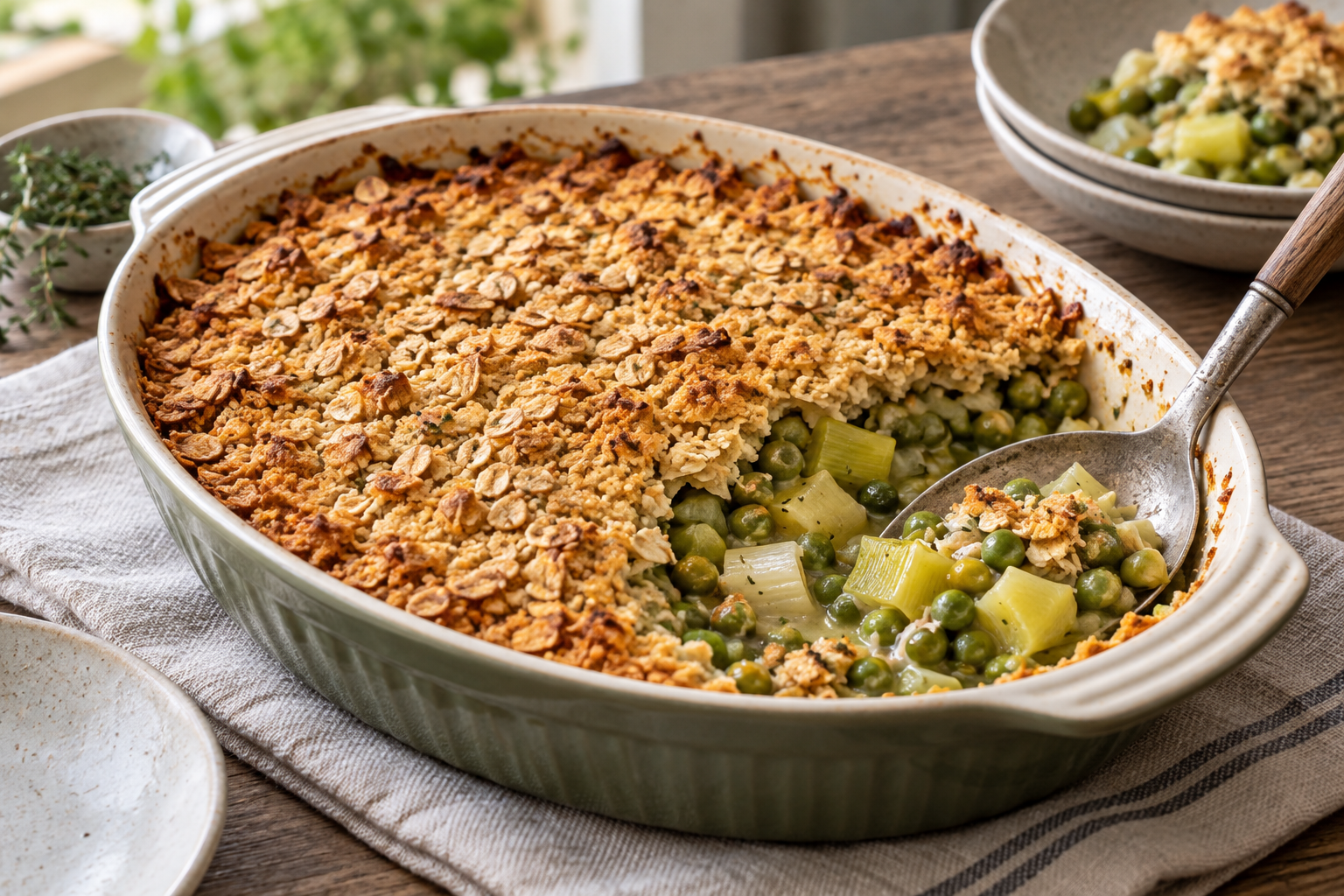
Pea and leek bake with oat topping
Serves 4 · Preparation 15 min · Cooking 40 min
A modern adaptation for home cooking. Times are approximate.
Ingredients
- 400 g frozen green peas
- 300 g leeks, washed thoroughly and sliced
- 25 g butter, or 25 ml olive oil, divided
- 15 g (1 tbsp) plain wheat flour
- 200 ml water or low-salt vegetable stock
- 60 g rolled oats
- 3 g (½ tsp) salt
Method
- Heat oven to 200°C/400°F. Cook peas according to their packet, drain and set aside.
- Soften leeks in 15 g butter or 15 ml oil in a frying pan for 8–10 minutes. Stir in flour, then gradually add stock and salt.
- Simmer 3 minutes until lightly thickened. Fold in cooked peas and transfer to a small shallow oven dish.
- Mix oats with remaining 10 g butter or 10 ml oil. Sprinkle in a thin layer over the vegetables.
- Bake 18–22 minutes until the surface is golden and the filling bubbles. Serve hot, keeping whole peas visible.
Substitutions and adjustments
- Plain breadcrumbs are a modern topping alternative with a different texture.
- Use cooked canned peas, drained well, for a softer filling.
Historical choices: Peas and possible oats provide archaeological context. Rolled oats, frozen peas and this crisp-crust vegetable bake are modern inventions.
Troubleshooting: Dry topping: rub fat through oats before sprinkling. Runny filling: simmer the flour sauce until it coats a spoon before assembly.
Storage and reheating: Refrigerate within 2 hours and use within 3 days. Reheat covered until steaming throughout, ideally 74°C/165°F; uncover briefly to restore the top.
Kitchen note: Cook frozen peas according to the packet and wash grit from leek layers. Contains wheat and possibly milk.
Sources and further reading
- Heiss and Kohler-Schneider: La Tène plant economy, University of Vienna record. Peas securely listed; oats described as possible. No oat-topped bake is attested.
- Ashmolean Museum: European Iron Age and La Tène overview. Institutional period context, La Tène from approximately 450 BCE to the Roman period; not food or cooking evidence.
Browse Ancient Recipes for Modern Kitchens · More creative work at Incoprea