MODERN KITCHENS · 061 / 100
La Tène crop evidence and explicit modern vegetable addition · Lower Austria, Central Europe · Later European Iron Age/La Tène context, approximately 450 BCE–1 CE
Evidence: historically informed adaptation. The historical evidence and modern cooking choices are distinguished below.
Millet does not need to arrive as porridge. Research on La Tène plant economy identifies millet among the crops of Lower Austria, and the Ashmolean Museum’s period note provides a broad chronological frame. That gives us a grain anchor around the later Iron Age, approximately 450 BCE to the beginning of the common era.
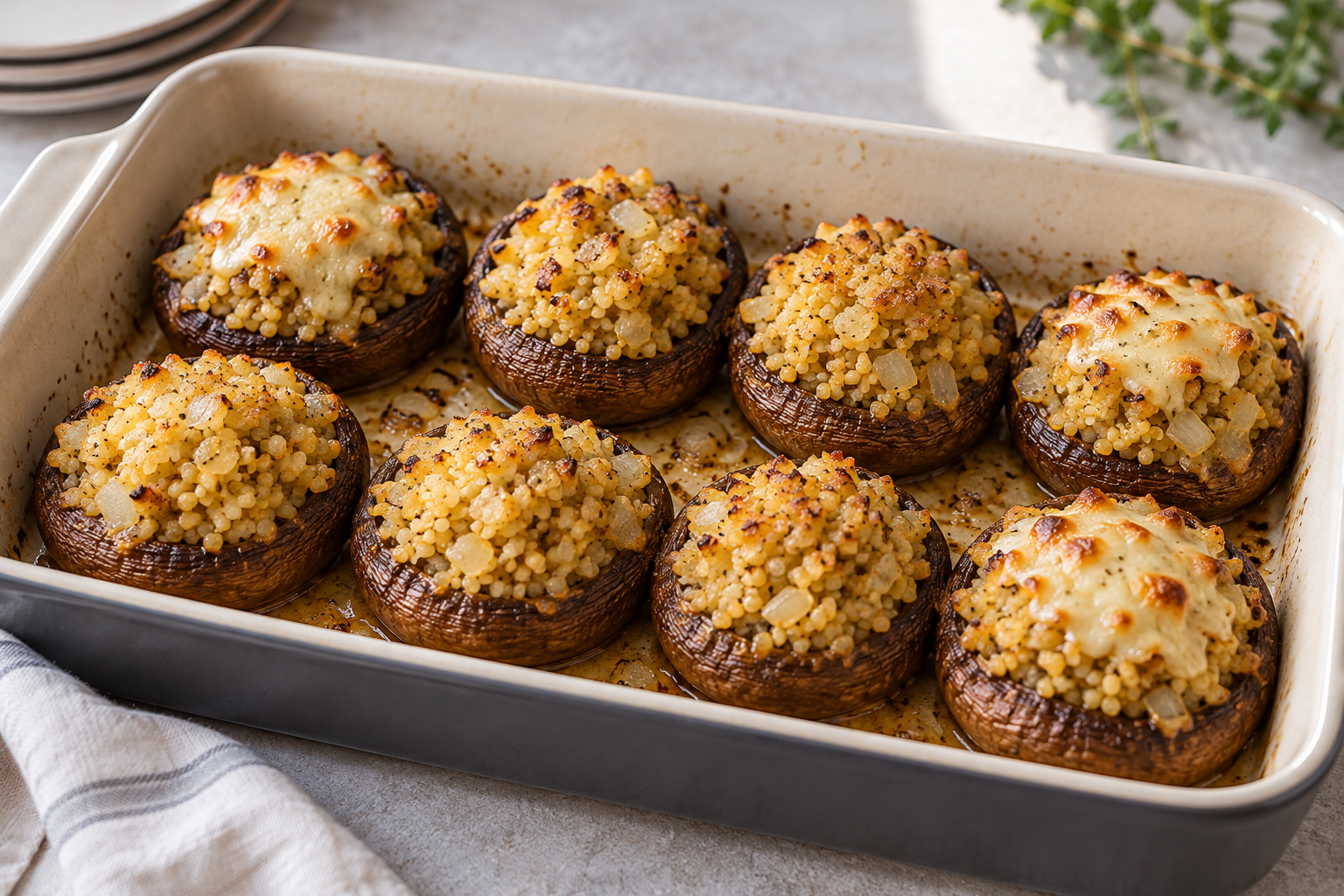
The archaeological record does not preserve these filled mushroom caps. Cultivated supermarket mushrooms are a deliberate modern addition, not evidence of foraging or a species identification at the sampled sites. This distinction allows the cook to make a useful vegetable main while keeping the ancient claim focused on the grain.
Cook the millet before filling the caps, because it needs moisture and time that a mushroom alone cannot supply. The chopped stems and onion add flavour to the filling and reduce waste. Choose broad caps sold for cooking so they can hold a sensible portion; the dish does not require unusual fungi or specialist equipment.
The mushrooms release liquid as they roast. A shallow oven dish and modest stock amount keep the bases tender without drowning the filling. The grain should stay soft, with a lightly coloured top. Serve two caps with another vegetable side. A small amount of pasteurized cheese is an optional modern finish, useful but unnecessary to the historical connection. The recipe shows how a documented crop can inform a practical new dish, while its cultivated mushrooms, stuffed format, proportions and oven schedule remain openly contemporary rather than being presented as an excavated Iron Age meal.
Millet-filled roast mushrooms
Serves 4 · Preparation 20 min · Cooking 45 min
A modern adaptation for home cooking. Times are approximate.
Ingredients
- 120 g dry millet, rinsed
- 300 ml water, for millet
- 8 large (about 650 g) cultivated flat mushrooms
- 150 g onion, finely diced
- 20 ml (4 tsp) olive oil
- 100 ml low-salt vegetable stock or water
- 3 g (½ tsp) salt
- 40 g pasteurized grated hard cheese, optional modern finish
Method
- Simmer millet in 300 ml water, covered, for 15–20 minutes or as its packet directs, until tender and water is absorbed.
- Heat oven to 200°C/400°F. Wipe mushrooms clean, remove stems and chop the stems finely.
- While millet cooks, soften onion and chopped stems in oil for 8–10 minutes. Mix with cooked millet and salt.
- Arrange caps hollow-side up in a shallow dish. Divide filling among them, top with optional cheese and pour stock around the bases.
- Bake 20–25 minutes until mushrooms are tender and filling is steaming hot, about 74°C/165°F. Serve two per person.
Substitutions and adjustments
- Use cooked bulgur as a practical modern filling; follow its separate grain timing.
- Omit cheese for a dairy-free version.
Historical choices: La Tène millet evidence supplies the anchor. Cultivated mushrooms, filling assembly, optional cheese and oven method are modern inventions.
Troubleshooting: Watery dish: use a shallow pan and only measured stock. Dry filling: add a spoonful of cooking juices when serving.
Storage and reheating: Refrigerate within 2 hours and use within 3 days. Reheat covered to 74°C/165°F.
Kitchen note: Use commercially cultivated edible mushrooms; do not substitute unidentified wild fungi. Cook grain fully and keep leftovers cold.
Sources and further reading
- Heiss and Kohler-Schneider: La Tène plant economy, University of Vienna record. Millet in sampled Lower Austrian crop economies; no stuffed mushroom evidence.
- Ashmolean Museum: European Iron Age and La Tène overview. Institutional period context, La Tène from approximately 450 BCE to the Roman period; not food or cooking evidence.
Browse Ancient Recipes for Modern Kitchens · More creative work at Incoprea