MODERN KITCHENS · 059 / 100
Ancient Iranian ingredient records and modern sauce construction · Iranian plateau and Achaemenid court context · Achaemenid Iranian food context, approximately 550–330 BCE
Evidence: historically informed adaptation. The historical evidence and modern cooking choices are distinguished below.
A small sauce can make the relationship between an ingredient list and a recipe especially clear. Polyaenus’s Persian provisioning passage includes almonds and garlic. Iranica’s discussion explains the limited evidence and uncertain food terms. Neither source supplies a method for this almond-garlic sauce.
The ingredient frame is the Achaemenid period, approximately 550–330 BCE, reported in part through a much later Greek writer. This is a new modern accompaniment. We use commercial sweet almonds and food-grade oil; there is no request to collect unidentified nuts or reproduce old extraction or preservation techniques.
A brief dry toast gives the almonds a more rounded flavour. Garlic is simmered in water so it stays gentle enough to use in a small sauce, and the cooking water helps the nuts form a spoonable texture. A blender is convenient, but very finely chopped nuts crushed under a rolling pin can produce a coarser version with ordinary household tools.
Add the water gradually. The aim is a loose sauce, not a sticky nut butter, and almonds vary in how finely they grind. A little vinegar balances richness as a modern choice. Spoon a small portion beside cooked vegetables or grilled meat, keeping the sauce’s role separate from the main dish. It can be made ahead and chilled promptly, but it is not shelf-stable. Ancient records anchor ingredients; toasting, brief garlic cooking, blending, acid balance and measured yield belong to the practical contemporary recipe below.
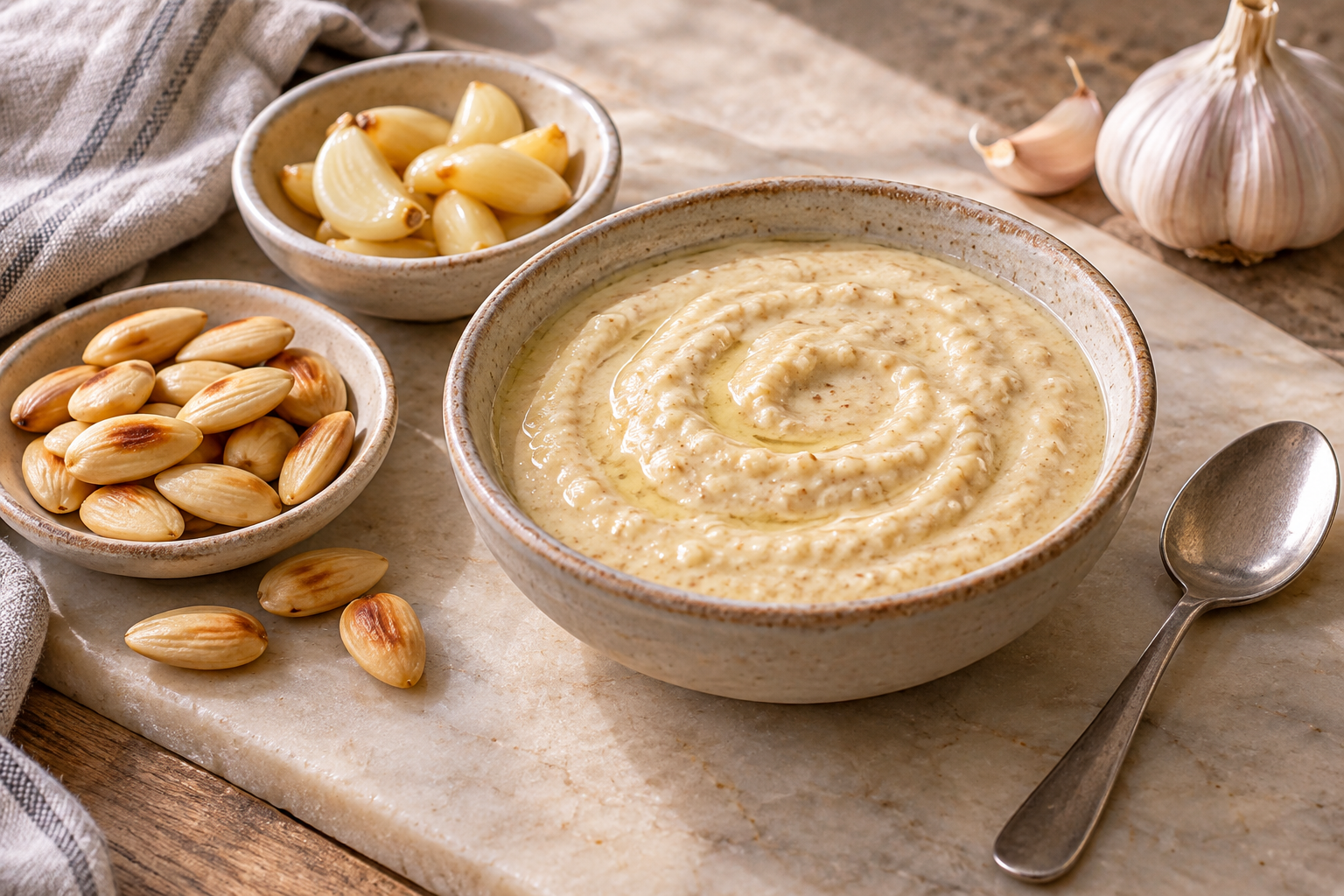
Toasted almond and garlic sauce
Serves 6 · Preparation 15 min · Cooking 8 min
A modern adaptation for home cooking. Times are approximate.
Ingredients
- 80 g commercial blanched sweet almonds
- 2 small (about 6 g) garlic cloves, peeled
- 100–130 ml water
- 15 ml (1 tbsp) olive oil or untoasted sesame oil
- 10 ml (2 tsp) wine vinegar
- 2 g (⅓ tsp) salt
Method
- Toast almonds in a dry frying pan over medium-low heat 3–4 minutes, stirring, until lightly golden. Cool briefly.
- Simmer garlic in 100 ml water for 4 minutes. Keep both garlic and cooking water.
- Blend almonds, garlic, oil, vinegar and salt with about 80 ml cooking water. Add remaining water gradually until spoonable.
- Without a blender, crush almonds very finely in a sturdy food bag with a rolling pin, mince garlic and whisk in liquids for a coarse sauce.
- Serve in small portions or cool promptly and refrigerate.
Substitutions and adjustments
- Use unsalted cashews only as a clearly modern nut substitution with a different ancient evidence connection.
- Olive oil is a convenient modern oil choice; sesame oil gives a stronger flavour.
Historical choices: Almond and garlic records inform a newly constructed sauce; no ancient recipe or preservation method is asserted.
Troubleshooting: Too thick: add drinking water gradually. Gritty: blend longer or embrace a coarse texture; do not add more oil to fix it.
Storage and reheating: Refrigerate in a covered container within 2 hours and use within 2 days. Stir before serving; this is not a shelf-stable garlic-in-oil product.
Kitchen note: Use commercial sweet almonds, not bitter almonds or unknown wild nuts. Contains tree nuts; keep garlic sauce refrigerated.
Sources and further reading
- Polyaenus, Stratagems 4.3.32: older translation on Attalus. Almonds, garlic and oils in provisioning; no sauce assembly.
- Iranica: Cooking in ancient Iran. Source limitations and ingredient interpretations; vinegar quantity is a modern choice.
Browse Ancient Recipes for Modern Kitchens · More creative work at Incoprea