MODERN KITCHENS · 057 / 100
Ancient Egyptian pulse and fruit evidence · Nile Valley, Egypt · New Kingdom Egypt, approximately 1550–1070 BCE
Evidence: historically informed adaptation. The historical evidence and modern cooking choices are distinguished below.
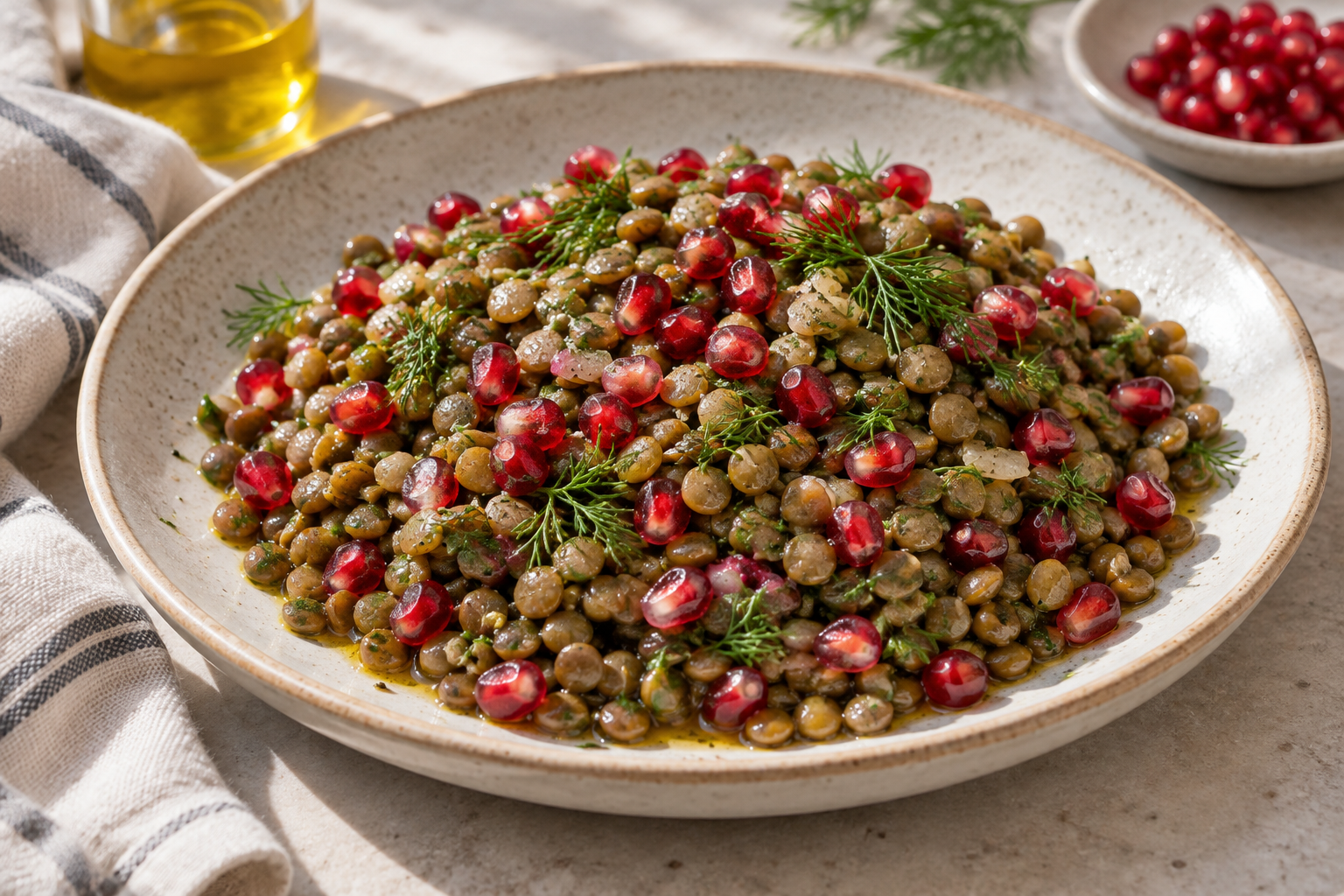
A bright fruit topping changes how a bowl of pulses feels. UCL’s Egyptian plant table records lentils and pomegranates, but does not tell us they were combined in a dish. The cereal-production account supplies a broader farming context. These are separate evidence anchors for a newly devised warm lentil accompaniment.
We frame the ingredient discussion in New Kingdom Egypt, approximately 1550–1070 BCE, while recognizing that individual plants have earlier and differing histories. The modern recipe uses green lentils because they remain distinct after cooking. Pomegranate arils are added fresh, rather than being turned into a preserved syrup or assigned an invented ancient sauce name.
Boil the lentils in plenty of water and drain them once tender. A seed that still has a hard centre needs more cooking, even when its outside looks softened. While the lentils remain warm, toss them gently with oil and a small amount of vinegar. Their warmth helps the dressing spread without requiring the fruit to be heated.
Scatter the pomegranate only at the end so the seeds stay juicy and the plate has a clear contrast. A little chopped dill is an optional modern finish. This makes a substantial vegetable side or a small lunch alongside bread and another vegetable. It differs from a grain salad in both texture and role: soft whole pulses carry a fresh fruit topping. The sources establish the plants’ presence, while boiling time, dressing, arrangement and portion size belong to this contemporary recipe rather than a recovered ancient menu.
Warm green lentils with pomegranate
Serves 4 · Preparation 15 min · Cooking 30 min
A modern adaptation for home cooking. Times are approximate.
Ingredients
- 200 g dry green or brown lentils, rinsed
- 1 litre water, for boiling
- 120 g pomegranate arils
- 20 ml (4 tsp) olive oil
- 10 ml (2 tsp) wine vinegar
- 3 g (½ tsp) salt
- 5 g fresh dill, chopped, optional
Method
- Rinse lentils and check for grit. Boil in water, then simmer 20–30 minutes until tender but still whole.
- Drain well. While warm, toss gently with oil, vinegar and salt.
- Divide into a serving bowl or four plates. Top with pomegranate arils and optional dill; serve warm.
Substitutions and adjustments
- Use 500 g drained canned cooked lentils, warming them before dressing.
- Fresh grape halves offer a sweeter modern fruit topping when pomegranate is unavailable.
Historical choices: Lentil and pomegranate evidence anchors the ingredients; their warm combination, dressing and topping are modern inventions.
Troubleshooting: Mushy lentils: use green/brown, check early and stop stirring once tender. Hard centres: simmer longer.
Storage and reheating: Refrigerate lentils within 2 hours and keep 3 days. Store fruit separately when making ahead; reheat lentils to 74°C/165°F before topping.
Kitchen note: Wash produce and use clean utensils. Refrigerate perishable food promptly; this is not a preservation recipe.
Sources and further reading
- UCL Digital Egypt for Universities. Separate lentil and pomegranate entries; not a combined dish.
- UCL Digital Egypt for Universities. Egyptian agricultural context, not lentil cooking instructions.
Browse Ancient Recipes for Modern Kitchens · More creative work at Incoprea