MODERN KITCHENS · 053 / 100
Achaemenid food records and modern dairy adaptation · Iranian plateau · Achaemenid Iranian food context, approximately 550–330 BCE
Evidence: historically informed adaptation. The historical evidence and modern cooking choices are distinguished below.
A ration record can tell us what moved through an ancient economy without revealing a complete meal. Encyclopaedia Iranica’s ancient-cooking study discusses fruit, nuts and milk in Achaemenid sources. Its warnings about uncertain food identifications are as useful as its ingredient examples. They do not establish our grape-and-pistachio breakfast bowl.
The separate Iranica cookery account places dairy preparations within a wider food history. We use commercial pasteurized yogurt as a convenient modern product, not as a claim to have replicated a sixth- or fifth-century BCE ferment. The ancient frame is approximately 550–330 BCE, while the exact bowl is newly assembled.
Fresh grapes supply juiciness, and a small amount of chopped pistachio adds crunch. Unsweetened yogurt keeps the fruit itself in charge of the sweetness. This needs no heating and no homemade fermentation: wash and dry the grapes, divide the yogurt, then add the toppings just before eating. A dry fruit surface keeps the yogurt from becoming watery.
Serve as a modest breakfast or a small dessert. Commercial seedless grapes are a present-day convenience, and another plain tree nut can replace pistachios if needed. The recipe should not be confused with a documented royal menu, because sources about provisioning and banquets have different purposes from household instructions. Its usefulness lies in an accessible combination and an explicit boundary. The texts provide a regional ingredient conversation; the yogurt brand, fresh fruit portions, nut garnish and contemporary serving arrangement remain our own choices.
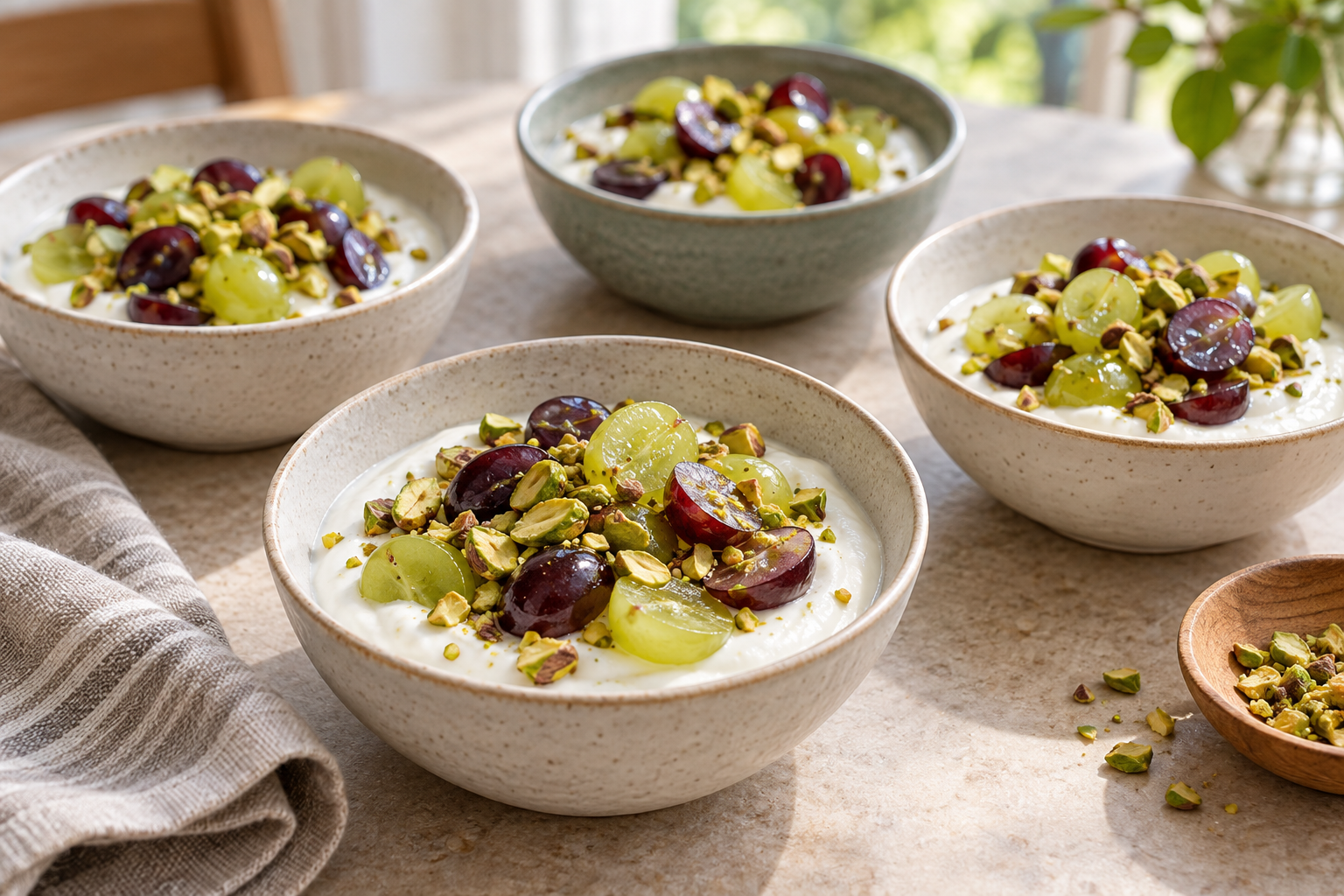
Grape, pistachio and yogurt bowls
Serves 4 · Preparation 10 min · Cooking 0 min
A modern adaptation for home cooking. Times are approximate.
Ingredients
- 500 g (about 2 cups) plain pasteurized yogurt
- 300 g seedless grapes, washed, dried and halved
- 40 g shelled unsalted pistachios, chopped
Method
- Check pistachios for shell fragments. Wash and dry grapes, then halve them.
- Divide yogurt among four bowls. Spoon grapes over the top and scatter with pistachios.
- Serve promptly or cover and refrigerate until needed.
Substitutions and adjustments
- Plain unsweetened soy yogurt is a clearly modern dairy-free alternative.
- Chopped almonds replace pistachios; the flavour and evidence connection change.
Historical choices: Ancient Iranian records provide ingredient context, not this breakfast formula. Commercial pasteurized yogurt and seedless grapes are modern choices.
Troubleshooting: Watery bowl: dry grapes before adding. Too tart: choose ripe grapes rather than automatically adding sugar.
Storage and reheating: Keep yogurt cold. Prepare fruit a day ahead in a separate covered container; assemble near serving and consume within 2 days.
Kitchen note: Use pasteurized yogurt, wash fruit and check nuts for shell pieces. Contains milk and tree nuts.
Sources and further reading
- Iranica: Cooking in ancient Iran. Achaemenid provisioning evidence for fruit, nuts and milk; identification uncertainty retained.
- Iranica: Cookery. Broad dairy and fruit context; not a securely dated formula for this bowl.
Browse Ancient Recipes for Modern Kitchens · More creative work at Incoprea