MODERN KITCHENS · 052 / 100
Ancient Egyptian grain, onion and bread context · Nile Valley, Egypt · New Kingdom Egypt, approximately 1550–1070 BCE
Evidence: historically informed adaptation. The historical evidence and modern cooking choices are distinguished below.
Bread becomes more approachable when its evidence is kept separate from its modern formula. The Metropolitan Museum’s foundation-deposit loaf gives a dated New Kingdom bread object, while UCL’s plant table supplies an onion context. Neither tells us how to make these small onion rolls.
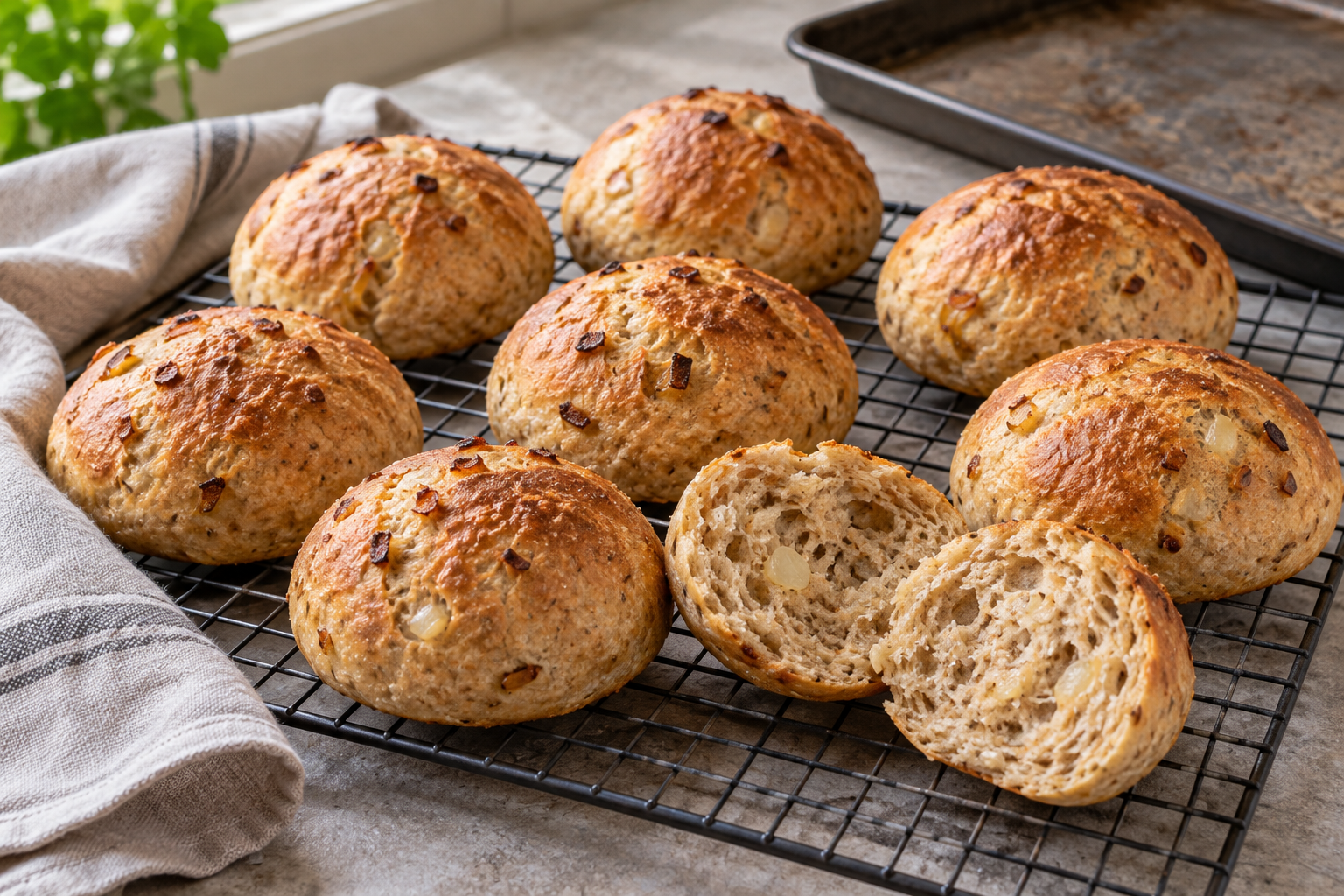
The historical frame is roughly 1550–1070 BCE, and the cited bread object is dated about 1473–1458 BCE. Our dough uses ordinary strong wheat flour, a little wholemeal flour and commercial instant yeast. These choices are intended to make a usable batch in a domestic oven; they do not reproduce the flour, fermentation or shape of the museum object.
Cook the onion before adding it to dough. Raw pieces release moisture differently and can remain sharp inside a roll, whereas softened onion distributes a gentle savoury flavour. Let it cool so it does not warm the dough excessively. A brief knead develops enough structure to hold the heavier filling without demanding professional bakery equipment.
Let visible expansion guide the rise rather than a rigid clock, because room temperature changes the pace. Divide into eight modest rolls so their centres cook within a sensible time. Cool on a rack before splitting, then serve beside a soup or grain-and-pulse bowl. The result should have a firm but soft crumb with small onion pieces. This adaptation provides an everyday bread method and a clearly sourced ancient context; it makes no claim that a New Kingdom baker used instant yeast, a modern flour blend or our eight-roll arrangement.
Soft-onion wheat rolls
Serves 8 · Preparation 25 min · Cooking 40 min · 20 minutes cooling onion; 60–90 minutes first rise; 30–45 minutes second rise; 30 minutes cooling bread
A modern adaptation for home cooking. Times are approximate.
Ingredients
- 250 g strong white bread flour
- 100 g wholemeal wheat flour
- 7 g instant dried yeast
- 5 g (¾ tsp) salt
- 220–240 ml lukewarm water
- 200 g onion, finely diced
- 20 ml (4 tsp) olive oil
Method
- Cook onion in oil over medium-low heat 10–12 minutes until soft. Spread on a clean plate and cool completely.
- Mix flours, yeast and salt. Add onion and 220 ml water. Knead 8 minutes, adding a little water only if dry.
- Cover and rise 60–90 minutes until visibly expanded. Divide into eight pieces, shape rolls and place spaced on a lined tray.
- Cover and rise 30–45 minutes. Heat oven to 200°C/400°F.
- Bake 20–25 minutes until golden and the centre of a roll reaches about 95°C/203°F. Cool on a rack 30 minutes.
Substitutions and adjustments
- Use all strong white flour for a lighter modern roll.
- Use 150 g finely sliced leek instead of onion; wash carefully and cook first.
Historical choices: Ancient onion and bread evidence provides context; flour blend, commercial yeast, portions and modern oven method are newly specified.
Troubleshooting: Dense rolls: allow more visible rising time. Wet dough: cool and drain cooked onion before mixing.
Storage and reheating: Refrigerate cooled rolls up to 3 days; freeze up to 2 months. Warm in a 170°C/340°F oven for 8–10 minutes.
Kitchen note: Bake flour fully and do not taste raw dough. Cool cooked onions before mixing; refrigerate finished onion rolls for storage.
Sources and further reading
- The Met: Hatshepsut foundation-deposit model bread. Dated New Kingdom bread context, not a roll formula.
- UCL Digital Egypt for Universities. Onion evidence; does not specify bread filling.
Browse Ancient Recipes for Modern Kitchens · More creative work at Incoprea