MODERN KITCHENS · 051 / 100
Ancient Egyptian plant evidence · Nile Valley, Egypt · New Kingdom Egypt, approximately 1550–1070 BCE
Evidence: historically informed adaptation. The historical evidence and modern cooking choices are distinguished below.
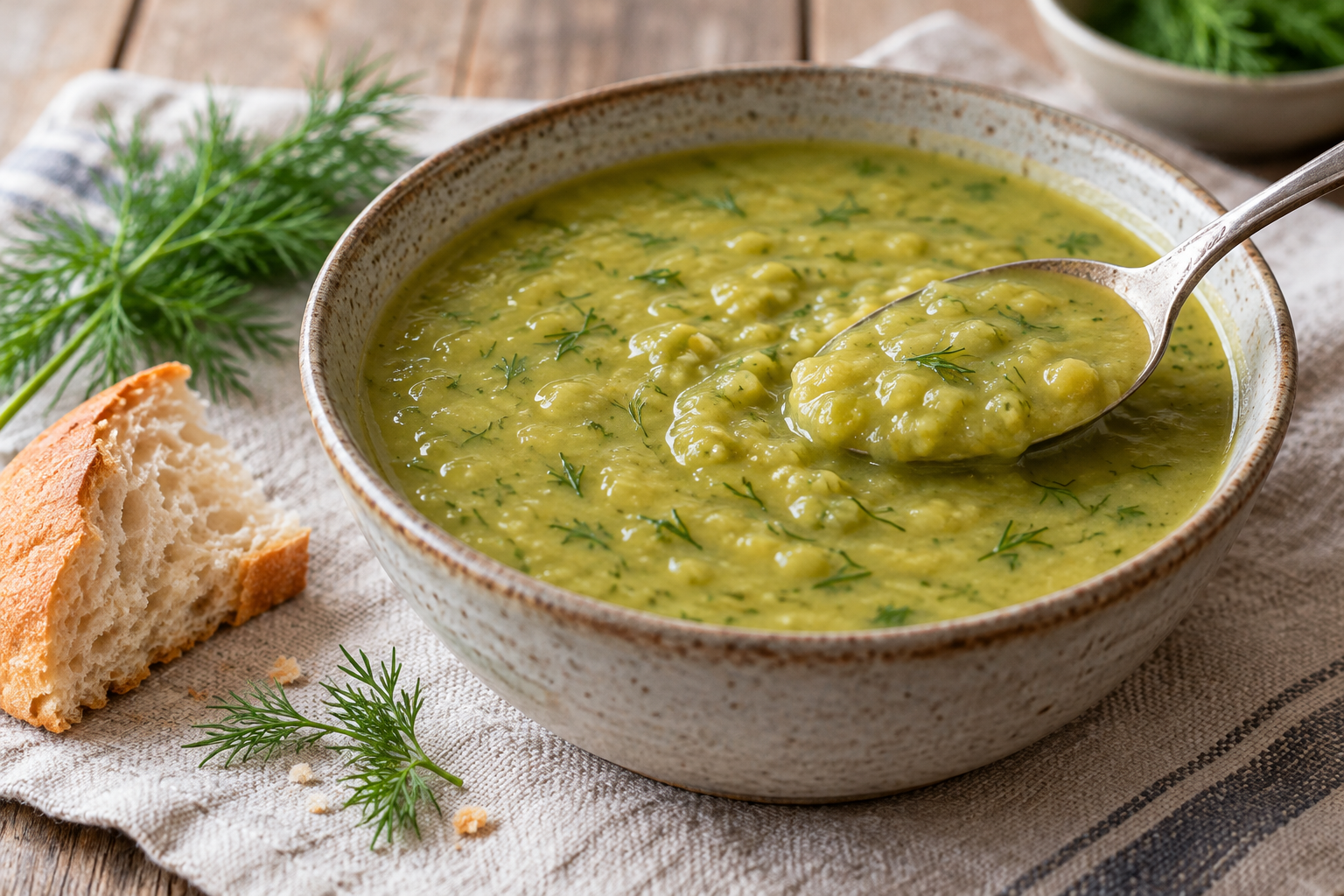
Peas offer a different texture from whole lentils or chickpeas. UCL’s Egyptian plant table records peas and dill; those entries are our ingredient anchors. The cereal-production account supplies farming context. Neither source preserves a measured pea-and-dill soup, so the pot below is a modern construction.
The New Kingdom frame, approximately 1550–1070 BCE, is used for the herb context without claiming that all pea remains belong to that single period. Commercial split peas are a particularly useful contemporary form: they soften into a thick soup without the peeling or grinding that whole pulses might require. That convenience changes the method and should remain visible.
Rinse the peas and check for grit before cooking. Simmer gently in a saucepan with room for the foam to rise, stirring more often as the mixture thickens. Peas from an old packet may need longer than the suggested time. Tenderness is the practical endpoint; a gritty centre cannot be fixed simply by blending the soup.
Dill goes in near the end so its aroma stays distinct. The finished soup should coat a spoon but still pour, and extra hot water can loosen it. Serve with a small bread portion and a crisp vegetable accompaniment. This is a useful make-ahead bowl because it thickens after chilling and can be adjusted when reheated. The ancient plants have a documented place in the discussion, while split-pulse processing, stock, herb amount and soup texture are chosen for an ordinary modern kitchen.
Split-pea soup with dill
Serves 4 · Preparation 10 min · Cooking 85 min
A modern adaptation for home cooking. Times are approximate.
Ingredients
- 250 g dry green split peas, rinsed and checked
- 150 g onion, chopped
- 15 ml (1 tbsp) olive oil
- 1.2 litres water or low-salt vegetable stock
- 15 g fresh dill, chopped
- 3 g (½ tsp) salt, if needed
Method
- Soften onion in oil in a large saucepan for 6–7 minutes.
- Add peas and liquid. Bring to a boil, skim excess foam, then simmer partly covered 60–75 minutes until peas collapse when pressed.
- Stir regularly, especially after the soup thickens; add hot water if the base catches or becomes too stiff.
- Stir in dill, simmer 2 minutes and taste before salting. Mash briefly if you prefer a smoother bowl.
Substitutions and adjustments
- Dry yellow split peas work, with a different colour.
- Use 10 ml (2 tsp) dried dill, adding it for the final 5 minutes.
Historical choices: Pea and dill plant evidence informs a new soup. Commercial split peas, proportions and final texture are modern specifications.
Troubleshooting: Peas remain gritty: simmer longer, adding water; do not rely on blending to cook them.
Storage and reheating: Cool promptly in shallow containers and refrigerate up to 3 days, or freeze 2 months. Reheat to a boil with enough water to loosen.
Kitchen note: Wash produce and use clean utensils. Refrigerate perishable food promptly; this is not a preservation recipe.
Sources and further reading
- UCL Digital Egypt for Universities. Peas and dill in Egyptian plant evidence; their finds differ in dates and frequency.
- UCL Digital Egypt for Universities. Egyptian farming context; not a pea-soup recipe.
Browse Ancient Recipes for Modern Kitchens · More creative work at Incoprea