MODERN KITCHENS · 049 / 100
Ancient Egyptian fish and plant evidence · Nile Valley, Egypt · New Kingdom Egypt, approximately 1550–1070 BCE
Evidence: historically informed adaptation. The historical evidence and modern cooking choices are distinguished below.
Fish evidence can take several forms. UCL’s fish account records excavated Egyptian fish remains, and the Metropolitan Museum’s Egyptian Bestiary discusses tilapia in art. A fish-shaped object or a bone assemblage is not a written instruction for our onion bake.
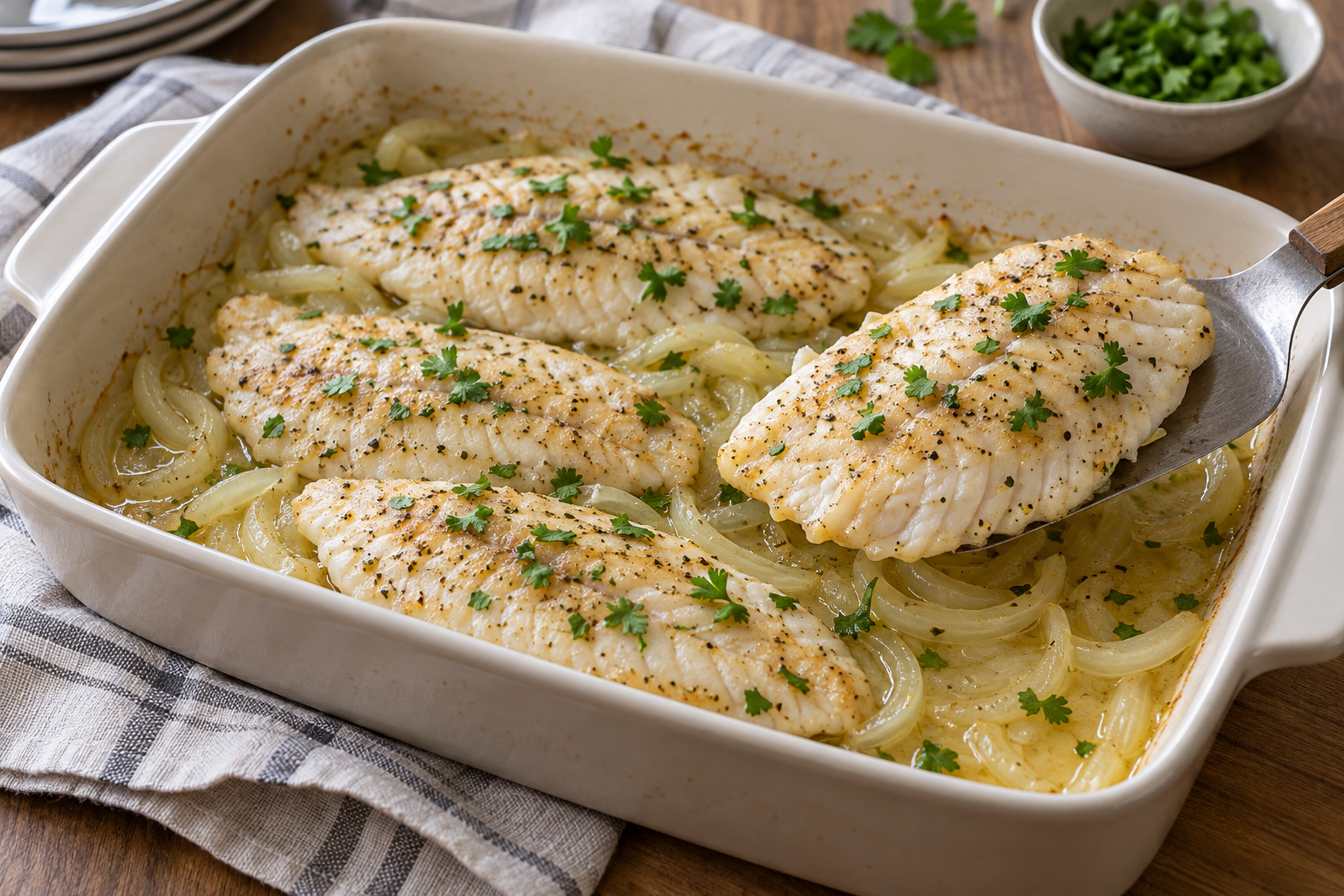
The New Kingdom frame, approximately 1550–1070 BCE, gives the discussion a clear ancient setting. The modern dish uses commercially farmed boneless fillets and a domestic oven. Onion is a practical aromatic base, but this particular pairing, its portions and the cooking sequence are not claimed as an excavated recipe.
Cook the onions before adding the fish. Their slow softening needs more time than a thin fillet, so placing both raw in the dish would invite a dry fish or a hard onion. Once the bed is tender, set the tilapia above it with a little water and oil. The moist surroundings help the gentle white flesh cook without requiring a rich sauce.
Check the thickest part of each fillet with a thermometer; transparency and flaking are helpful visual cues but do not replace a safe endpoint. A portion of cooked grain makes this a simple supper. Frozen fillets are useful when thawed in the refrigerator first. The generated illustration shows this modern oven dish, not an ancient fish platter. The sources anchor Egyptian fish and representation, while the bed of onions, cut, measurements and timing are explicitly contemporary kitchen choices.
Baked tilapia on onions
Serves 4 · Preparation 15 min · Cooking 35 min
A modern adaptation for home cooking. Times are approximate.
Ingredients
- 600 g boneless tilapia fillets, safely thawed if frozen
- 300 g onions, thinly sliced
- 20 ml (4 tsp) olive oil
- 100 ml water
- 3 g (½ tsp) salt
- 1 g (½ tsp) ground coriander
- 5 g fresh coriander, chopped, optional modern garnish
Method
- Heat oven to 200°C/400°F. Soften sliced onion in half the oil in a frying pan for 12–15 minutes over medium-low heat.
- Spread onion in a shallow oven dish. Add water and lay fish on top in one layer.
- Rub fish with remaining oil; sprinkle with salt and coriander.
- Bake 12–18 minutes until the thickest fish reaches 63°C/145°F and flakes. Serve immediately with some onions and juices. Add the optional fresh herb garnish at serving.
Substitutions and adjustments
- Cod or hake fillets work; adjust cooking for thickness.
- Omit coriander for a plainer modern fish dish.
Historical choices: Egyptian fish archaeology and tilapia imagery anchor the ingredient, not this onion-bed recipe. Commercial fillets and oven method are modern.
Troubleshooting: Onion too pale: soften it longer before assembly. Dry fish: start temperature checks at 10 minutes for thin fillets.
Storage and reheating: Refrigerate within 2 hours and use within 2 days. Reheat gently, covered, to 74°C/165°F.
Kitchen note: Use safely chilled commercial fish, check for bones and cook to 63°C/145°F.
Sources and further reading
- UCL Digital Egypt for Universities. Egyptian fish archaeology; the multi-period table is not a recipe.
- The Met: An Egyptian Bestiary. Tilapia imagery in an eighteenth-dynasty object; artistic symbolism is not cooking evidence.
- FoodSafety.gov: safe minimum internal temperatures. Modern safety endpoints; not historical evidence.
- USDA FSIS: keep food safe. Modern refrigeration and reheating guidance; not historical evidence.
Browse Ancient Recipes for Modern Kitchens · More creative work at Incoprea