MODERN KITCHENS · 048 / 100
Ancient Egyptian vegetable evidence · Nile Valley, Egypt · New Kingdom Egypt, approximately 1550–1070 BCE
Evidence: historically informed adaptation. The historical evidence and modern cooking choices are distinguished below.
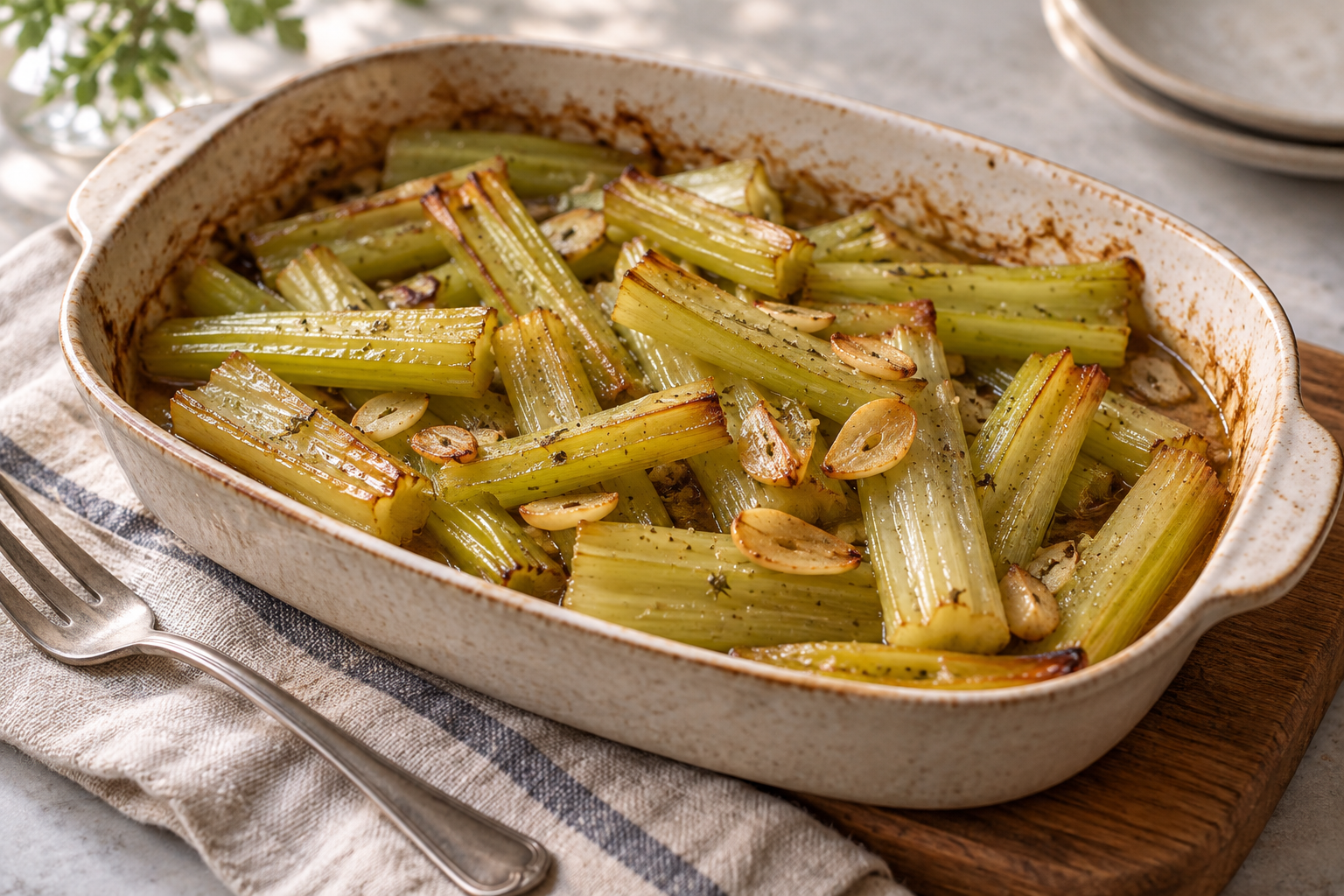
Celery can be the main vegetable instead of a few chopped pieces hidden in soup. UCL’s Egyptian plant table includes celery and garlic in its ancient record. This is enough to frame a vegetable adaptation, but not evidence that Egyptian cooks roasted thick supermarket celery stalks in this form.
The cereal-processing context suggests a useful setting for a warm side alongside grain food. We place the ingredient discussion in the New Kingdom, roughly 1550–1070 BCE. The large fleshy stalks, oven temperature and covered-then-uncovered method are modern decisions, with no claim of an exact pharaonic recipe.
Celery changes noticeably under gentle heat. Its sharp fresh crunch gives way to a tender, aromatic bite, while the fibres remain visible. Trim the tough base and pull away particularly long strings before cooking. A small amount of water and a cover let the stalks soften first; only then is the cover removed to colour the edges.
Garlic should be tucked among the stalks rather than left exposed on top, where small pieces may scorch. Serve the celery with the reduced cooking liquid so its flavour stays in the dish. It works well beside a lentil pot or roasted fish. If the stalks remain tough, extend the covered stage instead of making the oven hotter. The recipe offers a concrete modern way to consider a less celebrated ancient plant, while keeping the archaeological evidence separate from our choice to roast, portion and season it.
Roasted celery with garlic
Serves 4 · Preparation 15 min · Cooking 45 min
A modern adaptation for home cooking. Times are approximate.
Ingredients
- 600 g celery stalks, trimmed and strings removed where tough
- 3 garlic cloves, sliced
- 20 ml (4 tsp) olive oil
- 75 ml water
- 3 g (½ tsp) salt
Method
- Heat oven to 200°C/400°F. Cut celery stalks into 8 cm/3-inch lengths.
- Arrange in a shallow baking dish. Tuck garlic between stalks, add water, drizzle oil and season with salt.
- Cover tightly with foil or an oven-safe lid. Bake 25–30 minutes until nearly tender.
- Uncover and bake 10–15 minutes more until the edges lightly colour and a knife enters easily. Spoon over cooking juices.
Substitutions and adjustments
- Leek lengths make a softer modern substitute; wash between their layers carefully.
- Use 2.5 ml (½ tsp) garlic powder if fresh garlic is unavailable.
Historical choices: Celery and garlic are documented plants; roasting modern stalks in this arrangement is a newly devised adaptation.
Troubleshooting: Stringy stalks: peel away long outer fibres. Scorched garlic: tuck it into the moist centre and extend covered cooking.
Storage and reheating: Refrigerate within 2 hours and use within 3 days. Reheat covered with a splash of water until steaming hot.
Kitchen note: Wash produce and use clean utensils. Refrigerate perishable food promptly; this is not a preservation recipe.
Sources and further reading
- UCL Digital Egypt for Universities. Celery and garlic entries with New Kingdom evidence; does not attest a roast.
- UCL Digital Egypt for Universities. Cereal-farming context for a vegetable side; not the cooking method.
Browse Ancient Recipes for Modern Kitchens · More creative work at Incoprea