MODERN KITCHENS · 047 / 100
Ancient Egyptian grain and fruit evidence · Nile Valley, Egypt · New Kingdom Egypt, approximately 1550–1070 BCE
Evidence: historically informed adaptation. The historical evidence and modern cooking choices are distinguished below.
Dates and grain give this soft bowl its historical starting point. UCL’s plant table records dates in ancient Egypt, while its cereal account describes emmer and barley processing. Those facts do not establish a milk-and-date pudding, and modern durum semolina is not identical to the grain in every ancient loaf.
The New Kingdom frame, approximately 1550–1070 BCE, concerns the ingredient landscape. The recipe is a new adaptation, built for an ordinary saucepan. Pasteurized milk gives a gentle, familiar base; it is a modern specification rather than a dairy method recovered from an Egyptian cooking text. No ancient name is attached to the bowl.
Chopped dates soften first so their sweetness can move into the liquid. Sprinkle the semolina gradually while stirring, because a pile of dry grain can form stubborn lumps. A low heat gives the cook time to control the texture. The pudding should remain soft enough to spoon and will thicken as it stands, so a small extra splash of milk is useful at serving.
Use it as a warm breakfast or divide it into smaller dessert bowls. The sweetness depends on the dates; there is no need to add honey automatically. Check each chopped date for a stray stone even if the packet calls it pitted. This simple dish gives a practical route into an ancient fruit and cereal discussion without implying that every modern milk pudding has a pharaonic origin. The ingredients’ context is sourced; the semolina grade, milk quantity, order of cooking and serving format belong to this contemporary recipe.
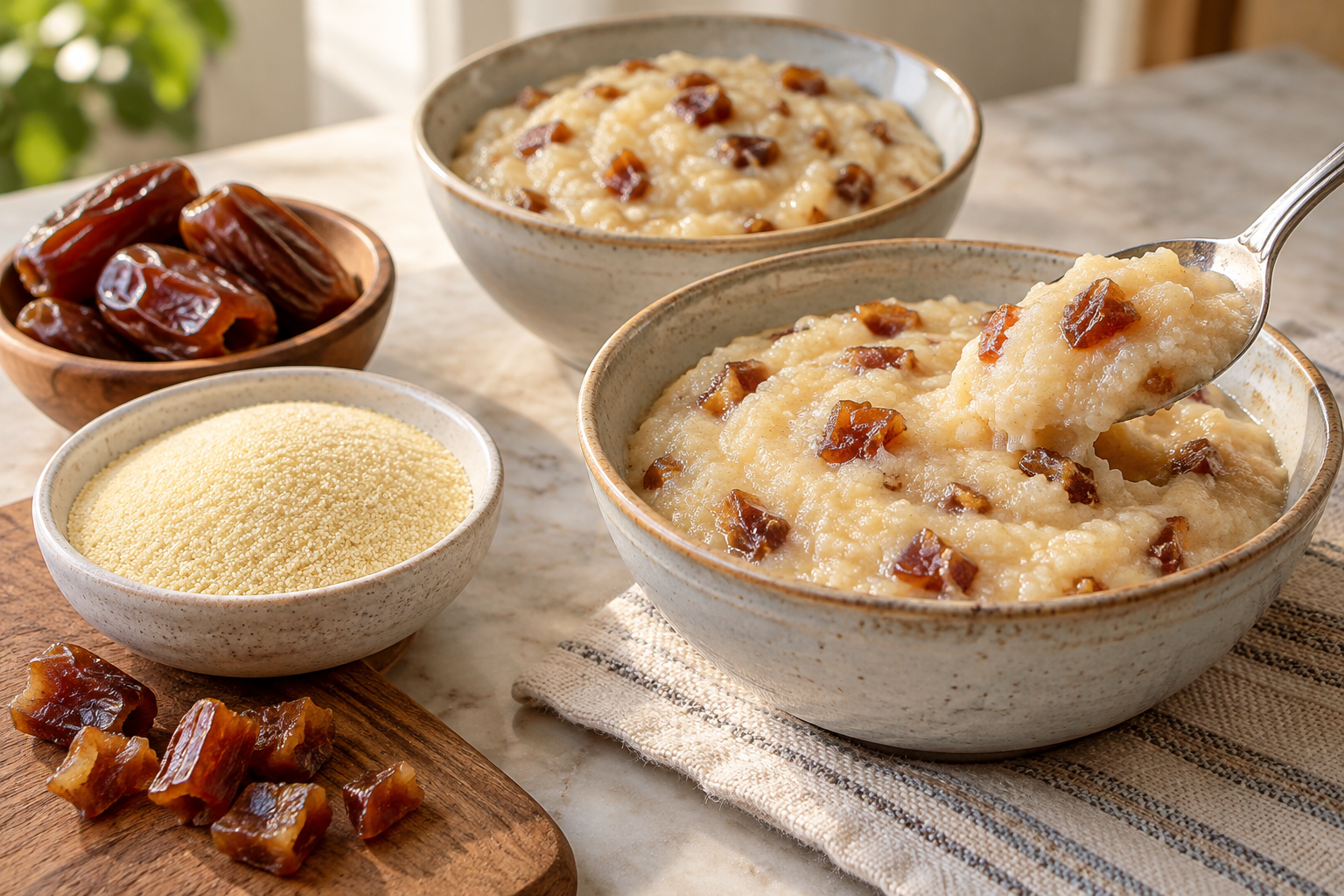
Date-sweetened milk semolina
Serves 4 · Preparation 10 min · Cooking 15 min
A modern adaptation for home cooking. Times are approximate.
Ingredients
- 600 ml (2½ cups) pasteurized milk
- 100 g pitted dates, finely chopped
- 70 g (about ⅓ cup) fine wheat semolina
- 0.5 g (small pinch) salt
Method
- Check dates for stones and chop finely. Put milk, dates and salt in a saucepan.
- Heat gently, stirring, for 6–8 minutes until dates soften and milk is hot but not boiling hard.
- Sprinkle in semolina gradually, stirring continuously. Simmer on low heat 5–7 minutes until thickened and the grain no longer tastes gritty.
- Serve warm in four small bowls. Add a little milk if it thickens too much.
Substitutions and adjustments
- Use unsweetened oat or soy milk as a modern dairy-free choice.
- Fine polenta needs its own packet timing and changes the historical grain connection.
Historical choices: Dates and Egyptian grain evidence inspire the bowl; pasteurized milk, durum semolina and the pudding formula are modern.
Troubleshooting: Lumps: whisk while adding grain gradually. Too stiff: stir in warm milk, a spoonful at a time.
Storage and reheating: Cool promptly and refrigerate up to 2 days. Reheat gently while stirring with extra milk until steaming throughout.
Kitchen note: Contains wheat and milk. Check dates for stones, cook grain fully and refrigerate promptly.
Sources and further reading
- UCL Digital Egypt for Universities. Dates in the Egyptian plant record; not a pudding recipe.
- UCL Digital Egypt for Universities. Emmer and barley processing context; modern durum semolina is a distinct specification.
Browse Ancient Recipes for Modern Kitchens · More creative work at Incoprea