MODERN KITCHENS · 046 / 100
Ancient Egyptian plant context and modern assembly · Nile Valley, Egypt · Third Intermediate through Roman-period Egyptian context, approximately 1070 BCE–300 CE
Evidence: historically informed adaptation. The historical evidence and modern cooking choices are distinguished below.
A leaf can serve as a small plate without pretending to reproduce a named ancient dish. UCL’s Egyptian plant table includes peas, dates and dill, while the Petrie Museum’s lettuce model provides a separate object context. The evidence does not show these foods assembled into lettuce cups.
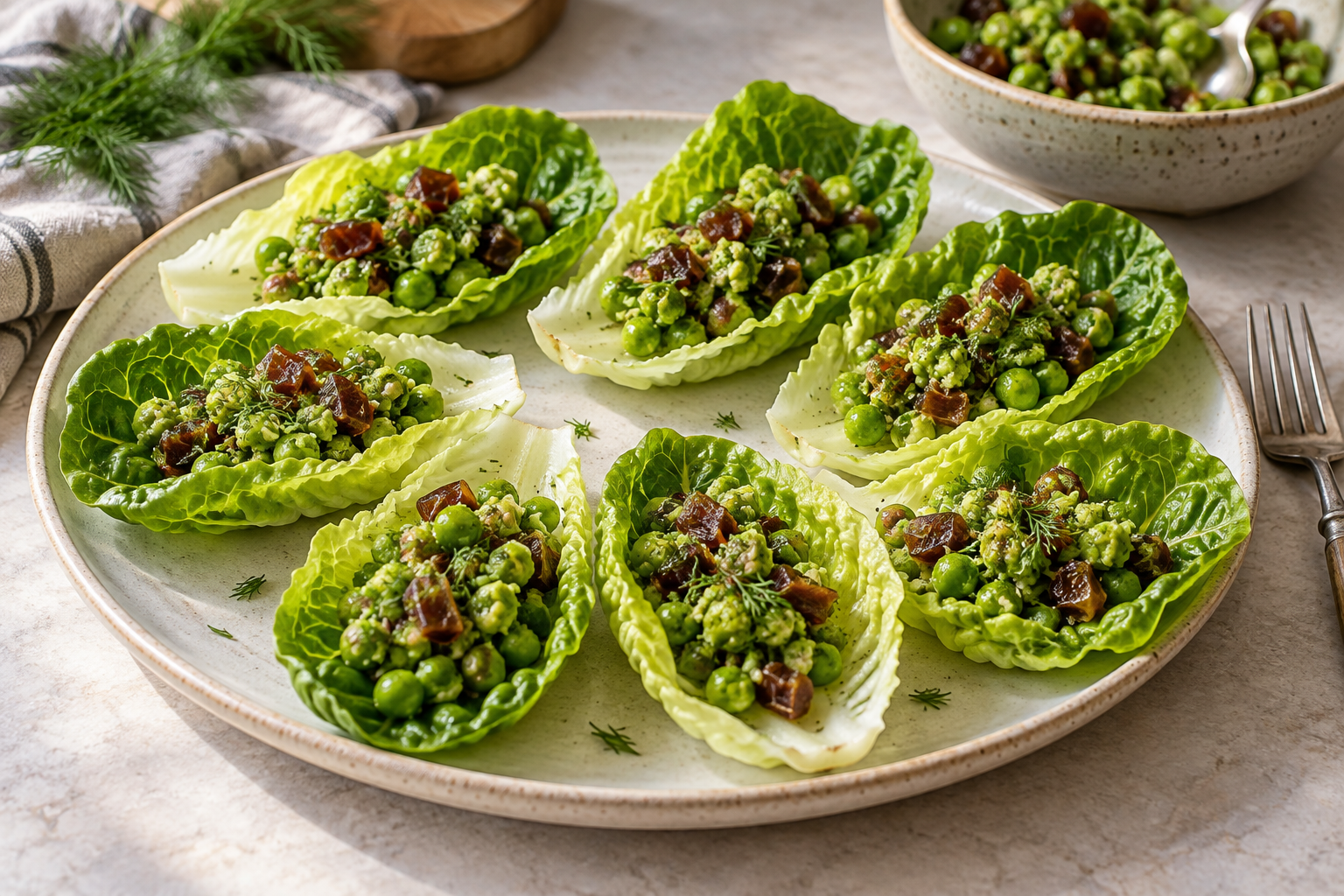
The broad Egyptian frame extends from the Third Intermediate Period into the Roman period, approximately 1070 BCE–300 CE. Different plants and objects have different histories within it; this is not one securely dated menu. Our cups are a contemporary invention that makes the ingredient discussion useful as a light lunch component or a small starter.
Frozen green peas are fully cooked according to their packet, then cooled promptly and lightly crushed. They retain some texture rather than becoming a smooth spread. A small amount of finely diced date supplies sweetness, and dill gives a fresh aroma. These proportions are our own. Use small date pieces so the filling stays savoury and every cup does not become a fruit snack.
Choose lettuce leaves with a natural hollow, wash them and dry them thoroughly. Spoon in the filling only near serving, because a wet leaf and a warm mixture quickly lose their crispness. The contrast is the point: cool leaf, soft peas and a few chewy fruit pieces. No home preservation or unfamiliar wild leaves are needed. This assembly keeps the ancient ingredient context visible while the frozen peas, dressing, leaf portions and presentation remain explicit modern choices, with no claim of uninterrupted continuity.
Lettuce cups with crushed peas and dates
Serves 4 · Preparation 20 min · Cooking 5 min · 15–20 minutes cooling peas in refrigerator
A modern adaptation for home cooking. Times are approximate.
Ingredients
- 300 g frozen green peas
- 40 g pitted dates, finely diced
- 8 small (about 120 g) romaine or little-gem lettuce leaves
- 10 g fresh dill, chopped
- 15 ml (1 tbsp) olive oil
- 5 ml (1 tsp) wine vinegar
- 2 g (⅓ tsp) salt
Method
- Cook peas according to their packet, usually 3–5 minutes in boiling water. Drain, rinse briefly under cool drinking water and drain well.
- Lightly crush peas with a fork, leaving some whole. Refrigerate in a shallow bowl until cool.
- Check dates for stones. Mix cooled peas with diced dates, dill, oil, vinegar and salt.
- Wash and dry lettuce leaves. Divide filling among eight leaves just before serving, two per portion.
Substitutions and adjustments
- Cooked canned peas work but make a softer filling; drain well.
- Use washed small cabbage leaves only after blanching and cooling; this changes the texture and historical connection.
Historical choices: Pea, date and herb context and a lettuce object inform a newly invented cup assembly. Frozen peas, dressing and proportions are modern.
Troubleshooting: Soggy cups: dry lettuce and cool/drain peas thoroughly. Too sweet: chop dates finer and use less.
Storage and reheating: Refrigerate filling separately up to 2 days; keep washed leaves dry and cold. Assemble near serving.
Kitchen note: Cook frozen peas as the packet directs; wash leaves, check dates for stones and keep the prepared filling chilled.
Sources and further reading
- UCL Digital Egypt for Universities. Peas, dates and dill in the plant table; no evidence for their combination in lettuce cups.
- Petrie Museum: lettuce model UC 34696. Lettuce representation; not proof of this leaf-cup serving technique.
Browse Ancient Recipes for Modern Kitchens · More creative work at Incoprea