MODERN KITCHENS · 045 / 100
Ancient Egyptian crop evidence · Nile Valley, Egypt · New Kingdom Egypt, approximately 1550–1070 BCE
Evidence: historically informed adaptation. The historical evidence and modern cooking choices are distinguished below.
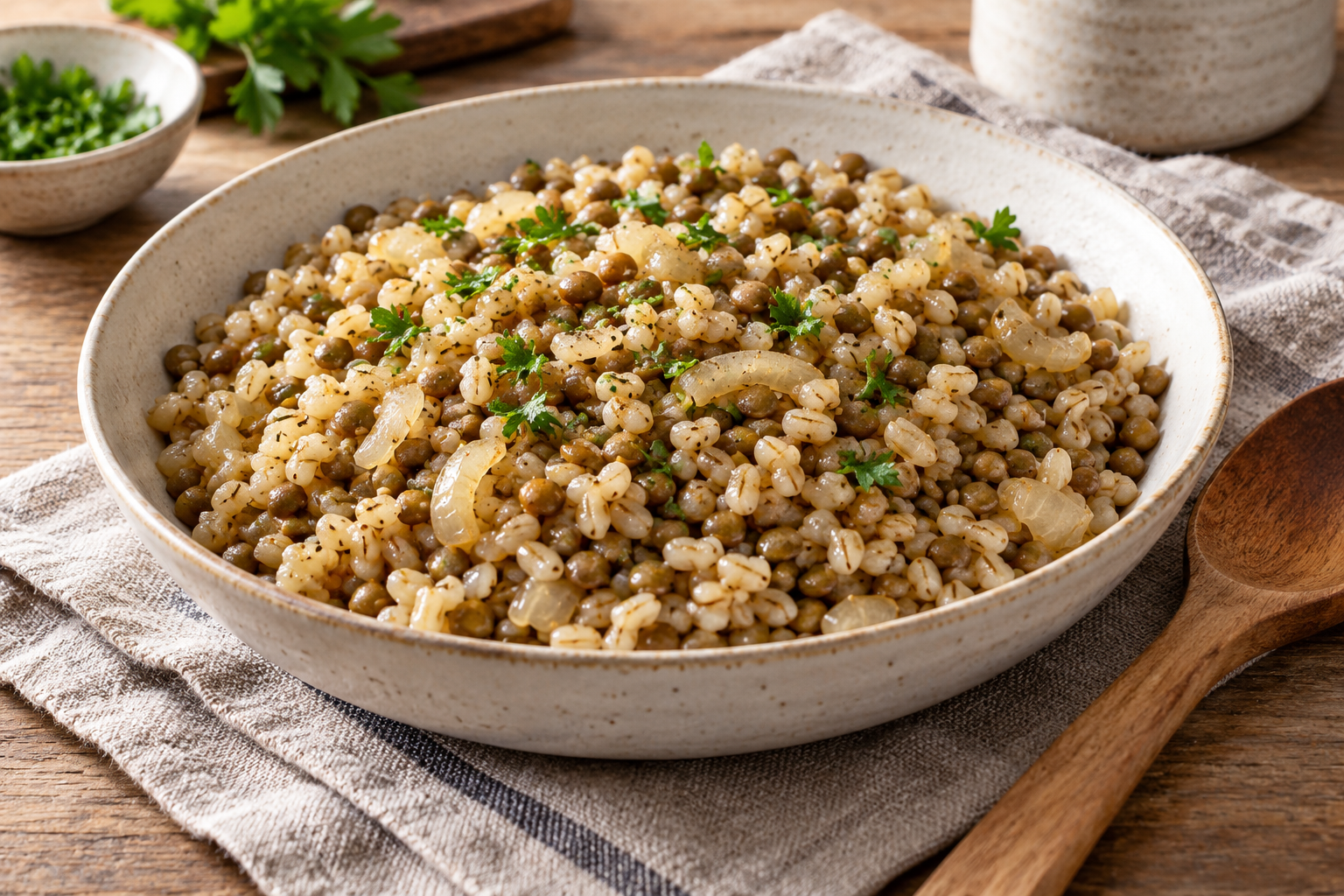
Grain and pulses need not be rivals in one pot. UCL’s cereal-production account identifies barley in Egyptian farming, and its plant-find table includes lentils. Together they provide a specific ancient ingredient context, but no excavated recipe tells us to simmer the two in these proportions.
The New Kingdom setting, approximately 1550–1070 BCE, is a historical frame for the ingredients rather than a date for this new dish. We use pearl barley and supermarket green lentils because they are convenient and keep their shapes. Modern processing changes the grain’s cooking behaviour; it cannot be silently equated with every ancient barley preparation.
Start the barley before the lentils so the two can become tender together. Green or brown lentils are useful here because red split lentils would dissolve, changing the dish from loose grains to a thick mash. Keep the lid on during the main simmer, then check both components before letting excess liquid evaporate. A final rest allows the moisture to settle.
The result is a substantial vegetarian bowl with distinct kernels and pulses, not a smooth soup. Onion and a small amount of cumin make the flavour complete without elaborate seasoning. Serve with a fresh vegetable side or a spoonful of pasteurized yogurt as a modern addition. This pot invites a practical encounter with documented crops while leaving the actual combination, cooking schedule, stock and serving suggestions clearly in the present. Its generated illustration shows the adaptation, not a reconstruction of a particular ancient meal.
Barley and green-lentil pilaf
Serves 4 · Preparation 15 min · Cooking 60 min · 5 minutes resting
A modern adaptation for home cooking. Times are approximate.
Ingredients
- 150 g pearl barley
- 150 g dry green or brown lentils, rinsed
- 150 g onion, diced
- 20 ml (4 tsp) olive oil
- 800 ml low-salt vegetable stock or water
- 1 g (½ tsp) ground cumin
- 3 g (½ tsp) salt, if needed
- 5 g fresh parsley, chopped, optional modern garnish
Method
- Warm oil in a lidded saucepan; soften onion for 7–8 minutes. Stir in cumin and barley.
- Add stock, bring to a boil and simmer covered 15 minutes.
- Add lentils, cover and simmer 25–30 minutes until both lentils and barley are tender. Add 50–100 ml water if the pot becomes dry.
- Uncover for 3–5 minutes if liquid remains. Check salt, turn off heat and rest covered 5 minutes; loosen gently with a fork. Add the optional fresh herb garnish at serving.
Substitutions and adjustments
- Use 400 g cooked lentils, adding them during the final 5 minutes.
- Red lentils are not a direct substitute; they produce a softer, thicker result.
Historical choices: Barley and lentils are archaeologically documented crops; the combined pilaf, pearl grain and modern stock are not an attested Egyptian recipe.
Troubleshooting: Lentils hard: simmer longer with extra water. Grain clumped: loosen after the covered rest rather than stirring continuously.
Storage and reheating: Cool promptly in shallow containers, refrigerate up to 3 days. Reheat with a splash of water to 74°C/165°F.
Kitchen note: Wash produce and use clean utensils. Refrigerate perishable food promptly; this is not a preservation recipe.
Sources and further reading
- UCL Digital Egypt for Universities. Barley within ancient Egyptian cereal processing; not a pilaf formula.
- UCL Digital Egypt for Universities. Lentil finds in the Egyptian plant table; no combined grain recipe.
Browse Ancient Recipes for Modern Kitchens · More creative work at Incoprea