MODERN KITCHENS · 044 / 100
Greek literary poultry and seed traditions · Greek-speaking Mediterranean · Classical through Roman-era Greek food references, approximately 500 BCE–250 CE
Evidence: historically informed adaptation. The historical evidence and modern cooking choices are distinguished below.
Sesame and poultry belong to the ancient Greek food vocabulary, but vocabulary does not make a modern coating ancient. Athenaeus’s Book II names a hen and lists sesame among seasonings. The Metropolitan Museum’s sesame discussion also records the seed’s much earlier Aegean evidence. Neither source describes these oven-baked chicken strips.
The historical context is Greek and Aegean, with prehistoric seed references and later classical food writing kept distinct. This recipe does not claim that Bronze Age sesame was paired with our boneless chicken breast. The convenient cut, beaten egg and breadcrumb mixture are contemporary decisions, designed to make a small quantity of seeds form an even coat.
Cut the chicken into strips of similar thickness so they finish together. Pat dry, dip in beaten egg, then press gently into the crumb mixture. A little oil in the coating helps it colour in the oven without deep frying. Sesame can brown before chicken is safely cooked, so the surface appearance alone cannot determine doneness.
A clean thermometer in the thickest strip provides the useful endpoint. Let the pieces stand briefly, then serve with a cool vegetable side and cooked grain. Avoid treating a dark crust as proof that the centre is ready. Commercial breadcrumbs make the texture predictable, while the seeds remain a clear part of the flavour. The historical sources establish an ingredient context; the strip format, coating sequence, oven method and safety check are an original modern adaptation.
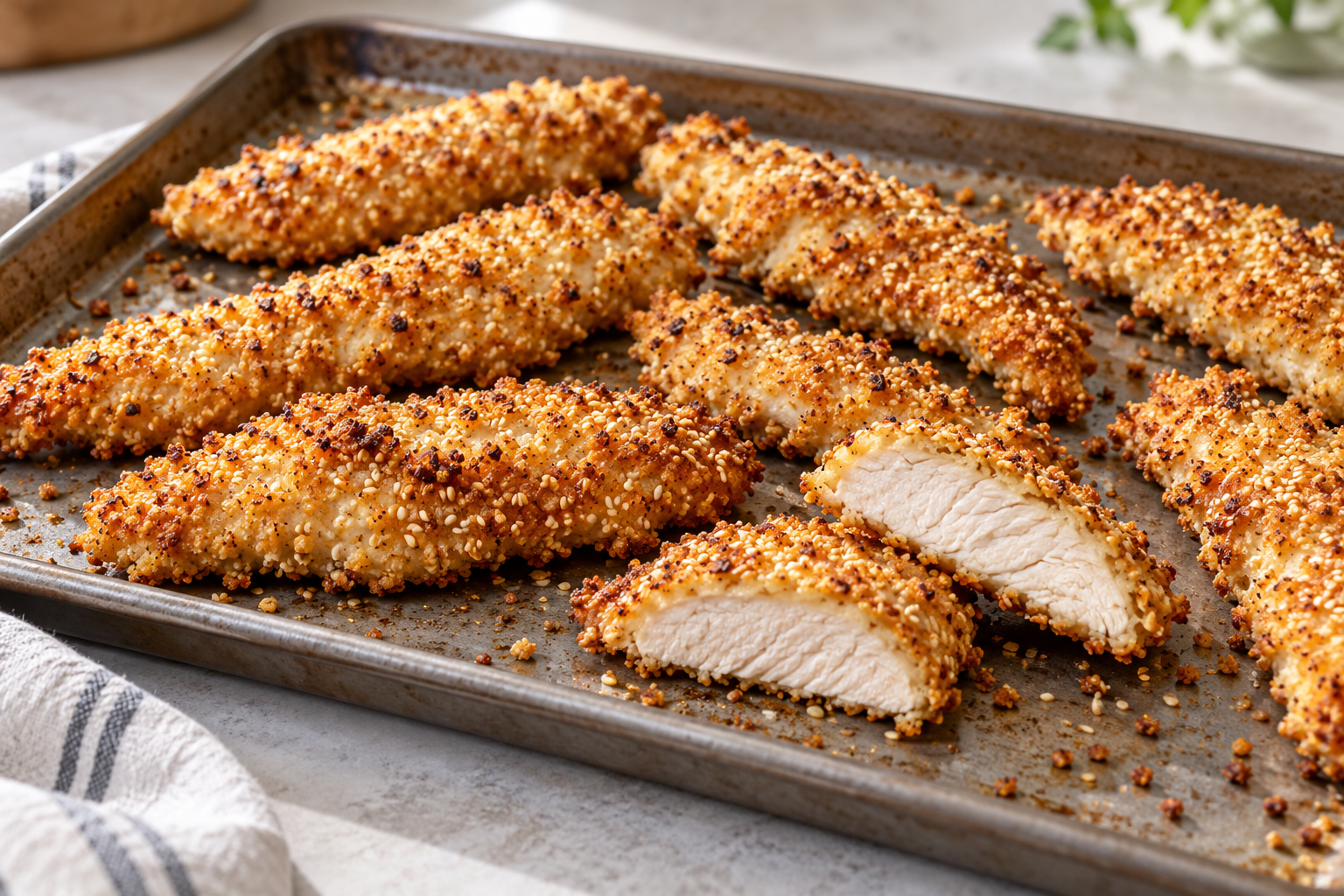
Oven-baked sesame chicken strips
Serves 4 · Preparation 20 min · Cooking 25 min · 3 minutes resting
A modern adaptation for home cooking. Times are approximate.
Ingredients
- 600 g boneless skinless chicken breast, cut into 2 cm-thick strips
- 1 large egg
- 60 g plain breadcrumbs
- 30 g (3 tbsp) sesame seeds
- 15 ml (1 tbsp) olive oil
- 3 g (½ tsp) salt
Method
- Heat oven to 210°C/410°F. Line a tray. Beat egg in a shallow bowl; mix crumbs, sesame, oil and salt in another.
- Pat chicken dry. Dip each strip in egg, then crumbs; press lightly and arrange with gaps on the tray.
- Bake 18–22 minutes, turning once after 12 minutes. Check several thick pieces reach 74°C/165°F.
- If the coating browns before the centre is ready, cover loosely with foil and continue cooking. Rest 3 minutes before serving.
Substitutions and adjustments
- Boneless thigh strips work, usually needing a few extra minutes.
- Use finely crushed plain oatcakes as a modern breadcrumb replacement; check allergens.
Historical choices: Sesame and poultry are separately attested; the chicken-strip coating and oven method are modern inventions.
Troubleshooting: Coating falls off: dry chicken well and press crumbs onto the egg. Pale crumbs: leave space between strips.
Storage and reheating: Refrigerate within 2 hours and use within 3 days. Reheat in a 180°C/350°F oven until 74°C/165°F; coating may soften.
Kitchen note: Keep raw chicken and egg away from ready-to-eat foods. Cook chicken to 74°C/165°F. Contains sesame, egg and wheat.
Sources and further reading
- Athenaeus, Deipnosophistae: public-domain translation. Book II, 65E and 68A: hen and sesame appear separately, not as coated chicken.
- The Met: Open, Sesame!. Aegean Linear B sesame evidence; contextual crop history, not a chicken recipe.
- FoodSafety.gov: safe minimum internal temperatures. Modern safety endpoints; not historical evidence.
- USDA FSIS: keep food safe. Modern refrigeration and reheating guidance; not historical evidence.
Browse Ancient Recipes for Modern Kitchens · More creative work at Incoprea