MODERN KITCHENS · 043 / 100
Greek literary fruit traditions · Greek-speaking Mediterranean · Classical through Roman-era Greek food references, approximately 500 BCE–250 CE
Evidence: historically informed adaptation. The historical evidence and modern cooking choices are distinguished below.
Quinces reward the cook who gives them time. Athenaeus’s Book II includes quinces among foods discussed in cooked form, and his honey passages supply a separate sweet-food context. These are ingredient and treatment references, not a measured quince compote preserved from antiquity.
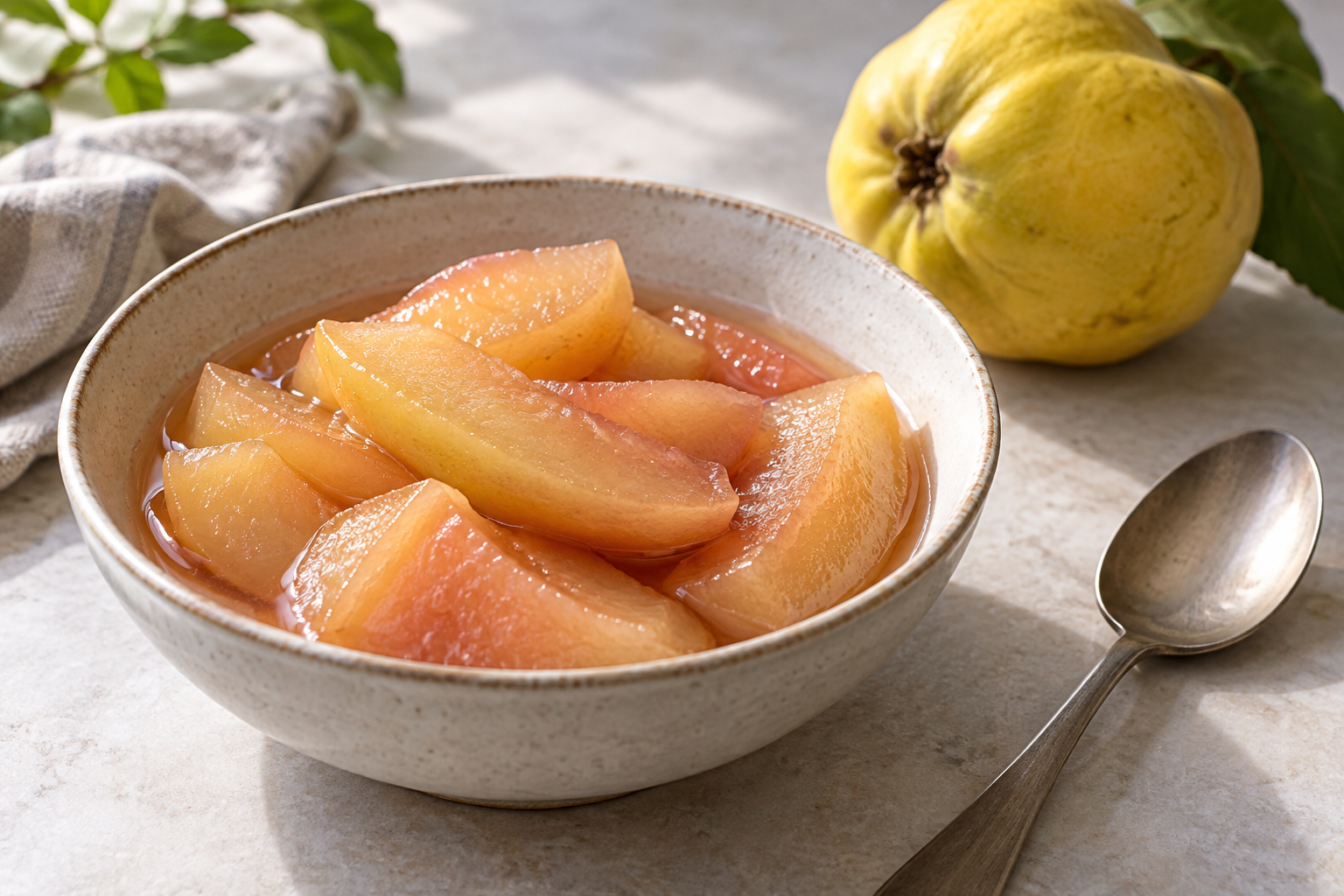
The Greek-speaking setting spans classical material quoted by Athenaeus around 200 CE. The recipe therefore carries a broad date range rather than an invented claim about one city’s dessert. Cooking fruit in a small amount of honeyed water is our interpretation. We neither transfer old medical judgements into modern nutrition advice nor imply that every quince variety behaves identically.
A quince may be awkward to peel and core, so work on a stable board with a sharp knife. Slice it thinly enough that it will become tender in a normal saucepan. The core and seeds are discarded. Keep the simmer gentle: the aim is soft fruit in a light syrup, not a sticky preserve or a shelf-stable product.
If quince is unavailable, firm pears make a useful modern alternative, with a shorter cooking time and a different aroma. That substitution gives the recipe an everyday route without disguising the change. Serve a small bowl warm or cold beside plain pasteurized yogurt. Stop cooking when a spoon can cut the fruit easily; colour is not a reliable endpoint because some varieties remain pale. Ancient textual references give the fruit a historical place, while the honey ratio, slicing, serving suggestion and refrigeration remain entirely modern decisions.
Quince and honey compote
Serves 4 · Preparation 20 min · Cooking 60 min
A modern adaptation for home cooking. Times are approximate.
Ingredients
- 600 g quinces, peeled and cored, yielding about 400 g slices
- 50 g (2½ tbsp) honey
- 400 ml water
Method
- Peel quince, cut into quarters and remove hard cores and seeds. Slice flesh about 5 mm thick.
- Put fruit, honey and water in a saucepan. Bring to a gentle simmer.
- Partly cover and simmer 40–55 minutes until spoon-tender, checking liquid every 10 minutes; add water if needed.
- Uncover for the final 5 minutes only if you want a slightly thicker syrup. Serve warm or cool promptly and chill.
Substitutions and adjustments
- Use 500 g firm peeled pear slices; simmer 15–25 minutes.
- A little sugar may replace honey as a modern sweetener.
Historical choices: Cooked-quince and honey references inform a newly measured compote; it is not an ancient or shelf-stable preserve.
Troubleshooting: Fruit stays hard: slice thinner or continue a gentle simmer. Syrup too thick: add hot water.
Storage and reheating: Refrigerate within 2 hours, covered, up to 3 days. Serve cold or warm gently with a splash of water.
Kitchen note: Discard quince cores and seeds. This is a refrigerated dessert, not a canning method; honey is unsuitable for infants under 12 months.
Sources and further reading
- Athenaeus, Deipnosophistae: public-domain translation. Book II, 59B: cooked quince context; no compote proportions.
- Athenaeus, Deipnosophistae: public-domain translation. Book II, 46–47: honey references; a separate ingredient anchor.
Browse Ancient Recipes for Modern Kitchens · More creative work at Incoprea