MODERN KITCHENS · 041 / 100
Greek shellfish writing · Greek-speaking Mediterranean · Classical through Roman-era Greek food references, approximately 500 BCE–250 CE
Evidence: historically informed adaptation. The historical evidence and modern cooking choices are distinguished below.
The shellfish passages in Athenaeus’s Book III name mussels among many coastal foods and distinguish cooking methods. They are useful evidence of attention to shellfish, but not a recipe for the bread-topped dish shown here. Ancient medical judgements in the passage should not be treated as modern safety guidance.
Book II’s seasoning list gives contextual references to thyme, oil and other kitchen flavours. This modern starter joins ingredients rather than claiming that the whole combination is attested. The Greek-speaking setting covers earlier literary material through Athenaeus’s compilation around the beginning of the third century CE.
Frozen commercially prepared mussel meat keeps the method accessible. Follow its packet’s thawing instructions; the recipe assumes raw or cooked shelled meat thawed safely and then heated thoroughly. Bread crumbs turn a small amount of seafood into a satisfying starter, while the underlying liquid prevents the mussels from drying before the topping colours. No one needs to forage shellfish or guess whether water at a collecting site is safe.
Use a shallow dish and a restrained coating. A heavy blanket of crumbs can stay dry while hiding the mussels, and too much oil makes the topping greasy. The surface should be crisp, with the shellfish hot underneath. Serve with a spoon so the little broth is enjoyed as well. The oven temperature, frozen ingredient, crumb layer and portion size are present-day choices. The historical anchor is a specific ancient interest in mussels and cooked shellfish, with the limits left visible.
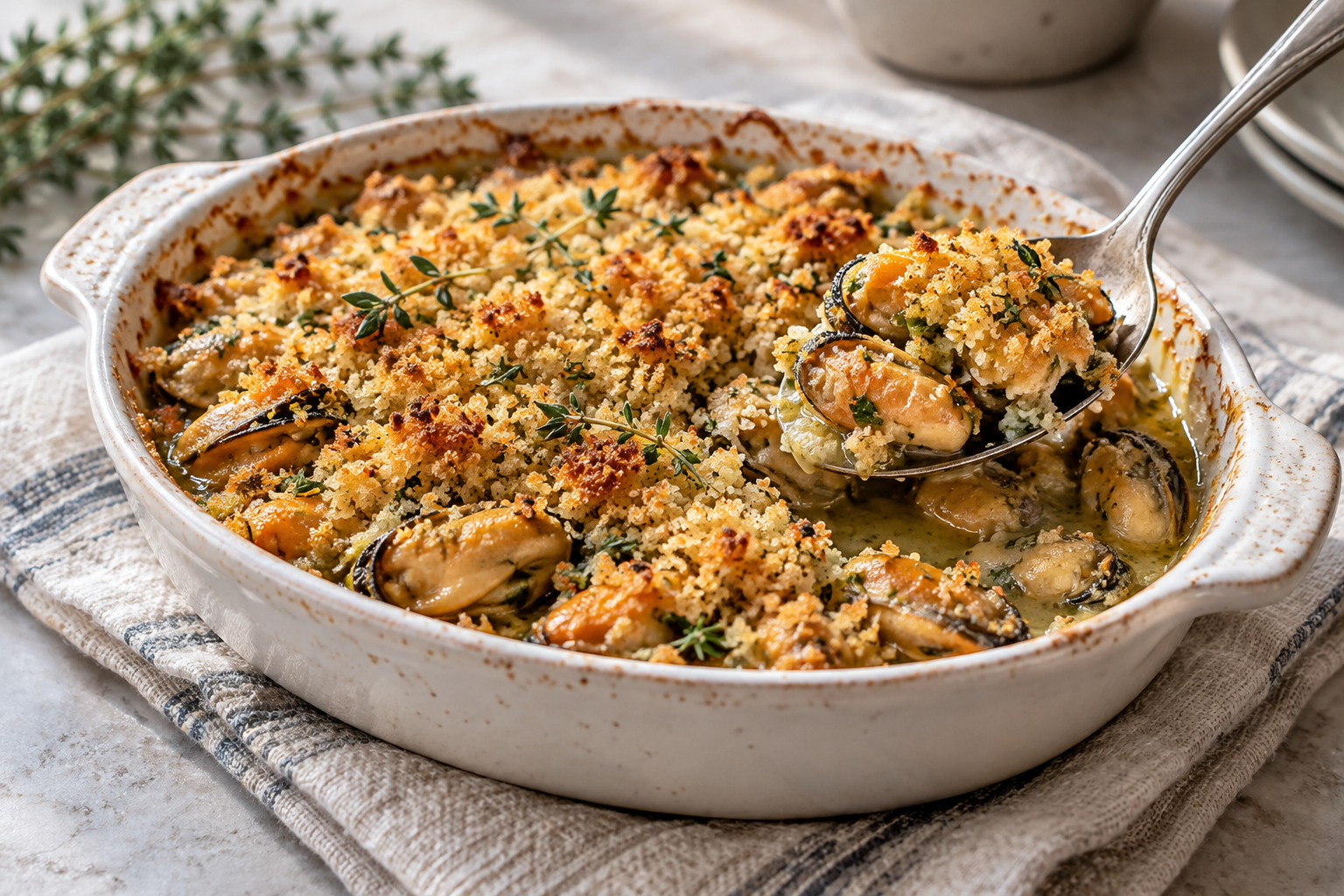
Mussels baked with thyme bread crumbs
Serves 4 · Preparation 15 min · Cooking 18 min
A modern adaptation for home cooking. Times are approximate.
Ingredients
- 400 g commercial frozen shelled mussel meat, safely thawed
- 80 g (about 1 cup) fresh bread crumbs
- 20 ml (4 tsp) olive oil
- 1 garlic clove, finely chopped
- 1 g (1 tsp) dried thyme
- 75 ml water
- 1 g (¼ tsp) salt, if needed
Method
- Thaw mussels in the refrigerator according to the packet. Heat oven to 210°C/410°F.
- Spread mussel meat in a shallow 1-litre oven dish and add the water.
- Mix crumbs, oil, garlic and thyme. Sprinkle evenly over mussels; add salt only if their packet is not already salted.
- Bake 15–18 minutes until crumbs are golden and the centre of the layered bake reaches 74°C/165°F, whether the mussels were sold raw or already cooked. Follow any longer packet instruction.
- Serve promptly as four small starters.
Substitutions and adjustments
- Use a food-safe commercial mix of shelled clams and mussels; follow its cooking instructions.
- Fresh whole mussels require a different cleaning and opening method; they are not a direct weight-for-weight substitute.
Historical choices: Mussel and cooking references inform a new breadcrumb bake; frozen shelled meat and the topping are modern conveniences.
Troubleshooting: Dry topping: drizzle over 5 ml (1 tsp) oil. Liquid pooling: use a shallow dish and drain thawed mussels well.
Storage and reheating: Refrigerate within 2 hours and use within 2 days. Reheat covered to 74°C/165°F; topping will soften.
Kitchen note: Use commercially sourced shellfish kept cold. Cook the centre of this layered bake to 74°C/165°F regardless of the raw or precooked product. Follow packet instructions. Contains molluscan shellfish and wheat.
Sources and further reading
- Athenaeus, Deipnosophistae: public-domain translation. Book III, 85–92: mussels and cooked shellfish; no breadcrumb formula.
- Athenaeus, Deipnosophistae: public-domain translation. Book II seasoning vocabulary including thyme; combination not attested.
- FoodSafety.gov: safe minimum internal temperatures. Modern safety endpoints; not historical evidence.
- USDA FSIS: keep food safe. Modern refrigeration and reheating guidance; not historical evidence.
Browse Ancient Recipes for Modern Kitchens · More creative work at Incoprea