MODERN KITCHENS · 040 / 100
Greek fish writing and literary food traditions · Greek-speaking Mediterranean · Classical through Roman-era Greek food references, approximately 500 BCE–250 CE
Evidence: historically informed adaptation. The historical evidence and modern cooking choices are distinguished below.
Fish varieties and how to treat them occupy long stretches of ancient food writing. Athenaeus’s Book VII names mackerel and preserves Archestratus’s preference for restrained treatment of tender, fatty fish. The advice is broader than one measured recipe and does not specifically prescribe our oregano-coated mackerel.
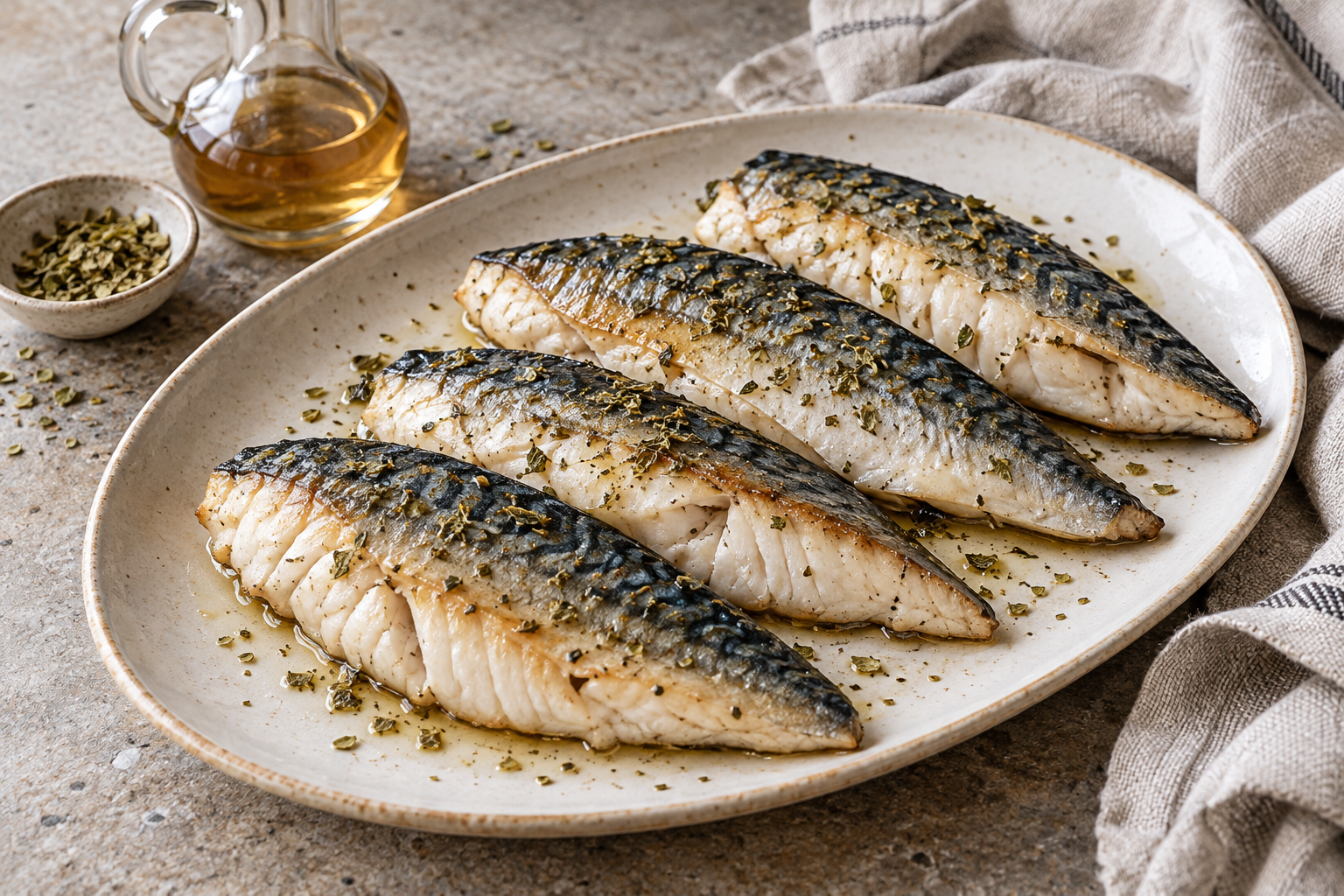
The herb and seasoning references in Book II give another part of the Greek culinary setting. The material includes older classical voices preserved around 200 CE. Our fillets, electric oven and supermarket oregano belong to a modern method, rather than a claim to have recovered the precise fish or garnish from a classical plate.
Mackerel is rich enough that it needs only a little oil. Patting the skin dry helps the surface roast rather than steam. Put fillets in a single layer, and check the thickest flesh early; a thin piece can be ready before the suggested time. The small amount of vinegar is added after cooking so each portion can be adjusted without soaking the skin.
Serve immediately, while the flesh separates into moist flakes. Frozen mackerel is useful when thawed safely in the refrigerator and dried before roasting. If it is unavailable, trout offers an accessible substitution with a different ancient connection. The recipe makes a modest main course beside cooked grains and greens. Its historical interest rests in paying attention to the fish itself, while the herb choice, portions and safe modern endpoint remain explicit contemporary decisions.
Oven-roasted mackerel with oregano
Serves 4 · Preparation 10 min · Cooking 15 min
A modern adaptation for home cooking. Times are approximate.
Ingredients
- 600 g boneless mackerel fillets, thawed if frozen
- 15 ml (1 tbsp) olive oil
- 1 g (1 tsp) dried oregano
- 3 g (½ tsp) salt
- 10 ml (2 tsp) wine vinegar, to finish
Method
- Heat oven to 220°C/425°F. Line a tray with baking paper.
- Check fillets for pin bones and pat dry. Place skin-side down in one layer, rub lightly with oil and sprinkle with oregano and salt.
- Roast 10–15 minutes, checking earlier for thin fillets, until the thickest part reaches 63°C/145°F and flesh flakes.
- Add a few drops of vinegar to each portion and serve immediately.
Substitutions and adjustments
- Trout fillets are a practical oily-fish substitute; adjust timing to thickness.
- Dried marjoram replaces oregano.
Historical choices: Ancient fish descriptions and general restraint in seasoning inform the method; oregano, fillet portions and oven settings are modern.
Troubleshooting: Dry flesh: check thinner fillets sooner. Pale skin: the method cooks safely but does not promise crisp skin.
Storage and reheating: Refrigerate within 2 hours and eat within 2 days. Reheat gently, covered, to 74°C/165°F, or use cold only if properly chilled.
Kitchen note: Buy fish from a reliable refrigerated source. Check for bones and cook to 63°C/145°F; cooking does not rescue spoiled mackerel.
Sources and further reading
- Athenaeus, Deipnosophistae: public-domain translation. Book VII, 324: mackerel discussion and Archestratus on simple treatment of fatty fish; not an oregano recipe.
- Athenaeus, Deipnosophistae: public-domain translation. Book II, 68: herb vocabulary; modern oregano choice is not a quoted directive.
- FoodSafety.gov: safe minimum internal temperatures. Modern safety endpoints; not historical evidence.
- USDA FSIS: keep food safe. Modern refrigeration and reheating guidance; not historical evidence.
Browse Ancient Recipes for Modern Kitchens · More creative work at Incoprea