MODERN KITCHENS · 039 / 100
Greek literary food traditions · Greek-speaking Mediterranean · Classical through Roman-era Greek food references, approximately 500 BCE–250 CE
Evidence: historically informed adaptation. The historical evidence and modern cooking choices are distinguished below.
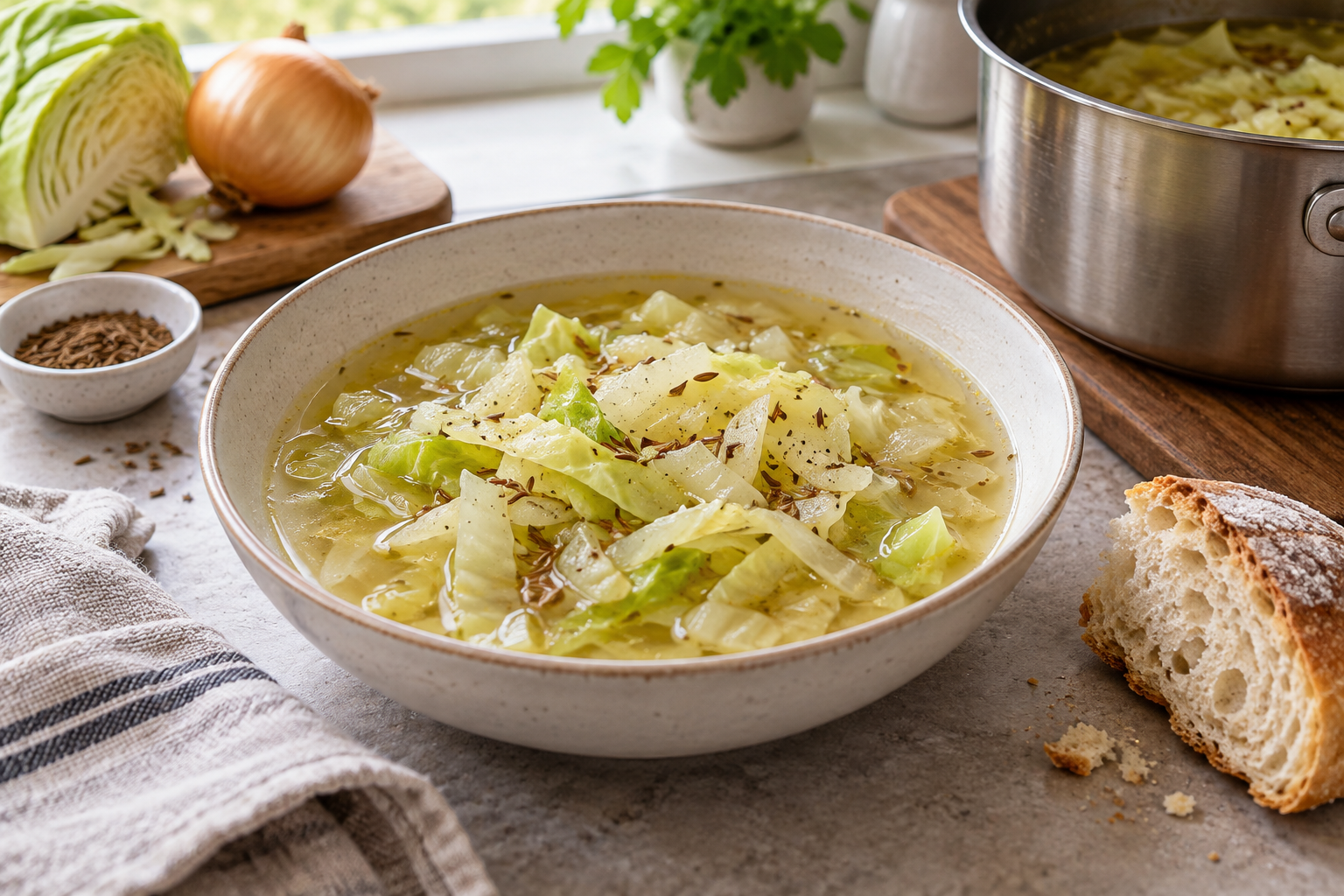
Cabbage appears repeatedly in Greek food writing. Athenaeus’s account includes a cabbage cooked with oil, while his vegetable discussions show how often meals and medical opinions share a page. The latter opinions are historical evidence about beliefs, not present-day dietary advice.
This soup takes its place in a Greek-speaking food context approximately 500 BCE to 250 CE. It is a new household recipe, not an adaptation of a surviving cabbage-soup formula. Modern white cabbage has its own cultivar history, and commercial stock gives a convenient base. The measured cumin and oil make a simple pot more aromatic without requiring unusual herbs or reconstructed equipment.
Cutting the cabbage into short strips is useful for eating: long strands can hang awkwardly from a spoon. Soften the onion first, then add the cumin briefly before the liquid. That sequence releases aroma while limiting the risk of scorched spice. The cabbage only needs enough time to become tender; a long, hard boil can make both texture and smell less inviting.
The finished soup remains brothy rather than pureed. Serve it with a bread wedge or a cooked pulse dish to make a fuller meal. The recipe deliberately offers practical cues instead of repeating ancient claims about digestion or cures. Taste the liquid after the cabbage has softened, because stock brands differ in salt. Ancient texts establish a vegetable and a cooking interest; they do not tell us the size of this saucepan, the amount of liquid or the needs of a modern diner.
Cabbage and cumin soup
Serves 4 · Preparation 15 min · Cooking 25 min
A modern adaptation for home cooking. Times are approximate.
Ingredients
- 500 g white or green cabbage, in short thin strips
- 150 g onion, diced
- 15 ml (1 tbsp) olive oil
- 2 g (1 tsp) cumin seeds, lightly crushed
- 1 litre (4 cups) low-salt vegetable stock
- 2 g (⅓ tsp) salt, if needed
Method
- Warm oil in a saucepan. Cook onion over medium-low heat 6 minutes until soft.
- Stir in cumin for 30 seconds, then add cabbage and stock.
- Bring to a boil, lower heat and simmer 15–18 minutes until cabbage is tender but still identifiable.
- Taste before adding salt. Add hot water if you prefer a lighter broth and serve.
Substitutions and adjustments
- Use savoy cabbage, reducing simmering if its leaves soften sooner.
- Ground cumin works; use 1 g/½ tsp and stir only briefly before adding liquid.
Historical choices: The sources anchor cabbage, oil and broad seasoning; this light soup and its measures are modern. Ancient medical claims are not endorsed.
Troubleshooting: Strong smell: avoid a prolonged hard boil. Bland broth: check salt and crush cumin before cooking.
Storage and reheating: Cool promptly in shallow containers and refrigerate up to 3 days. Reheat to a boil, stirring so all portions become hot.
Kitchen note: Wash produce and use clean utensils. Refrigerate perishable food promptly; this is not a preservation recipe.
Sources and further reading
- Athenaeus, Deipnosophistae: public-domain translation. Book II, 65C: cabbage with oil; the new soup is not stated there.
- Athenaeus, Deipnosophistae: public-domain translation. Book II vegetable and medical discourse; context for treating old health claims critically.
Browse Ancient Recipes for Modern Kitchens · More creative work at Incoprea