MODERN KITCHENS · 038 / 100
Greek literary food traditions · Greek-speaking Mediterranean · Classical through Roman-era Greek food references, approximately 500 BCE–250 CE
Evidence: historically informed adaptation. The historical evidence and modern cooking choices are distinguished below.
A grain can thicken a meal without disappearing into flour. Barley has an ancient literary foothold in Athenaeus’s barley-water discussion, while cheese and eggs appear in his seasoning inventory. The baked barley mixture below is not described in either passage. Its structure is a modern answer to a practical lunch problem.
The historical context belongs to the Greek-speaking Mediterranean, roughly the classical period through Athenaeus’s early third-century compilation. A modest ingredient reference is more secure than giving our new dish an invented ancient name. Rolled oats would be convenient, but pearl barley preserves a clearer connection here while providing a pleasantly chewy result.
Cooking the barley first makes the bake manageable. Raw grain would compete with the egg mixture for moisture and might stay hard after the surface browned. Well-washed leeks are softened separately, then folded through the grain. Eggs bind the pieces, and pasteurized cheese supplies richness. A small dish keeps the portions thick enough to slice while allowing heat to reach the centre.
Let the bake stand briefly before cutting. It should be moist and cohesive, with individual kernels visible, rather than a smooth custard. A spoonful of cooked greens beside it makes a simple lunch. If the barley is already cooked and refrigerated, the dish can come together quickly, but do not omit the final temperature check. The measured filling, egg binder, cheese choice and oven method are modern specifications. The value of the historical sources is to keep the ancient ingredient context visible without treating every plausible combination as a surviving recipe.
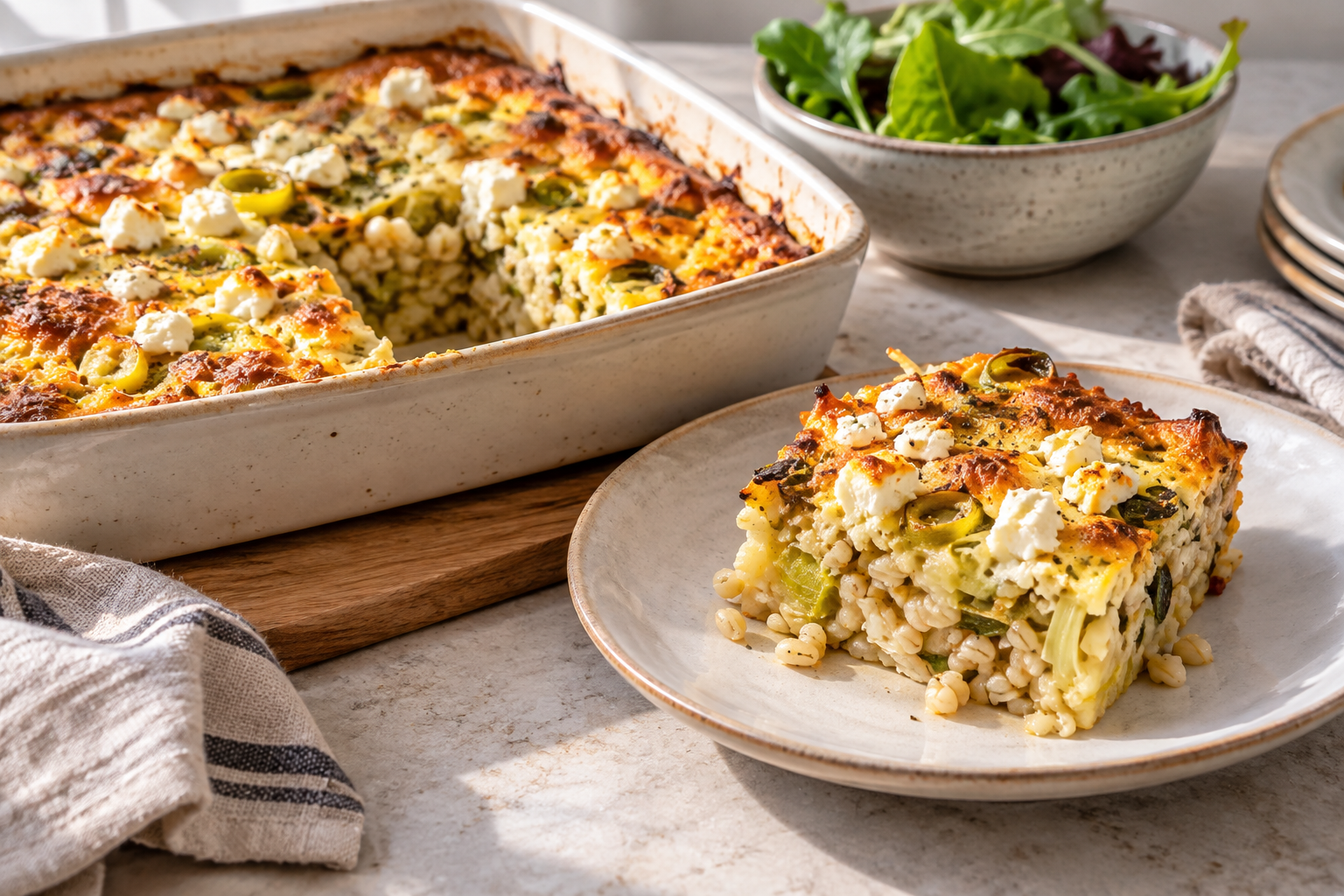
Leek, cheese and barley bake
Serves 4 · Preparation 20 min · Cooking 70 min · 10 minutes cooling grain; 10 minutes final rest
A modern adaptation for home cooking. Times are approximate.
Ingredients
- 150 g pearl barley
- 1 litre water, for barley
- 250 g leeks, washed thoroughly and sliced
- 15 ml (1 tbsp) olive oil
- 2 large eggs
- 150 ml pasteurized milk
- 100 g pasteurized feta, crumbled
- 1 g (¼ tsp) salt
- 1 g (½ tsp) dried thyme
Method
- Boil barley in water for 30–40 minutes until tender; drain very well and cool 10 minutes.
- Heat oven to 190°C/375°F. Oil a 20 cm/8-inch square baking dish.
- While the barley simmers, soften leeks in oil in a frying pan for 8–10 minutes. Allow to cool slightly before adding to eggs.
- Beat eggs with milk, salt and thyme. Fold in barley, leeks and feta; spread in the dish.
- Bake 25–30 minutes until the centre is set and reaches 74°C/165°F. Rest 10 minutes before slicing.
Substitutions and adjustments
- Use 400 g already cooked barley to shorten preparation.
- Ricotta makes a milder modern cheese choice; add salt to taste.
Historical choices: A modern baked grain-and-egg dish, anchored in separate Greek food references; no exact ancient formula is claimed.
Troubleshooting: Loose slices: drain grain and leeks carefully, then give the cooked bake its resting time.
Storage and reheating: Refrigerate within 2 hours and use within 3 days. Reheat portions covered until 74°C/165°F.
Kitchen note: Use pasteurized dairy; cook the egg-containing bake to 74°C/165°F. Check the centre, not just the brown surface.
Sources and further reading
- Athenaeus, Deipnosophistae: public-domain translation. Book II, 46E: barley preparation context.
- Athenaeus, Deipnosophistae: public-domain translation. Book II, 68A: eggs and cheese among seasonings; no grain bake.
- FoodSafety.gov: safe minimum internal temperatures. Modern safety endpoints; not historical evidence.
- USDA FSIS: keep food safe. Modern refrigeration and reheating guidance; not historical evidence.
Browse Ancient Recipes for Modern Kitchens · More creative work at Incoprea