MODERN KITCHENS · 034 / 100
Roman · Roman Mediterranean · Roman imperial tradition; surviving compilation approximately 4th–5th centuries CE
Evidence: adapted surviving recipe. The historical evidence and modern cooking choices are distinguished below.
A concentrated dressing can change a plain vegetable without becoming a complicated meal. Apicius 111 lists ginger, dates, honey, cumin and vinegar in a preparation framed around lettuce. This small modern batch keeps that aromatic combination while omitting rue and historical medicinal claims. It is a fresh condiment, not a treatment or shelf-stable infusion.
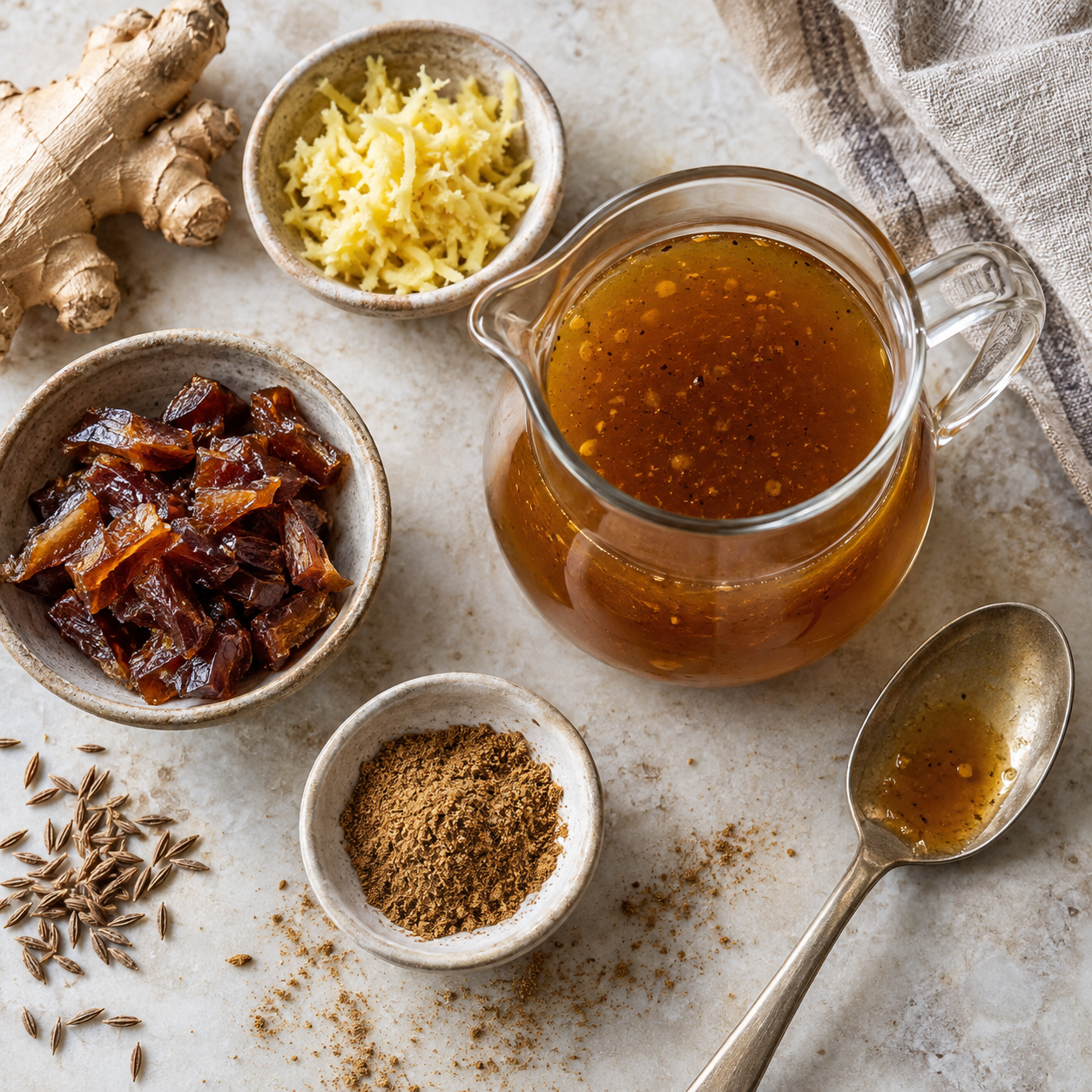
Finely grate the ginger so it releases flavour quickly, and chop soft dates small enough to break down during a brief simmer. Ground cumin is easy to measure and avoids a gritty texture. The saucepan method cooks the mixture evenly, while a little water keeps the acidity manageable. These ratios are chosen for the modern cook rather than presented as recovered ancient quantities.
Strain if a smooth dressing is preferred, or blend for a slightly fuller texture. The source and translation should be read critically; consult the edition notes alongside the passage. Our small amount of oil is a practical finishing addition. No unfamiliar plant gathering or multi-day room-temperature preparation is needed.
Use a teaspoon at a time on cooked carrots, cabbage or a fresh salad, then taste before adding more. This is intentionally concentrated, so it should not flood the plate. If the vinegar seems too sharp, add a little water rather than doubling the honey immediately. Refrigerate promptly and label the short storage window. An ancient flavour idea remains useful when its modern handling and limits are made clear.
Cumin and Ginger Vinegar Dressing
Serves 10 · Preparation 10 min · Cooking 5 min · 10 minutes cooling
A modern adaptation for home cooking. Times are approximate.
Ingredients
- 15 g fresh ginger, peeled and finely grated
- 30 g soft pitted dates, chopped
- 5 ml (1 tsp) ground cumin
- 25 g honey
- 80 ml white-wine vinegar
- 80 ml water
- 15 ml (1 tbsp) olive oil
- 0.625 ml (⅛ tsp) salt
Method
- Place ginger, dates, cumin, honey, vinegar and water in a small saucepan. Bring to a simmer.
- Cook gently 5 minutes, stirring, until dates soften. Cool 10 minutes.
- Blend briefly or press through a sieve for a smooth dressing. Whisk in oil and salt.
- Use 5–10 ml (1–2 tsp) per portion of vegetables; refrigerate the remainder.
Substitutions and adjustments
- Soft raisins replace dates with a different fruit flavour.
- Maple syrup replaces honey as a modern vegan choice.
Historical choices: Apicius 111 supplies ginger, dates, cumin, honey and vinegar in a lettuce-related preparation. Rue and medicinal claims are omitted; fresh sauce method is modern.
Troubleshooting: Overly pungent: dilute a serving with equal water or vegetable cooking liquid. Grainy: strain through a fine sieve.
Storage and reheating: Refrigerate in a clean covered container for up to 4 days. This is not a shelf-stable vinegar preserve.
Kitchen note: Use ordinary supermarket ginger and omit rue. Refrigerate promptly.
Sources and further reading
- Apicius, Book 3, recipe 111 (Vehling numbering). Inspected surviving recipe and editorial notes. Apicius 111 supplies ginger, dates, cumin, honey and vinegar in a lettuce-related preparation. Rue and medicinal claims are omitted; fresh sauce method is modern. Quantities and modern timetable are our own; translation contains editorial additions.
- LacusCurtius: edition and translation notes. Explains limitations and bracketed additions of the 1936 Vehling translation; not proof of an exact ancient appearance.
- NYAM collections announcement via CHSTM. Institutional account places the recipe collection in the fourth and fifth centuries; individual material may be earlier.
Browse Ancient Recipes for Modern Kitchens · More creative work at Incoprea