MODERN KITCHENS · 033 / 100
Roman · Roman Mediterranean · Roman imperial tradition; surviving compilation approximately 4th–5th centuries CE
Evidence: adapted surviving recipe. The historical evidence and modern cooking choices are distinguished below.
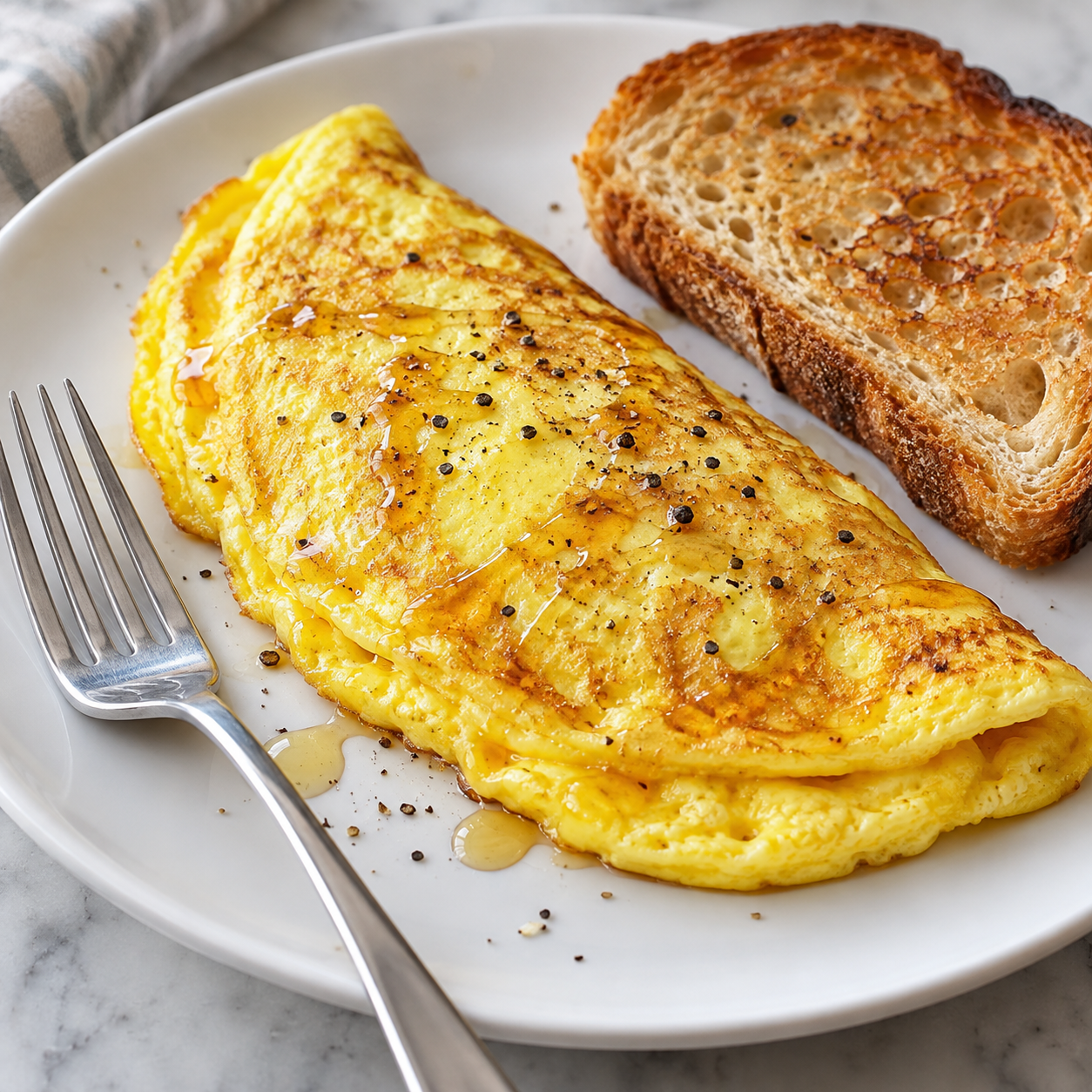
A warm omelet with honey belongs comfortably beside other sweet breakfasts. Apicius 302 combines eggs, milk and oil, finishing the preparation with honey and pepper. This version uses a small frying pan and a brief covered cook. The result is a soft folded omelet, distinct from the chilled water-bath pudding elsewhere in this collection.
Beat only until the milk and eggs combine evenly. A heavily aerated mixture is unnecessary for a useful home breakfast. Warm the pan gently and coat the base with oil so the bottom sets without darkening before the top is safe. A lid traps enough heat to finish the surface while keeping the centre moist.
Our milk quantity is deliberately modest for a manageable pan omelet. It is not a conversion asserted as the only possible reading of the source’s units. Consult the edition notes for the translator’s interpretation of the dish. Honey is added at the end, preserving its flavour and avoiding a sticky burned layer against the pan.
Wait until the egg is fully set before folding, using a wide spatula to support it. A thermometer confirms the modern endpoint, while the gentle texture tells you whether the heat was controlled well. Serve immediately in two generous or four small portions. Fresh fruit or plain toast alongside is a modern suggestion. The useful historical connection is the milk-egg-honey combination, not a claim that an ancient breakfast followed our portion size.
Soft Milk Omelet with Honey
Serves 2 · Preparation 5 min · Cooking 10 min
A modern adaptation for home cooking. Times are approximate.
Ingredients
- 4 large eggs
- 100 ml pasteurized milk
- 15 ml (1 tbsp) olive oil
- 25 g honey
- 0.625 ml (⅛ tsp) finely ground black pepper
- 0.625 ml (⅛ tsp) salt
Method
- Beat eggs, milk and salt until evenly combined.
- Heat oil in a 20–22 cm nonstick frying pan over medium-low heat. Add mixture, cover and cook 6–9 minutes until the top is fully set and the centre reaches 71°C/160°F. Lower heat if the bottom browns quickly.
- Loosen edges and fold with a wide spatula, or leave flat if fragile. Divide onto plates.
- Drizzle with honey, dust lightly with pepper and serve immediately.
Substitutions and adjustments
- Unsweetened oat milk replaces dairy milk.
- Maple syrup is a modern honey alternative.
Historical choices: Apicius 302 supplies the milk-egg preparation and honey-pepper finish. Small pan, milk ratio and covered cooking are modern specifications.
Troubleshooting: Omelet tearing: serve it flat or in wedges; use less aggressive heat and a wide spatula next time.
Storage and reheating: Best served fresh. Refrigerate within 2 hours up to 2 days; reheat to 74°C/165°F.
Kitchen note: Cook eggs to 71°C/160°F and fully set. Contains egg and milk.
Sources and further reading
- Apicius, Book 7, recipe 302 (Vehling numbering). Inspected surviving recipe and editorial notes. Apicius 302 supplies the milk-egg preparation and honey-pepper finish. Small pan, milk ratio and covered cooking are modern specifications. Quantities and modern timetable are our own; translation contains editorial additions.
- LacusCurtius: edition and translation notes. Explains limitations and bracketed additions of the 1936 Vehling translation; not proof of an exact ancient appearance.
- NYAM collections announcement via CHSTM. Institutional account places the recipe collection in the fourth and fifth centuries; individual material may be earlier.
Browse Ancient Recipes for Modern Kitchens · More creative work at Incoprea