MODERN KITCHENS · 032 / 100
Roman · Roman Mediterranean · Roman imperial tradition; surviving compilation approximately 4th–5th centuries CE
Evidence: adapted surviving recipe. The historical evidence and modern cooking choices are distinguished below.
This pudding keeps milk, eggs and honey at the centre of the spoon. Apicius 301, tyropatina describes a honey-sweetened egg-and-milk preparation with pepper. The translated name should not be used to assume modern cheese is required. Our version is a plain baked custard, with measured ingredients and an ordinary water bath for gentle heat.
Warm the milk enough to dissolve honey, then cool it slightly before adding eggs. Very hot milk can scramble them before the dish reaches the oven. Straining removes any coarse strands and gives the custard an even texture. Small ramekins make portions easy to manage, and a roasting pan of hot water moderates the oven’s heat.
The ancient passage includes ratios, but their units and cooking environment do not translate automatically into this precise modern timetable. Read the edition notes alongside it. We choose a restrained honey level and a very fine pepper finish, leaving the plain custard flavour recognizable rather than masking it with additional spices.
The centre should quiver gently as one set mass, not slosh as liquid. A thermometer gives the modern safety check; bubbling at the edges usually means the oven is too hot or the custard has cooked too long. Cool and refrigerate before serving for a clean spoonful. This differs from a skillet omelet in both texture and technique: it is a soft chilled pudding cooked gradually in surrounding water.
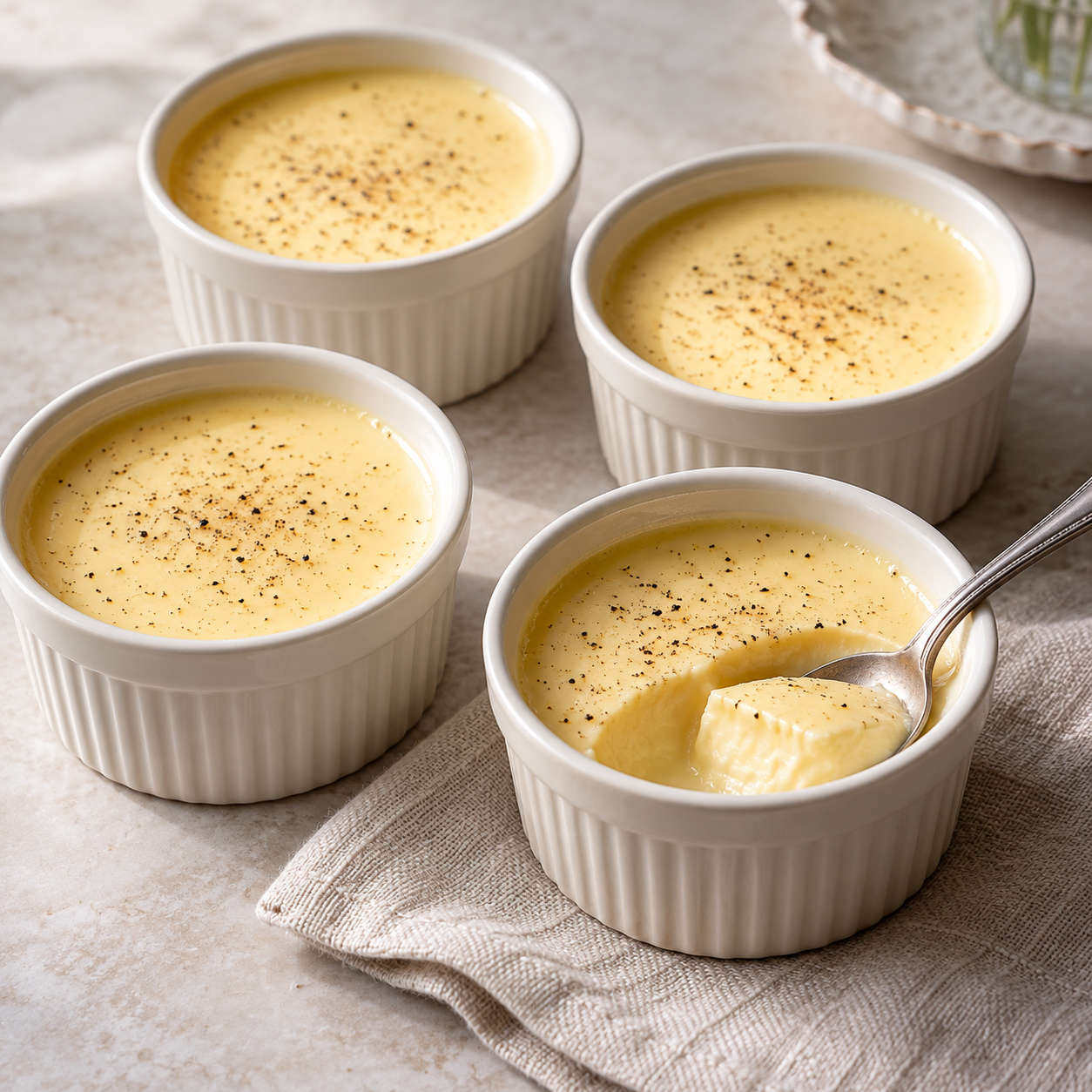
Peppered Honey and Milk Pudding
Serves 4 · Preparation 15 min · Cooking 45 min · 20 minutes cooling; at least 2 hours chilling
A modern adaptation for home cooking. Times are approximate.
Ingredients
- 500 ml pasteurized whole milk
- 4 large eggs
- 60 g honey
- 0.625 ml (⅛ tsp) finely ground black pepper
- 5 ml (1 tsp) olive oil for ramekins
Method
- Heat oven to 150°C/300°F. Grease 4 ramekins. Warm milk and honey in a saucepan, stirring until honey dissolves; cool until warm rather than hot.
- Beat eggs lightly, gradually whisk in milk and strain into a jug. Divide among ramekins.
- Place ramekins in a roasting pan and pour hot water halfway up their sides. Bake 30–45 minutes until centres are set with a gentle wobble and reach 71°C/160°F.
- Remove from water, cool 20 minutes and refrigerate at least 2 hours. Add a tiny pepper dusting before serving.
Substitutions and adjustments
- Unsweetened oat milk can replace dairy milk; texture may differ.
Historical choices: Apicius 301 supplies honey, milk, eggs and pepper. This measured ramekin custard and chilled serving are modern choices; no added cheese is inferred.
Troubleshooting: Grainy custard: use lower oven heat and remove when just set. Watery centre: bake another 5–10 minutes and recheck temperature.
Storage and reheating: Refrigerate covered up to 3 days. Serve chilled; do not freeze.
Kitchen note: Cook egg custard to 71°C/160°F. Contains egg and milk.
Sources and further reading
- Apicius, Book 7, recipe 301 (Vehling numbering). Inspected surviving recipe and editorial notes. Apicius 301 supplies honey, milk, eggs and pepper. This measured ramekin custard and chilled serving are modern choices; no added cheese is inferred. Quantities and modern timetable are our own; translation contains editorial additions.
- LacusCurtius: edition and translation notes. Explains limitations and bracketed additions of the 1936 Vehling translation; not proof of an exact ancient appearance.
- NYAM collections announcement via CHSTM. Institutional account places the recipe collection in the fourth and fifth centuries; individual material may be earlier.
Browse Ancient Recipes for Modern Kitchens · More creative work at Incoprea