MODERN KITCHENS · 031 / 100
Roman · Roman Mediterranean · Roman imperial tradition; surviving compilation approximately 4th–5th centuries CE
Evidence: adapted surviving recipe. The historical evidence and modern cooking choices are distinguished below.
A firm cooked grain paste can become a crisp sweet after cooling and frying. Apicius 299–300 gives that broad sequence with honey and a pepper finish. This modern recipe uses fine semolina and a shallow layer of oil, turning the terse instruction into small triangles. Its proportions, chill and frying temperature are newly specified.
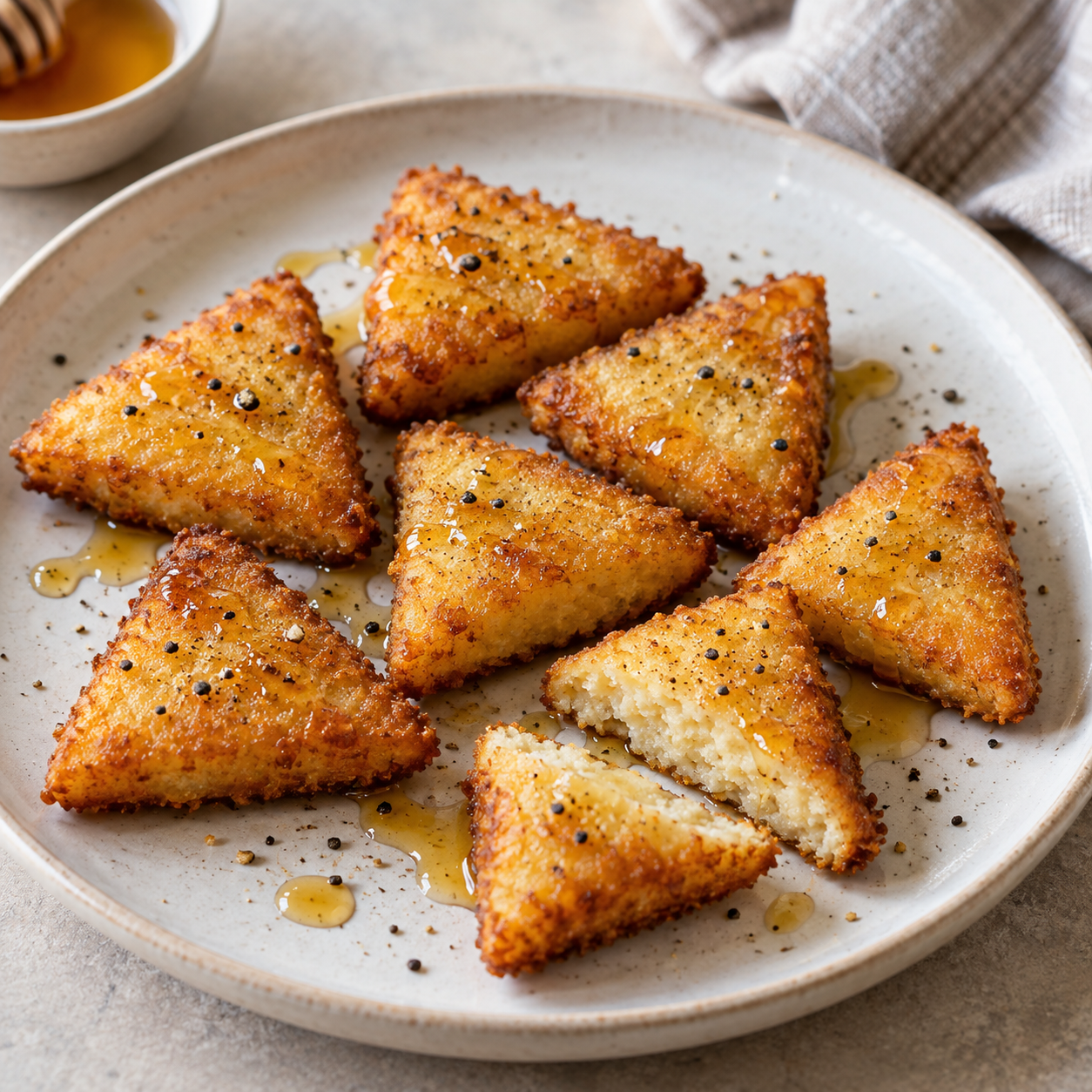
Whisk semolina into hot milk gradually to avoid dry lumps. The mixture needs to become stiff enough to hold a trail from the spoon; a loose breakfast porridge will not slice cleanly. Spread it while warm in a lined shallow dish and give it time to firm in the refrigerator. This cooling is a practical setting stage, not a preservation process.
A dry surface helps the triangles colour in the pan. Pat away condensation before frying, and leave space between pieces. Honey is added after cooking so it does not burn in the oil. Consult the edition notes for translation cautions, including modern words used to explain the source’s brief culinary method.
The finished pieces should have a golden outside and a soft cooked interior. A restrained pinch of finely ground pepper provides contrast without grit. Serve warm in small portions, perhaps with fresh fruit as a modern accompaniment. If the paste remains too soft to cut, chill longer rather than trying to rescue fragile pieces in hot oil. Ordinary milk, semolina and a frying pan make the technique accessible.
Crisp Honey Semolina Triangles
Serves 8 · Preparation 15 min · Cooking 25 min · 20 minutes initial cooling; 60–90 minutes refrigerated setting
A modern adaptation for home cooking. Times are approximate.
Ingredients
- 160 g fine semolina
- 500 ml pasteurized milk
- 1.25 ml (¼ tsp) salt
- 80 ml olive oil for shallow frying
- 50 g honey
- 0.625 ml (⅛ tsp) finely ground black pepper
Method
- Bring milk and salt to a gentle simmer. Gradually whisk in semolina and cook over low heat 5–7 minutes, stirring, until very thick and fully cooked.
- Spread 1.5 cm thick in a lined 20 cm square dish. Cool 20 minutes, then refrigerate 60–90 minutes until firm.
- Cut into 16 triangles and pat dry. Heat oil in a frying pan over medium heat.
- Fry in 2 batches for 3–4 minutes per side until golden and hot through. Drain briefly on paper, drizzle honey and add a tiny pinch of pepper.
Substitutions and adjustments
- Unsweetened oat milk is a modern dairy-free substitute.
- Maple syrup replaces honey with a different flavour.
Historical choices: Apicius 299–300 records firm cooked paste, cooling, cutting, frying and honey. Fine semolina, shallow frying and measured timing are modern choices.
Troubleshooting: Pieces crumbling: chill until completely firm and turn only once each bottom has formed a crust.
Storage and reheating: Keep unfried paste refrigerated up to 2 days. Fried pieces are best fresh; refrigerate leftovers and reheat to 74°C/165°F in the oven.
Kitchen note: Cook semolina fully. Keep chilled setting time within safe refrigerated storage; take care with hot oil.
Sources and further reading
- Apicius, Book 7, recipe 299–300 (Vehling numbering). Inspected surviving recipe and editorial notes. Apicius 299–300 records firm cooked paste, cooling, cutting, frying and honey. Fine semolina, shallow frying and measured timing are modern choices. Quantities and modern timetable are our own; translation contains editorial additions.
- LacusCurtius: edition and translation notes. Explains limitations and bracketed additions of the 1936 Vehling translation; not proof of an exact ancient appearance.
- NYAM collections announcement via CHSTM. Institutional account places the recipe collection in the fourth and fifth centuries; individual material may be earlier.
Browse Ancient Recipes for Modern Kitchens · More creative work at Incoprea