MODERN KITCHENS · 028 / 100
Roman · Roman Mediterranean · Roman imperial tradition; surviving compilation approximately 4th–5th centuries CE
Evidence: adapted surviving recipe. The historical evidence and modern cooking choices are distinguished below.
Squid becomes tender through either very brief cooking or a patient simmer; this recipe chooses the latter. Apicius 405 gives squid a peppery sweet-wine sauce. We adapt that combination with cleaned frozen squid, ordinary white wine and a small amount of honey. The longer braising timetable is a modern specification, not a recovered ancient instruction.
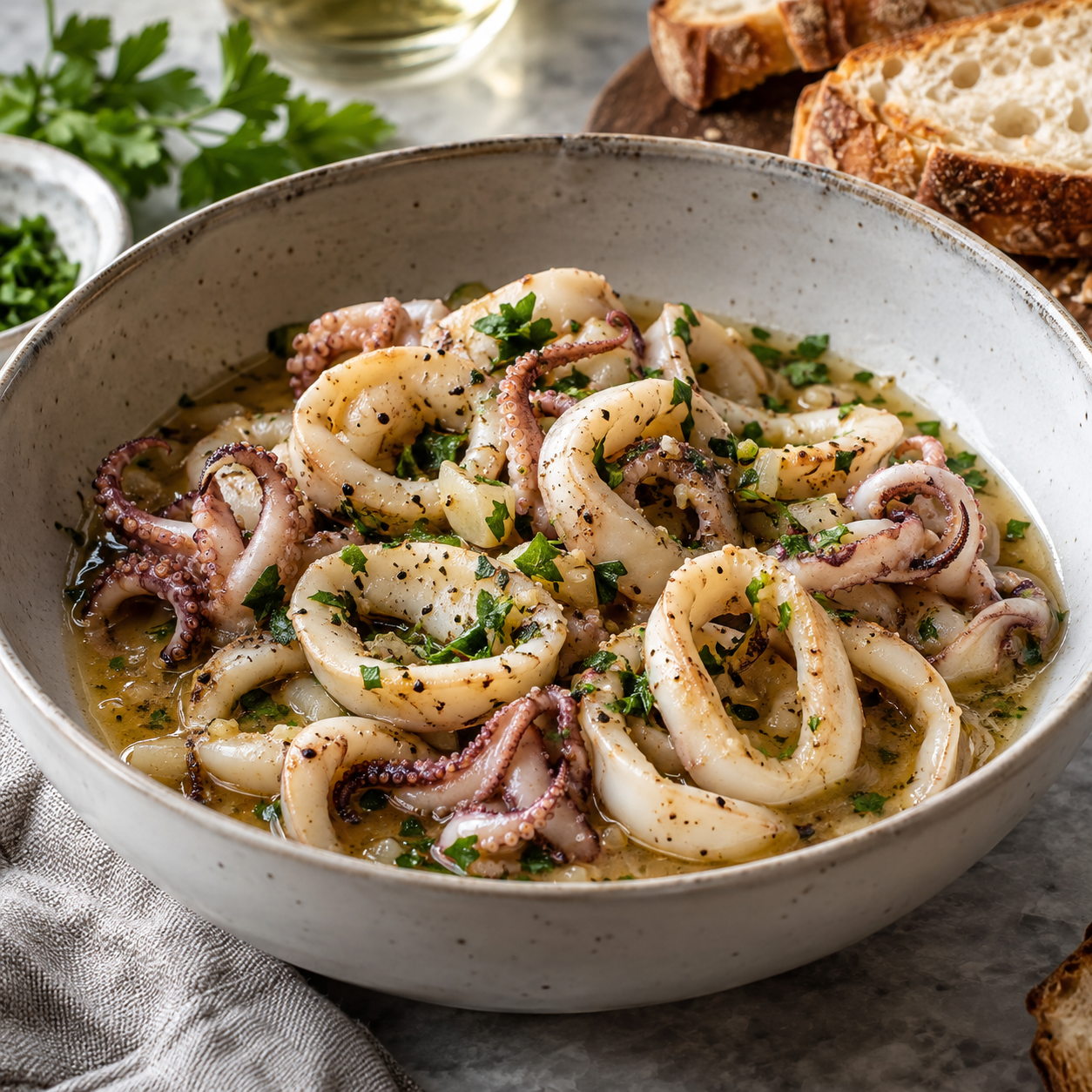
Frozen cleaned rings and tentacles save the specialised preparation of a whole animal. Thaw them in the refrigerator and drain before cooking. Begin the sauce first so the squid enters simmering liquid. During cooking it may become firm before softening again; judge a piece near the end rather than concluding that a short tough stage is the finished result.
We omit rue and use parsley as a fresh modern finish. The starch is kept light because the cooking liquid should cling rather than become a heavy coating. Read the edition notes for the translation’s limitations and additions. Our ingredients do not claim to reproduce an exact ancient squid species or commercial wine.
Serve with bread or a cooked grain to make use of the sauce. A piece should yield comfortably when bitten, with enough shape to remain recognizable. If the liquid reduces too quickly, add hot water and lower the heat. Check the modern seafood endpoint, then continue as needed for tenderness. The useful distinction is between food that is safely cooked and food whose texture has also become pleasant.
Tender Squid in Peppery Wine Sauce
Serves 4 · Preparation 10 min · Cooking 55 min
A modern adaptation for home cooking. Times are approximate.
Ingredients
- 650 g cleaned squid rings and tentacles, thawed if frozen
- 20 ml (4 tsp) olive oil
- 150 ml white wine
- 250 ml water or low-salt fish stock
- 15 g (2 tsp) honey
- 2.5 ml (½ tsp) black pepper
- 1.25 ml (¼ tsp) salt
- 4 g (1 tsp) cornflour/cornstarch
- 15 ml (1 tbsp) cold water
- 10 g parsley, chopped
Method
- Heat oil in a saucepan; add wine, stock, honey, pepper and salt and bring to a simmer.
- Add squid, cover loosely and simmer gently 35–50 minutes until tender, adding water if liquid reduces too far. Ensure seafood reaches 63°C/145°F.
- Mix starch with cold water and stir into simmering sauce. Cook 1 minute until lightly thickened.
- Stir in parsley and serve.
Substitutions and adjustments
- Replace wine with 150 ml white grape juice and omit honey initially.
- Cleaned cuttlefish is an alternative but may need longer cooking.
Historical choices: Apicius 405 supplies squid with a peppered sweet-wine sauce. Cleaned rings, parsley and a tenderising simmer are modern choices.
Troubleshooting: Rubbery after 20 minutes: continue gentle cooking and check in 10-minute intervals; keep enough liquid.
Storage and reheating: Cool in shallow containers and refrigerate within 2 hours. Keep up to 3 days; reheat leftovers to 74°C/165°F until steaming throughout.
Kitchen note: Thaw squid in the refrigerator and cook to at least 63°C/145°F before judging tenderness. Contains seafood.
Sources and further reading
- Apicius, Book 9, recipe 405 (Vehling numbering). Inspected surviving recipe and editorial notes. Apicius 405 supplies squid with a peppered sweet-wine sauce. Cleaned rings, parsley and a tenderising simmer are modern choices. Quantities and modern timetable are our own; translation contains editorial additions.
- LacusCurtius: edition and translation notes. Explains limitations and bracketed additions of the 1936 Vehling translation; not proof of an exact ancient appearance.
- NYAM collections announcement via CHSTM. Institutional account places the recipe collection in the fourth and fifth centuries; individual material may be earlier.
Browse Ancient Recipes for Modern Kitchens · More creative work at Incoprea