MODERN KITCHENS · 026 / 100
Roman · Roman Mediterranean · Roman imperial tradition; surviving compilation approximately 4th–5th centuries CE
Evidence: historically informed adaptation. The historical evidence and modern cooking choices are distinguished below.
A meatloaf offers a practical way to explore a complex stuffed-meat idea. Apicius 384 describes hare forcemeat with nuts and eggs. This adaptation uses ground lamb instead of hare and bakes the mixture as a loaf, leaving the major substitution visible in its name. It is historically informed rather than an exact surviving-recipe reconstruction.
Ground lamb is available in many supermarkets; ground beef is an easy alternative where it is not. Chop the nuts so the loaf slices cleanly, and soak breadcrumbs in the liquid before adding meat. Breadcrumbs are our modern support for the shape. A small loaf tin makes cooking predictable and keeps the mixture from spreading into a flat layer.
Dates give little sweet accents rather than sweetening the whole loaf. Onion and thyme make an accessible aromatic base. We omit caul and the elaborate surrounding hare preparation. Read the edition notes with the passage to see how modern terminology enters the available English version. Our lamb choice does not settle its original meat or presentation.
Let the loaf rest before cutting so the juices redistribute and the crumb holds together. Use a thermometer in the centre because ground meat needs a different safety endpoint from an intact roast. Serve thick slices with cooked vegetables and a little of the pan liquid. A leftovers sandwich is a modern use, provided the loaf was chilled promptly and kept properly refrigerated.
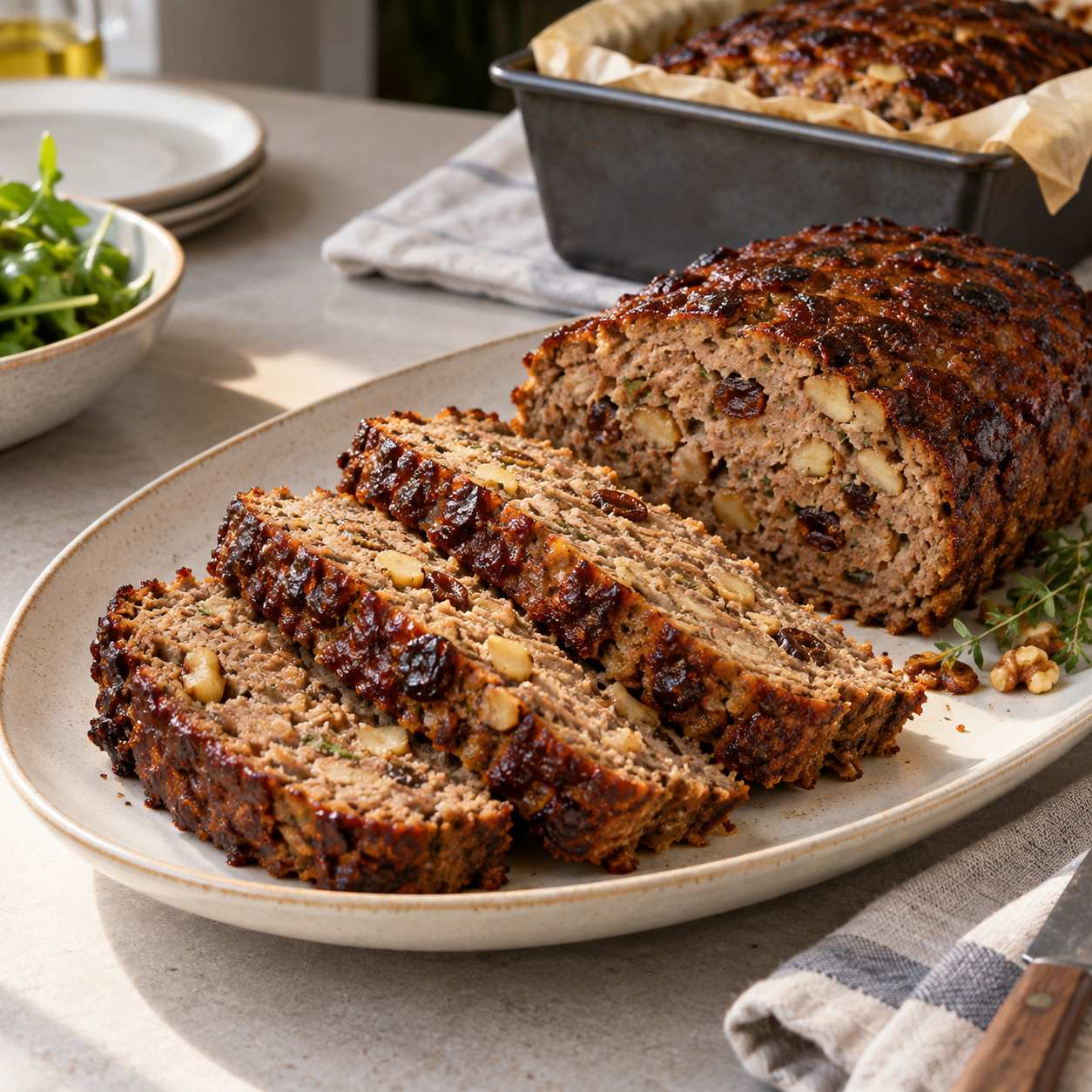
Lamb and Nut Meatloaf Inspired by Stuffed Hare
Serves 6 · Preparation 20 min · Cooking 60 min · 5 minutes soaking; 10 minutes resting
A modern adaptation for home cooking. Times are approximate.
Ingredients
- 700 g ground lamb
- 60 g dry breadcrumbs
- 80 ml water
- 1 large egg
- 50 g walnuts, finely chopped
- 40 g pitted dates, finely chopped
- 100 g onion, very finely chopped
- 2.5 ml (½ tsp) dried thyme
- 2.5 ml (½ tsp) black pepper
- 2.5 ml (½ tsp) salt
- 10 ml (2 tsp) olive oil for tin
Method
- Heat oven to 180°C/350°F. Grease and line a 20 cm loaf tin.
- Soak breadcrumbs in water for 5 minutes. Add egg, nuts, dates, onion, thyme, pepper and salt.
- Add lamb and mix lightly until combined. Press evenly into tin without packing tightly.
- Bake 45–60 minutes until the centre reaches 71°C/160°F. Rest 10 minutes, then lift out and slice.
Substitutions and adjustments
- Ground beef replaces lamb.
- Chopped sunflower seeds replace walnuts as a modern nut-free alternative; check allergies.
Historical choices: Apicius 384 provides hare forcemeat, nuts and eggs. Lamb, dates in the loaf, breadcrumbs and a loaf tin are explicit modern changes.
Troubleshooting: Crumbly slices: chop nuts and dates finely, press evenly and give the full rest before cutting.
Storage and reheating: Cool in shallow containers and refrigerate within 2 hours. Keep up to 3 days; reheat leftovers to 74°C/165°F until steaming throughout.
Kitchen note: Cook ground lamb or beef to 71°C/160°F. Contains egg, wheat and nuts.
Sources and further reading
- Apicius, Book 8, recipe 384 (Vehling numbering). Inspected surviving recipe and editorial notes. Apicius 384 provides hare forcemeat, nuts and eggs. Lamb, dates in the loaf, breadcrumbs and a loaf tin are explicit modern changes. Quantities and modern timetable are our own; translation contains editorial additions.
- LacusCurtius: edition and translation notes. Explains limitations and bracketed additions of the 1936 Vehling translation; not proof of an exact ancient appearance.
- NYAM collections announcement via CHSTM. Institutional account places the recipe collection in the fourth and fifth centuries; individual material may be earlier.
Browse Ancient Recipes for Modern Kitchens · More creative work at Incoprea