MODERN KITCHENS · 025 / 100
Roman · Roman Mediterranean · Roman imperial tradition; surviving compilation approximately 4th–5th centuries CE
Evidence: adapted surviving recipe. The historical evidence and modern cooking choices are distinguished below.
A simple beef pot can show how a very short source becomes a full modern method. Apicius 352 associates beef or veal with leeks, liquid and seasoning. This version chooses supermarket stewing beef and a gentle covered braise. The cut, quantities and long simmer are modern specifications, selected to make a tough economical cut tender.
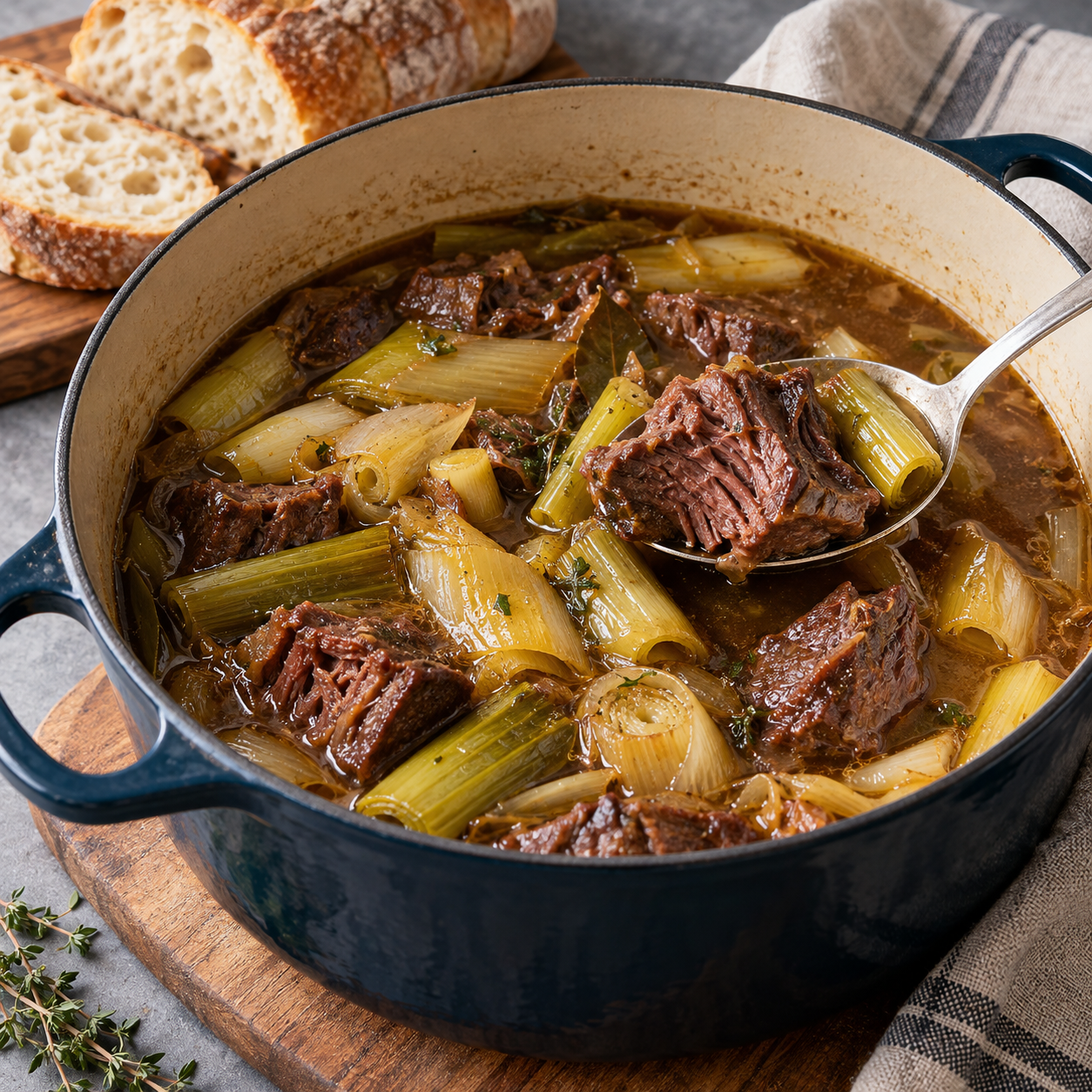
Pat the meat dry before browning and work in batches. A crowded pot releases enough moisture to prevent colour developing. Leeks contribute sweetness without needing a heavy sauce, and their layers should be washed carefully. Add the pale pieces at the start, saving any very tender greens for another dish rather than letting them disappear during the long cook.
Garlic is our accessible aromatic choice in place of the source’s laser; it is not the same historical ingredient. The edition notes explain why the translation cannot be treated as a complete ancient timetable. We use ordinary stock and a lidded saucepan, avoiding specialist equipment or an unsupported claim that all Romans ate this same bowl.
The meat is ready when a fork enters easily and the connective tissue has softened. That texture endpoint comes well after the minimum safety temperature for an intact beef cut. Keep enough liquid to prevent scorching, and reduce the sauce only after the meat is tender. Serve with cooked grain or bread. The braise can be made ahead, chilled promptly and reheated throughout the next day.
Slow Beef and Leek Braise
Serves 4 · Preparation 15 min · Cooking 170 min
A modern adaptation for home cooking. Times are approximate.
Ingredients
- 750 g stewing beef, cut into 4 cm pieces
- 400 g leeks, washed and thickly sliced
- 25 ml (5 tsp) olive oil
- 2 garlic cloves, crushed
- 700 ml low-salt beef stock or water
- 2.5 ml (½ tsp) black pepper
- 2.5 ml (½ tsp) salt, to taste
Method
- Heat oil in a heavy saucepan. Brown beef in 2 batches for 4–5 minutes each.
- Return beef, add leeks and garlic and stir 3 minutes. Add stock, pepper and salt.
- Bring to a boil, cover and simmer very gently 2–2½ hours until beef is fork-tender. Stir occasionally and add water if liquid drops below halfway up the meat.
- Remove lid and simmer 10 minutes if needed to reduce sauce. Taste and serve.
Substitutions and adjustments
- Boneless lamb shoulder replaces beef; begin checking after 90 minutes.
- Garlic deliberately replaces laser rather than reproducing it.
Historical choices: Apicius 352 gives beef or veal with leeks. Modern stewing cut, garlic and slow braising timetable are our practical interpretation.
Troubleshooting: Tough beef: continue gentle cooking in 15-minute intervals with enough liquid; high heat does not speed tenderising safely.
Storage and reheating: Cool in shallow containers and refrigerate within 2 hours. Keep up to 3 days; reheat leftovers to 74°C/165°F until steaming throughout.
Kitchen note: Braise beef until fully cooked and tender; intact beef minimum is 63°C/145°F with 3 minutes rest, but this stew normally cooks much longer. Reheat leftovers to 74°C/165°F.
Sources and further reading
- Apicius, Book 8, recipe 352 (Vehling numbering). Inspected surviving recipe and editorial notes. Apicius 352 gives beef or veal with leeks. Modern stewing cut, garlic and slow braising timetable are our practical interpretation. Quantities and modern timetable are our own; translation contains editorial additions.
- LacusCurtius: edition and translation notes. Explains limitations and bracketed additions of the 1936 Vehling translation; not proof of an exact ancient appearance.
- NYAM collections announcement via CHSTM. Institutional account places the recipe collection in the fourth and fifth centuries; individual material may be earlier.
Browse Ancient Recipes for Modern Kitchens · More creative work at Incoprea