MODERN KITCHENS · 023 / 100
Roman · Roman Mediterranean · Roman imperial tradition; surviving compilation approximately 4th–5th centuries CE
Evidence: adapted surviving recipe. The historical evidence and modern cooking choices are distinguished below.
Poaching gives chicken a gentle texture and a useful cooking liquid for its sauce. Apicius 242 pairs cooked chicken with dates and aromatic sweet-sharp seasoning. Our version chooses boneless breasts, thyme and a modest quantity of honey. It is a measured modern adaptation rather than a recovered account of the original bird or exact sauce.
Keep the liquid just below a vigorous boil after adding chicken. Fierce bubbling can tighten the meat before its centre cooks. A lid reduces evaporation, and the breasts should be of similar thickness so they finish together. Once cooked, lift them onto a clean plate and keep them covered while making the sauce.
Soft pitted dates blend readily with a little hot broth. This gives body without relying on a large amount of starch or cream. Cumin, fennel and thyme retain aromatic elements, while rue and laser are omitted. Consult the edition notes for translation cautions; our omissions are practical decisions, not claims that the ancient passage lacked those ingredients.
The sauce should be pourable and lightly coat a slice of chicken. Taste before adding the full vinegar quantity because dates differ in sweetness. A thermometer confirms the modern poultry endpoint, and the poaching liquid is boiled when used in the sauce. Serve with grain or bread to use the liquid. Refrigerate the meat together with a little sauce so leftovers are easier to warm without drying out.
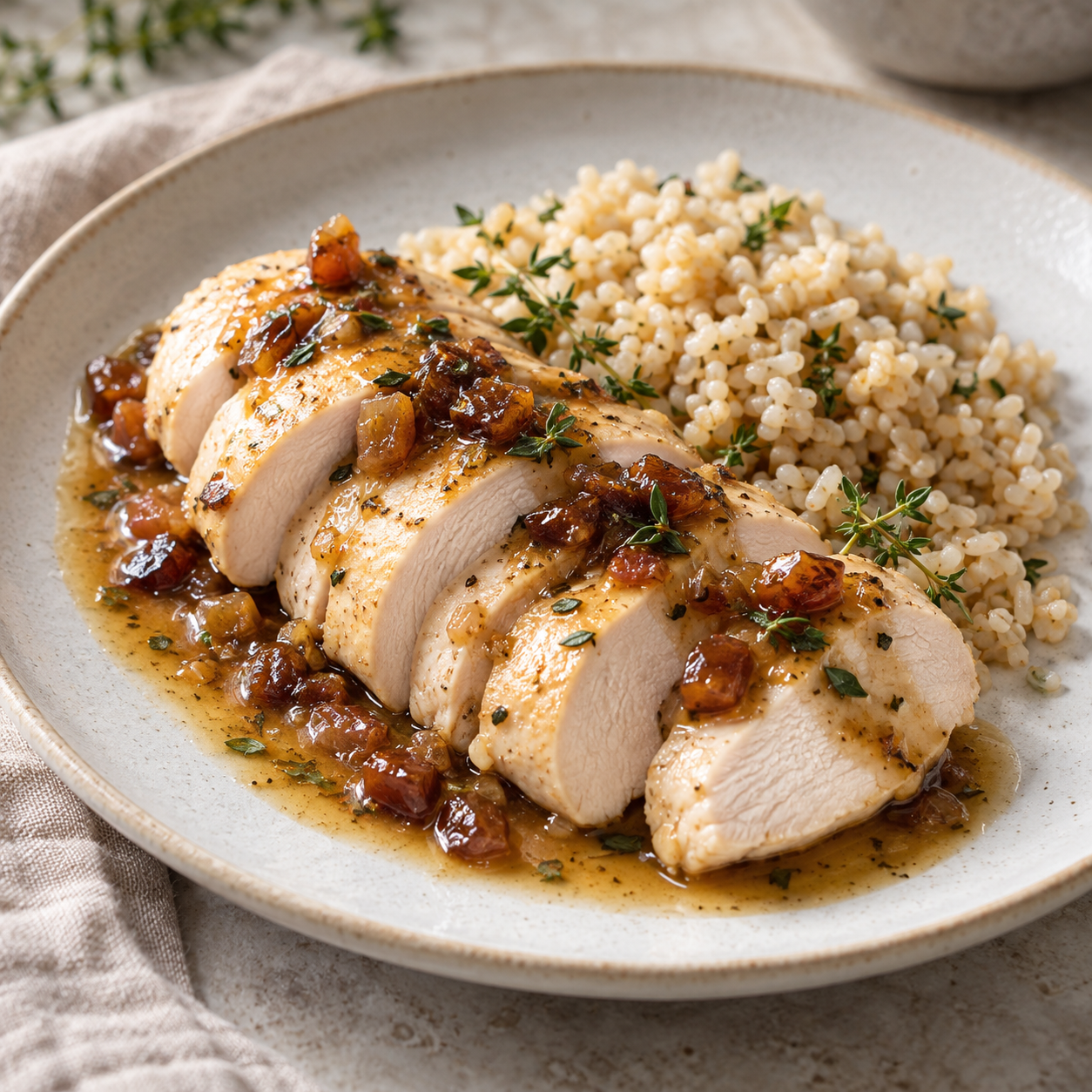
Poached Chicken with Date and Thyme Sauce
Serves 4 · Preparation 15 min · Cooking 25 min · 5 minutes resting
A modern adaptation for home cooking. Times are approximate.
Ingredients
- 600 g boneless skinless chicken breasts, similar thickness
- 700 ml water or low-salt chicken stock
- 60 g soft pitted dates, chopped
- 2.5 ml (½ tsp) ground cumin
- 1.25 ml (¼ tsp) ground fennel seed
- 2.5 ml (½ tsp) dried thyme
- 10 g (1½ tsp) honey
- 10–15 ml wine vinegar
- 15 ml (1 tbsp) olive oil
- 1.25 ml (¼ tsp) salt
- 1.25 ml (¼ tsp) black pepper
Method
- Bring stock and salt to a simmer in a saucepan. Add chicken, cover and gently poach 15–22 minutes until each thickest centre reaches 74°C/165°F.
- Lift chicken onto a clean plate, cover and rest 5 minutes.
- Blend dates with 200 ml hot poaching liquid, or mash very finely. Add spices, honey, 10 ml vinegar and oil in a small saucepan.
- Bring sauce to a full boil, then simmer 3 minutes. Taste and add remaining vinegar if needed. Slice chicken and spoon sauce over.
Substitutions and adjustments
- Chicken thighs work; allow 20–30 minutes and check 74°C/165°F.
- Soft raisins can replace dates with a different flavour.
Historical choices: Apicius 242 documents cooked chicken with a date-based aromatic sauce. Cuts, proportions and omission of rue/laser are modern choices.
Troubleshooting: Thick sauce: add broth 1 tbsp at a time. Dry chicken: remove it promptly at 74°C/165°F.
Storage and reheating: Cool in shallow containers and refrigerate within 2 hours. Keep up to 3 days; reheat leftovers to 74°C/165°F until steaming throughout.
Kitchen note: Cook all chicken to 74°C/165°F. Bring used poaching liquid to a full boil when making sauce.
Sources and further reading
- Apicius, Book 6, recipe 242 (Vehling numbering). Inspected surviving recipe and editorial notes. Apicius 242 documents cooked chicken with a date-based aromatic sauce. Cuts, proportions and omission of rue/laser are modern choices. Quantities and modern timetable are our own; translation contains editorial additions.
- LacusCurtius: edition and translation notes. Explains limitations and bracketed additions of the 1936 Vehling translation; not proof of an exact ancient appearance.
- NYAM collections announcement via CHSTM. Institutional account places the recipe collection in the fourth and fifth centuries; individual material may be earlier.
Browse Ancient Recipes for Modern Kitchens · More creative work at Incoprea