MODERN KITCHENS · 022 / 100
Roman · Roman Mediterranean · Roman imperial tradition; surviving compilation approximately 4th–5th centuries CE
Evidence: adapted surviving recipe. The historical evidence and modern cooking choices are distinguished below.
A pastry shell makes a modest ham feel like an occasion. Apicius 287 joins ham, figs, bay leaves, honey and a flour-and-oil covering. This version chooses commercially fully cooked ham so the home cook can focus on warming the filling and baking a crisp crust. The dough proportions and smaller size are modern.
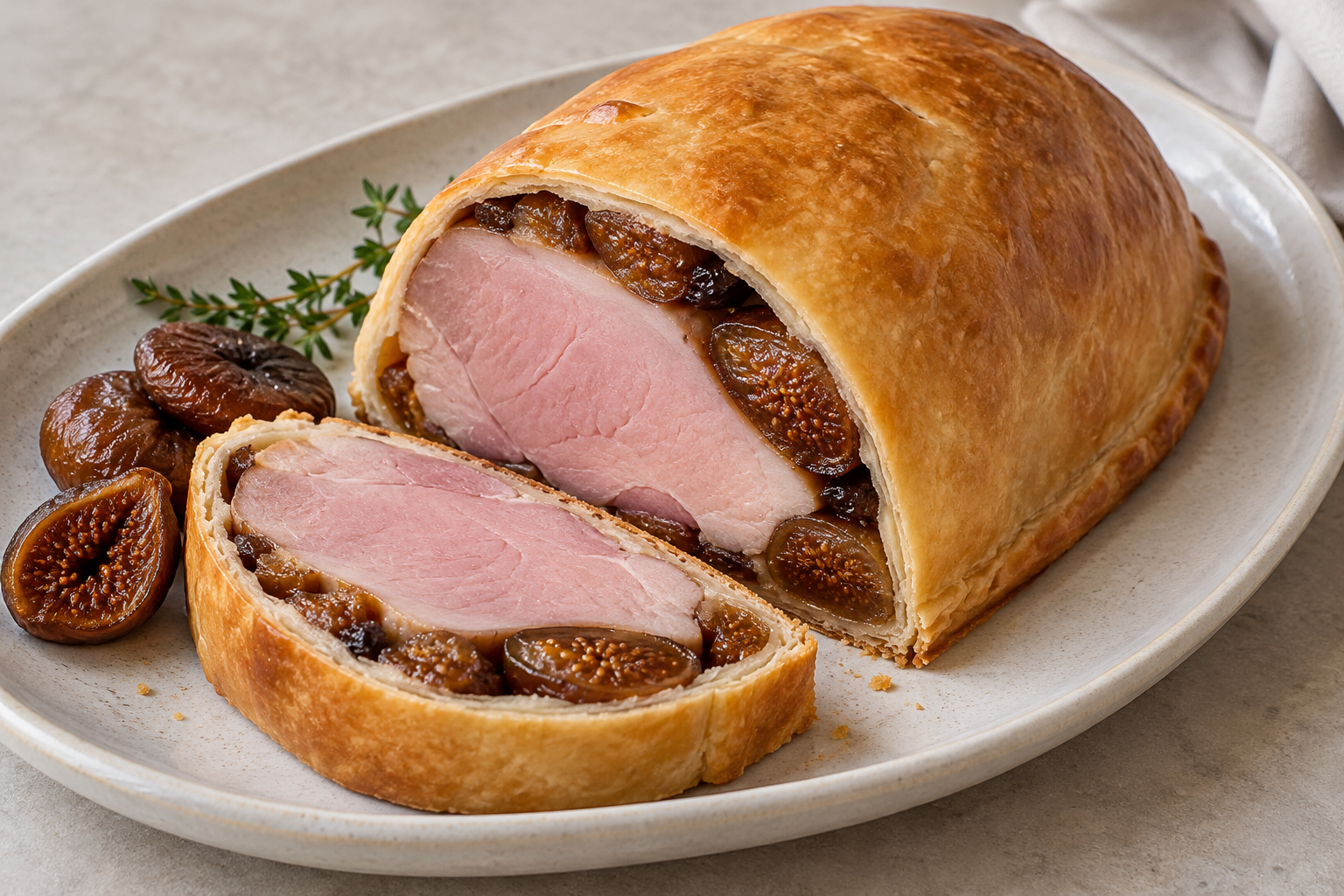
The figs simmer briefly with water and bay to become a soft accompaniment, rather than disappearing into a thick sugary paste. Cool them before placing them against dough. A hot wet filling softens pastry and makes sealing difficult. Pat the ham dry and keep the surrounding crust relatively thin so it has time to bake through.
We omit the source’s skin treatment and make an ordinary oil pastry with flour, water and salt. This simplification is explicit. The edition notes help distinguish the transmitted preparation from culinary wording supplied by its translator. Our small wrapped parcel is practical presentation, not evidence for an ancient banquet’s appearance.
The crust should be golden and firm underneath, while the ham reaches a safe reheating temperature. Make a small steam vent to protect the seams. Let the parcel stand briefly before slicing; the contents will otherwise pull the crust apart. Serve with vegetables and some figs from the pan. Buying cooked ham keeps the method accessible without claiming that the ancient cook used the same commercial product.
Fig Ham in a Simple Pastry Crust
Serves 6 · Preparation 25 min · Cooking 70 min · 20 minutes cooling figs; 15 minutes dough rest; 10 minutes parcel rest
A modern adaptation for home cooking. Times are approximate.
Ingredients
- 700 g commercial fully cooked boneless ham piece
- 100 g dried figs, stems removed and halved
- 250 ml water for figs
- 2 dried bay leaves
- 15 g (2 tsp) honey
- 250 g plain/all-purpose flour
- 50 ml olive oil
- 100–120 ml water for dough
- 1.25 ml (¼ tsp) salt
Method
- Simmer figs, 250 ml water and bay leaves for 10 minutes until figs soften. Drain figs and remove bay; cool 20 minutes.
- Mix flour and salt, stir in oil and 100 ml water, adding more if needed to form a firm dough. Rest 15 minutes. Heat oven to 190°C/375°F.
- Pat ham dry. Roll dough on baking paper to a 4 mm-thick rectangle large enough to wrap ham. Place ham and half the figs in the centre, brush ham with honey and wrap, pinching seams. Make a 1 cm steam vent.
- Bake on a tray for 45–60 minutes until the crust is golden and the ham centre reaches 74°C/165°F; tent loosely with foil if crust darkens early.
- Rest 10 minutes and slice. Serve remaining figs alongside.
Substitutions and adjustments
- A lean fully cooked turkey ham is a modern alternative; check label reheating instructions.
Historical choices: Apicius 287 supplies ham with figs, bay and a flour-oil covering. Fully cooked commercial ham and this measured pastry are modern simplifications.
Troubleshooting: Soggy bottom: drain figs thoroughly and use a preheated heavy baking tray. Thick dough needs longer to bake.
Storage and reheating: Cool in shallow containers and refrigerate within 2 hours. Keep up to 3 days; reheat leftovers to 74°C/165°F until steaming throughout.
Kitchen note: Use fully cooked ham; reheat this parcel to 74°C/165°F. Do not use uncooked ham with this timetable. Remove bay leaves.
Sources and further reading
- Apicius, Book 7, recipe 287 (Vehling numbering). Inspected surviving recipe and editorial notes. Apicius 287 supplies ham with figs, bay and a flour-oil covering. Fully cooked commercial ham and this measured pastry are modern simplifications. Quantities and modern timetable are our own; translation contains editorial additions.
- LacusCurtius: edition and translation notes. Explains limitations and bracketed additions of the 1936 Vehling translation; not proof of an exact ancient appearance.
- NYAM collections announcement via CHSTM. Institutional account places the recipe collection in the fourth and fifth centuries; individual material may be earlier.
Browse Ancient Recipes for Modern Kitchens · More creative work at Incoprea