MODERN KITCHENS · 021 / 100
Roman · Roman Mediterranean · Roman imperial tradition; surviving compilation approximately 4th–5th centuries CE
Evidence: adapted surviving recipe. The historical evidence and modern cooking choices are distinguished below.
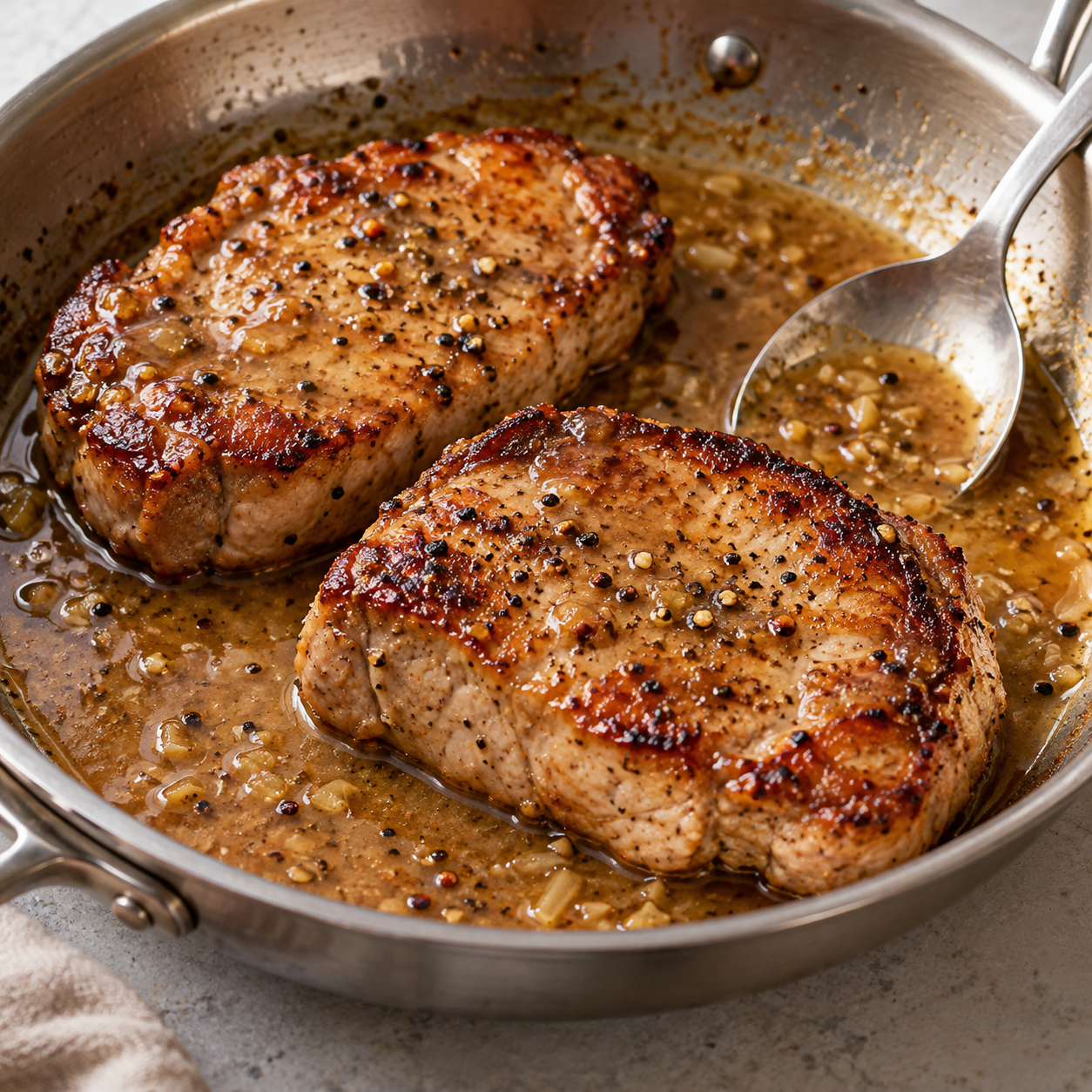
A pan sauce gives a familiar pork chop a connection to Roman culinary writing. Apicius 263 describes pork pieces prepared in the manner of wild boar with seasoning and gravy. This adaptation chooses ordinary boneless chops and a short refrigerated marinade. It does not require wild game or reconstruct the source’s unspecified spice proportions.
The meat should be an even thickness so the centre cooks before the outside becomes dry. Oil carries pepper, cumin and coriander across the surface, while wine moistens the pan later. These spice choices are an accessible modern interpretation of the passage’s general seasoning. Twenty minutes in the refrigerator is sufficient for this practical method; days of historical storage are unnecessary.
Use a frying pan large enough to avoid overcrowding, and brown the chops in a little oil before adding liquid. The marinade must be brought to a full boil because it touched raw pork. A small amount of honey rounds out the sauce. Read the edition notes for the translator’s uncertain modern labels and additions.
Check the chops with a thermometer, then give them a proper rest. Their colour alone cannot confirm safe cooking. The sauce can reduce while the meat rests, avoiding the temptation to keep cooking a ready chop. Serve with cooked vegetables or grain and a spoonful of gravy. A useful modern adaptation should deliver clear timing and doneness while leaving the historical flavour profile honestly approximate.
Hunter-Style Pork Chops
Serves 4 · Preparation 15 min · Cooking 16 min · 20 minutes refrigerated marinating; at least 3 minutes resting
A modern adaptation for home cooking. Times are approximate.
Ingredients
- 600 g boneless pork chops, about 2 cm thick
- 20 ml (4 tsp) olive oil
- 2.5 ml (½ tsp) ground cumin
- 2.5 ml (½ tsp) ground coriander
- 2.5 ml (½ tsp) black pepper
- 2.5 ml (½ tsp) salt
- 100 ml white wine
- 100 ml water or low-salt stock
- 10 g (1½ tsp) honey
Method
- Mix half the oil with cumin, coriander, pepper and salt. Rub over chops and refrigerate 20 minutes.
- Heat remaining oil in a wide pan over medium-high heat. Brown chops 3 minutes per side.
- Add wine, water and honey. Bring liquid to a full boil, then simmer 4–8 minutes until the centre of every chop reaches 63°C/145°F.
- Lift chops onto a clean plate and rest at least 3 minutes. Reduce sauce 2 minutes if needed, then spoon over meat.
Substitutions and adjustments
- Use 100 ml water plus 5 ml wine vinegar instead of wine.
Historical choices: Apicius 263 supplies seasoned pork pieces with gravy. Boneless chops, spice blend, short refrigerated marinade and safety endpoint are modern choices.
Troubleshooting: Dry chops: use a thermometer and stop at 63°C/145°F; reduce sauce after removing meat.
Storage and reheating: Cool in shallow containers and refrigerate within 2 hours. Keep up to 3 days; reheat leftovers to 74°C/165°F until steaming throughout.
Kitchen note: Cook pork chops to 63°C/145°F and rest at least 3 minutes. Boil any marinade that contacted raw meat.
Sources and further reading
- Apicius, Book 7, recipe 263 (Vehling numbering). Inspected surviving recipe and editorial notes. Apicius 263 supplies seasoned pork pieces with gravy. Boneless chops, spice blend, short refrigerated marinade and safety endpoint are modern choices. Quantities and modern timetable are our own; translation contains editorial additions.
- LacusCurtius: edition and translation notes. Explains limitations and bracketed additions of the 1936 Vehling translation; not proof of an exact ancient appearance.
- NYAM collections announcement via CHSTM. Institutional account places the recipe collection in the fourth and fifth centuries; individual material may be earlier.
Browse Ancient Recipes for Modern Kitchens · More creative work at Incoprea