MODERN KITCHENS · 020 / 100
Roman · Roman Mediterranean · Roman imperial tradition; surviving compilation approximately 4th–5th centuries CE
Evidence: adapted surviving recipe. The historical evidence and modern cooking choices are distinguished below.
Nuts change both the texture and flavour of a small meatball. Apicius 47 combines minced pork, grain, wine and nuts in a preparation wrapped in caul. This version retains the central mixture while omitting the specialist wrapper. Commercial ground pork and breadcrumbs make it possible to cook the idea in an ordinary frying pan.
Chop the pine nuts finely enough that the meatballs hold together, but leave some pieces for contrast. Breadcrumbs absorb liquid and support the shape; they are a deliberate modern binder rather than an identification of the ancient grain term. Mix lightly because excessive working can produce dense, rubbery meat. Damp hands make small, even balls easier to form.
Brown the meatballs in batches so they fry instead of steaming in a crowded pan. A brief covered finish cooks the centres while the browned outside stays moist. The wine gravy is thin and savoury, not a thick sweet glaze. Read the edition notes for translation cautions, including added modern terminology and uncertain ancient quantities.
Serve with bread, a cooked grain or a green vegetable. Check a central meatball with a thermometer; surface colour cannot establish that ground pork is safe. If the mixture is too loose, rest it in the refrigerator rather than adding unlimited crumbs. This practical adaptation does not require home smoking, intestinal casings or specialist butchery, and its modern safety endpoint is stated separately from the historical instruction.
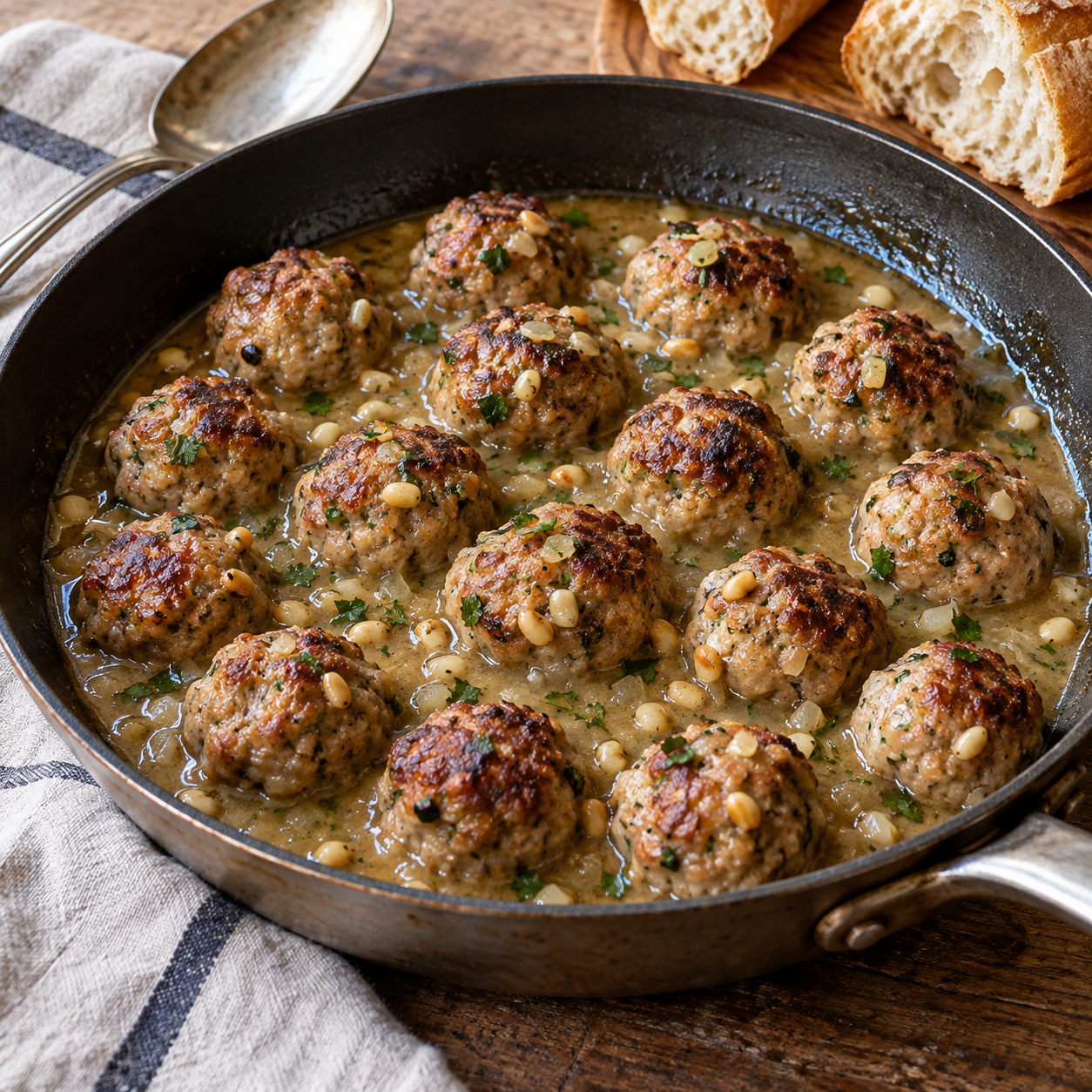
Pork and Pine-Nut Meatballs
Serves 4 · Preparation 15 min · Cooking 25 min · 15 minutes optional chilling
A modern adaptation for home cooking. Times are approximate.
Ingredients
- 500 g ground pork
- 40 g dry breadcrumbs
- 30 g pine nuts, finely chopped
- 50 ml white wine for mixture
- 2.5 ml (½ tsp) black pepper
- 2.5 ml (½ tsp) salt
- 20 ml (4 tsp) olive oil
- 100 ml white wine for pan
- 150 ml water or low-salt stock
Method
- Mix pork, breadcrumbs, nuts, 50 ml wine, pepper and salt gently. Shape 16 meatballs. Chill 15 minutes if soft.
- Heat oil in a wide pan and brown meatballs in 2 batches for 6 minutes each, turning gently.
- Return all meatballs to pan, add 100 ml wine and 150 ml liquid. Cover and simmer 8–10 minutes until each centre reaches 71°C/160°F.
- Uncover and reduce gravy 2–3 minutes if necessary. Serve 4 meatballs per portion.
Substitutions and adjustments
- Chopped walnuts replace pine nuts.
- Water replaces wine in both mixture and gravy.
Historical choices: Apicius 47 records pork, grain, wine and nuts with a caul wrapper. Breadcrumbs and unwrapped meatballs are modern adaptations.
Troubleshooting: Meatballs breaking: chill the mixture 15 minutes, form smaller balls and turn only after the bottom has browned.
Storage and reheating: Cool in shallow containers and refrigerate within 2 hours. Keep up to 3 days; reheat leftovers to 74°C/165°F until steaming throughout.
Kitchen note: Cook ground pork to 71°C/160°F. Contains wheat and nuts.
Sources and further reading
- Apicius, Book 2, recipe 47 (Vehling numbering). Inspected surviving recipe and editorial notes. Apicius 47 records pork, grain, wine and nuts with a caul wrapper. Breadcrumbs and unwrapped meatballs are modern adaptations. Quantities and modern timetable are our own; translation contains editorial additions.
- LacusCurtius: edition and translation notes. Explains limitations and bracketed additions of the 1936 Vehling translation; not proof of an exact ancient appearance.
- NYAM collections announcement via CHSTM. Institutional account places the recipe collection in the fourth and fifth centuries; individual material may be earlier.
Browse Ancient Recipes for Modern Kitchens · More creative work at Incoprea