MODERN KITCHENS · 019 / 100
Roman · Roman Mediterranean · Roman imperial tradition; surviving compilation approximately 4th–5th centuries CE
Evidence: historically informed adaptation. The historical evidence and modern cooking choices are distinguished below.
A small baked cup makes leafy greens easy to portion. Apicius 162 combines an ingredient called urtica with eggs and seasoning, while the displayed translation and notes differ over its identification. This recipe uses commercially sold spinach openly as a modern replacement. It takes the egg-bound method as inspiration without claiming that spinach is the plant named in the source.
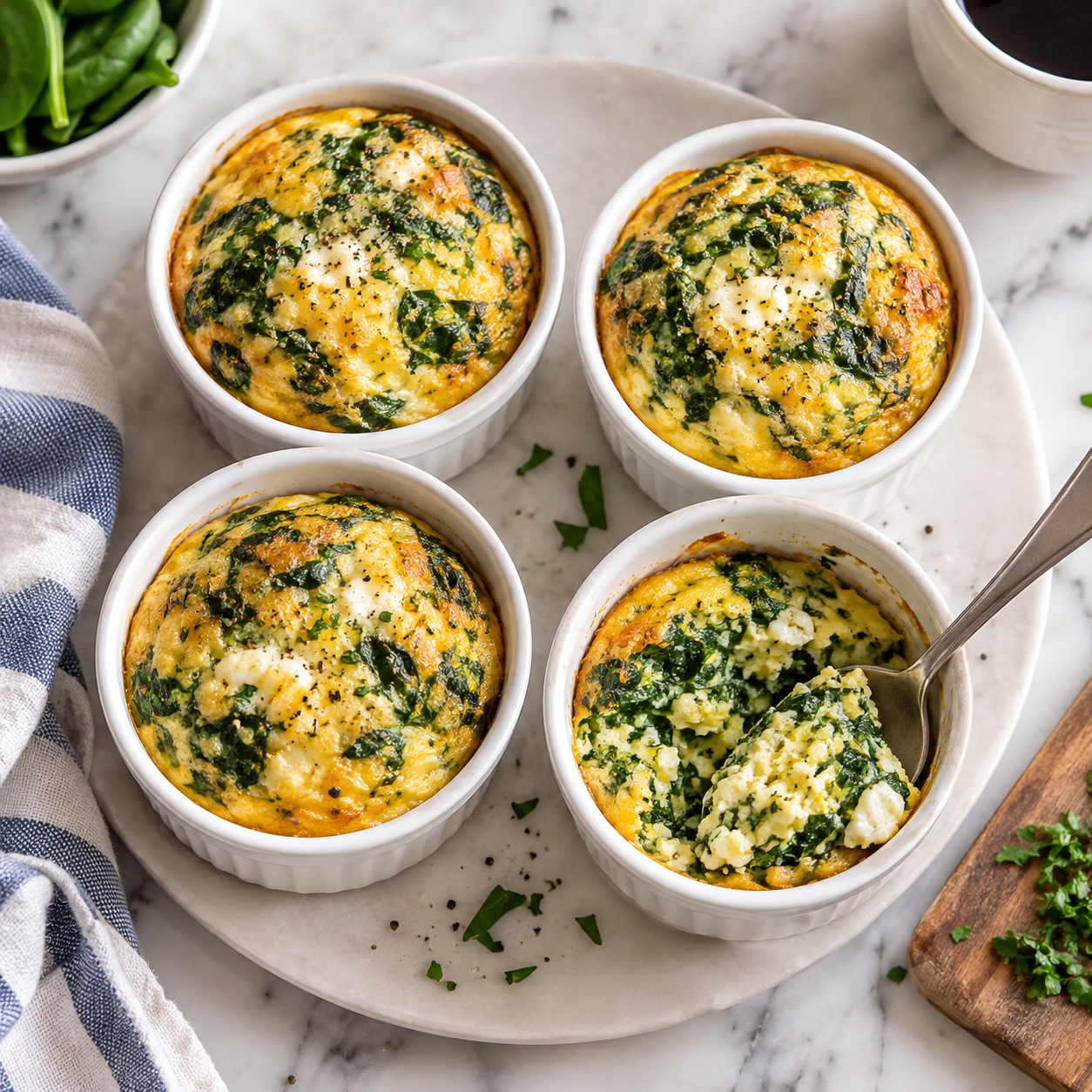
Frozen chopped spinach is practical here because the cutting has already been done. Thaw it fully, then squeeze out excess water with clean hands or a sieve. This step matters more than decorative seasoning: watery greens can make an egg cup fragile and dilute its flavour. Chop any remaining long strands so each portion is easy to eat.
Use ordinary ovenproof ramekins or a muffin tin, and grease them generously enough to release the edges. We specify milk to make a gentle mixture, plus a little black pepper. These quantities are modern. Consult the edition notes with the primary passage to understand why an uncertain ingredient should remain uncertain even when a useful adaptation is possible.
The centres should be fully set, with moist green flecks throughout and no liquid egg on the spoon. Serve warm as a breakfast, starter or vegetable accompaniment. A thermometer confirms the modern endpoint. If using muffin wells, begin checking earlier because smaller portions heat faster. Chill uneaten cups promptly and reheat thoroughly rather than relying on their firm appearance to show they are safe.
Individual Spinach and Egg Cups
Serves 4 · Preparation 15 min · Cooking 25 min · 5 minutes resting
A modern adaptation for home cooking. Times are approximate.
Ingredients
- 300 g frozen chopped spinach, thawed
- 4 large eggs
- 100 ml pasteurized milk
- 15 ml (1 tbsp) olive oil, including greasing
- 1.25 ml (¼ tsp) black pepper
- 1.25 ml (¼ tsp) salt
Method
- Heat oven to 180°C/350°F. Grease 4 ovenproof ramekins.
- Squeeze spinach thoroughly to remove water. Chop any long strands.
- Beat eggs with milk, remaining oil, pepper and salt; mix in spinach and divide between ramekins.
- Bake 20–25 minutes until centres are firm, no liquid egg remains and the middle reaches 74°C/165°F. Rest 5 minutes before serving.
Substitutions and adjustments
- Fresh spinach: cook 350 g in a covered pan for 3–4 minutes, cool, squeeze dry and chop.
- Unsweetened oat milk is a modern milk substitute.
Historical choices: Apicius 162 supplies an egg-bound urtica dish; plant identification is debated. Spinach and individual oven cups are explicit modern substitutions.
Troubleshooting: Weeping liquid: squeeze spinach more firmly next time; drain excess from cooked cups before serving.
Storage and reheating: Cool in shallow containers and refrigerate within 2 hours. Keep up to 3 days; reheat leftovers to 74°C/165°F until steaming throughout.
Kitchen note: Cook mixed egg cups to 74°C/165°F. Contains egg and milk.
Sources and further reading
- Apicius, Book 4, recipe 162 (Vehling numbering). Inspected surviving recipe and editorial notes. Apicius 162 supplies an egg-bound urtica dish; plant identification is debated. Spinach and individual oven cups are explicit modern substitutions. Quantities and modern timetable are our own; translation contains editorial additions.
- LacusCurtius: edition and translation notes. Explains limitations and bracketed additions of the 1936 Vehling translation; not proof of an exact ancient appearance.
- NYAM collections announcement via CHSTM. Institutional account places the recipe collection in the fourth and fifth centuries; individual material may be earlier.
Browse Ancient Recipes for Modern Kitchens · More creative work at Incoprea