MODERN KITCHENS · 018 / 100
Roman · Roman Mediterranean · Roman imperial tradition; surviving compilation approximately 4th–5th centuries CE
Evidence: historically informed adaptation. The historical evidence and modern cooking choices are distinguished below.
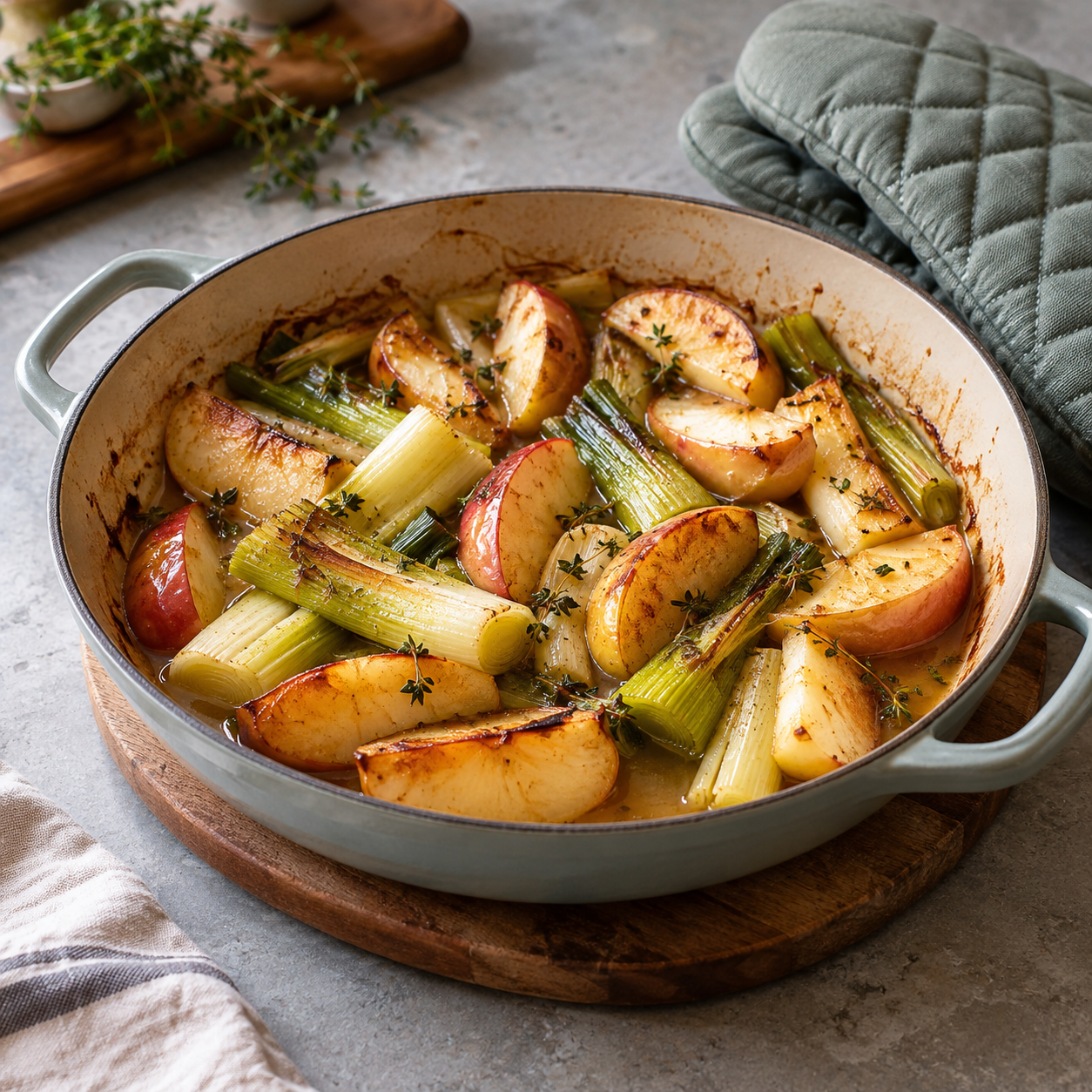
Fruit and leeks can share a savoury pan without turning into a dessert. Apicius 163 combines quinces, leeks and honey in a cooked preparation. This everyday adaptation uses firm apples because quinces are seasonal and often difficult to find. The title keeps that substitution clear; apple is not silently presented as the fruit named by the ancient text.
Choose an apple that holds its shape, such as a firm cooking or eating variety, and cut it into broad pieces. Leeks need thorough washing before slicing, especially near their dark-green leaves. Brown the cut sides lightly, then introduce a little stock so both ingredients finish gently. A small covered casserole or ovenproof pan is sufficient.
Our recipe controls the honey carefully because modern apples are often sweeter and softer than quinces. The edition notes explain the interpretation behind the English passage; they should be read alongside it. Vegetable stock is a present-day choice for a vegetarian side dish. We avoid claiming that the ancient preparation necessarily occupied the same meal role.
The result should show soft leeks and apple pieces that still have edges, with only a few tablespoons of liquid. Serve warm beside beans, grain or a plain roast. If the apples soften early, lift them out while the leeks finish, then return them to warm through. Making the substitute behave well is more useful than forcing an apple to imitate a quince’s cooking time.
Apple and Leek Casserole from a Quince Recipe
Serves 4 · Preparation 15 min · Cooking 35 min
A modern adaptation for home cooking. Times are approximate.
Ingredients
- 450 g firm apples, cored and cut into thick wedges
- 350 g leeks, washed and cut into 4 cm lengths
- 20 ml (4 tsp) olive oil
- 150 ml low-salt vegetable stock
- 10 g (1½ tsp) honey
- 1.25 ml (¼ tsp) salt
- 1.25 ml (¼ tsp) black pepper
Method
- Heat oven to 190°C/375°F. Heat oil in an ovenproof lidded pan and lightly brown leeks for 4 minutes.
- Add apple wedges, stock, honey, salt and pepper. Bring to a simmer.
- Cover and bake 20–25 minutes until leeks are tender and apples hold their shape.
- Uncover for 5 minutes if excess liquid remains; serve warm.
Substitutions and adjustments
- For quinces, peel and core 450 g fruit, simmer separately in water until nearly tender for 25–40 minutes, then add for the final 15 minutes.
- Maple syrup replaces honey for a vegan modern option.
Historical choices: Apicius 163 names quinces, leeks and honey. Firm apples and vegetable stock are explicit supermarket substitutions.
Troubleshooting: Mushy apples: remove them while leeks finish and reduce liquid separately.
Storage and reheating: Cool in shallow containers and refrigerate within 2 hours. Keep up to 3 days; reheat leftovers to 74°C/165°F until steaming throughout.
Kitchen note: Refrigerate perishable food within 2 hours; keep at 4°C/40°F or below.
Sources and further reading
- Apicius, Book 4, recipe 163 (Vehling numbering). Inspected surviving recipe and editorial notes. Apicius 163 names quinces, leeks and honey. Firm apples and vegetable stock are explicit supermarket substitutions. Quantities and modern timetable are our own; translation contains editorial additions.
- LacusCurtius: edition and translation notes. Explains limitations and bracketed additions of the 1936 Vehling translation; not proof of an exact ancient appearance.
- NYAM collections announcement via CHSTM. Institutional account places the recipe collection in the fourth and fifth centuries; individual material may be earlier.
Browse Ancient Recipes for Modern Kitchens · More creative work at Incoprea